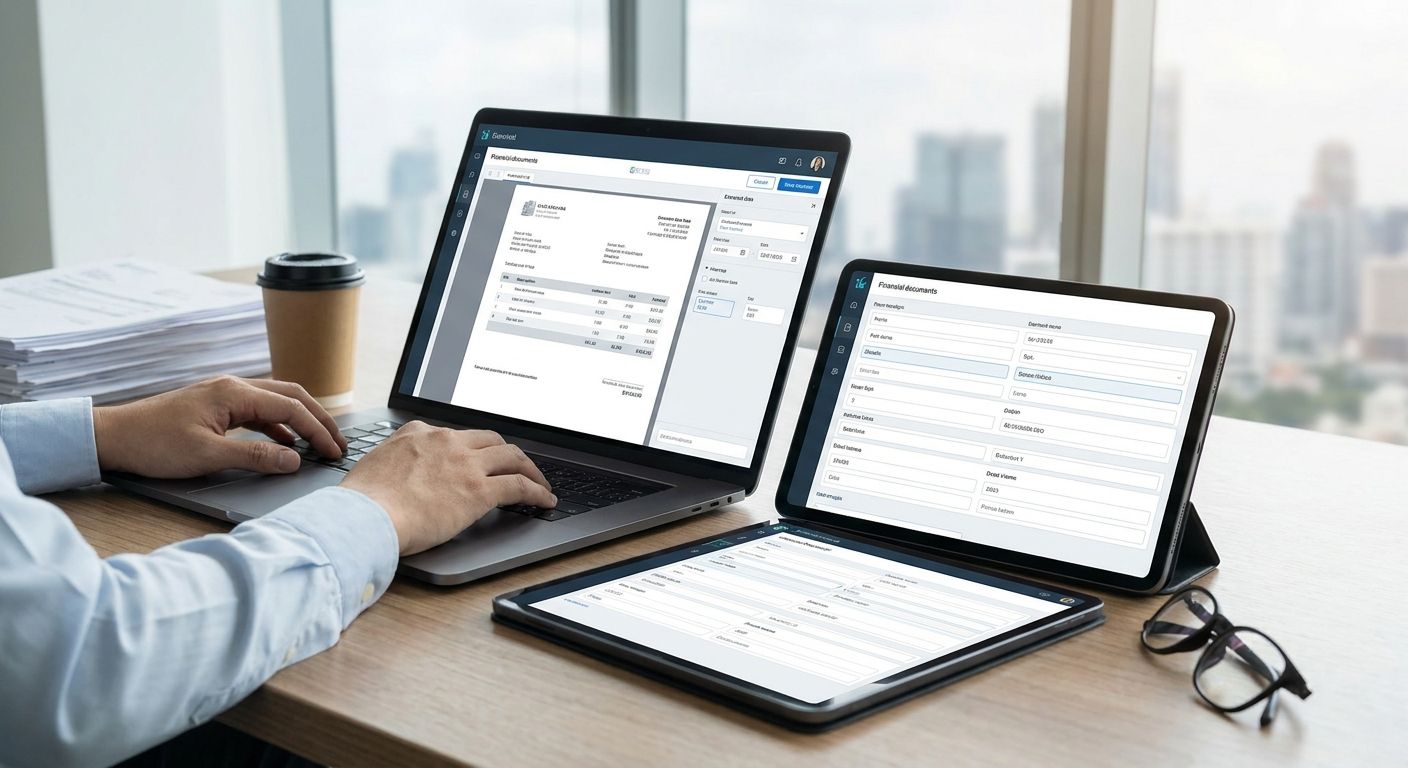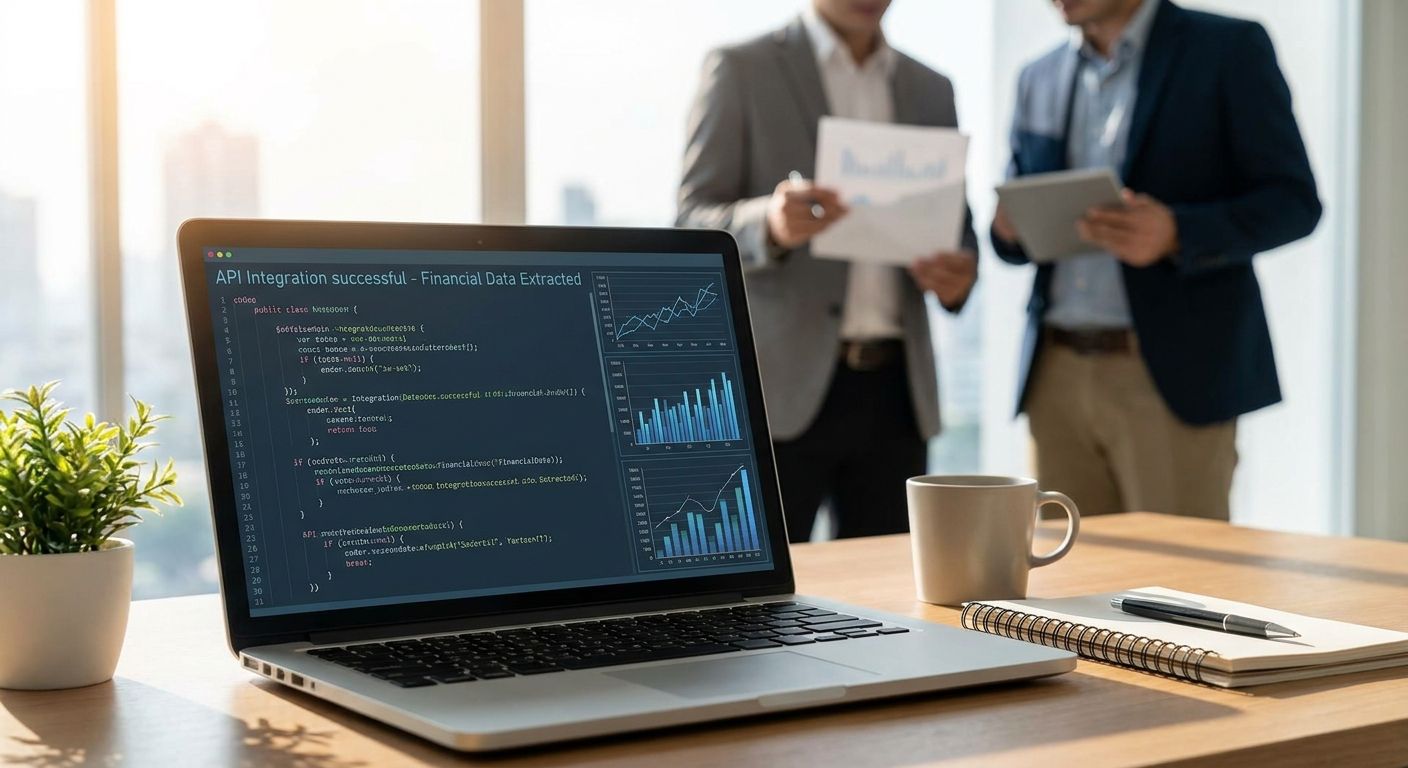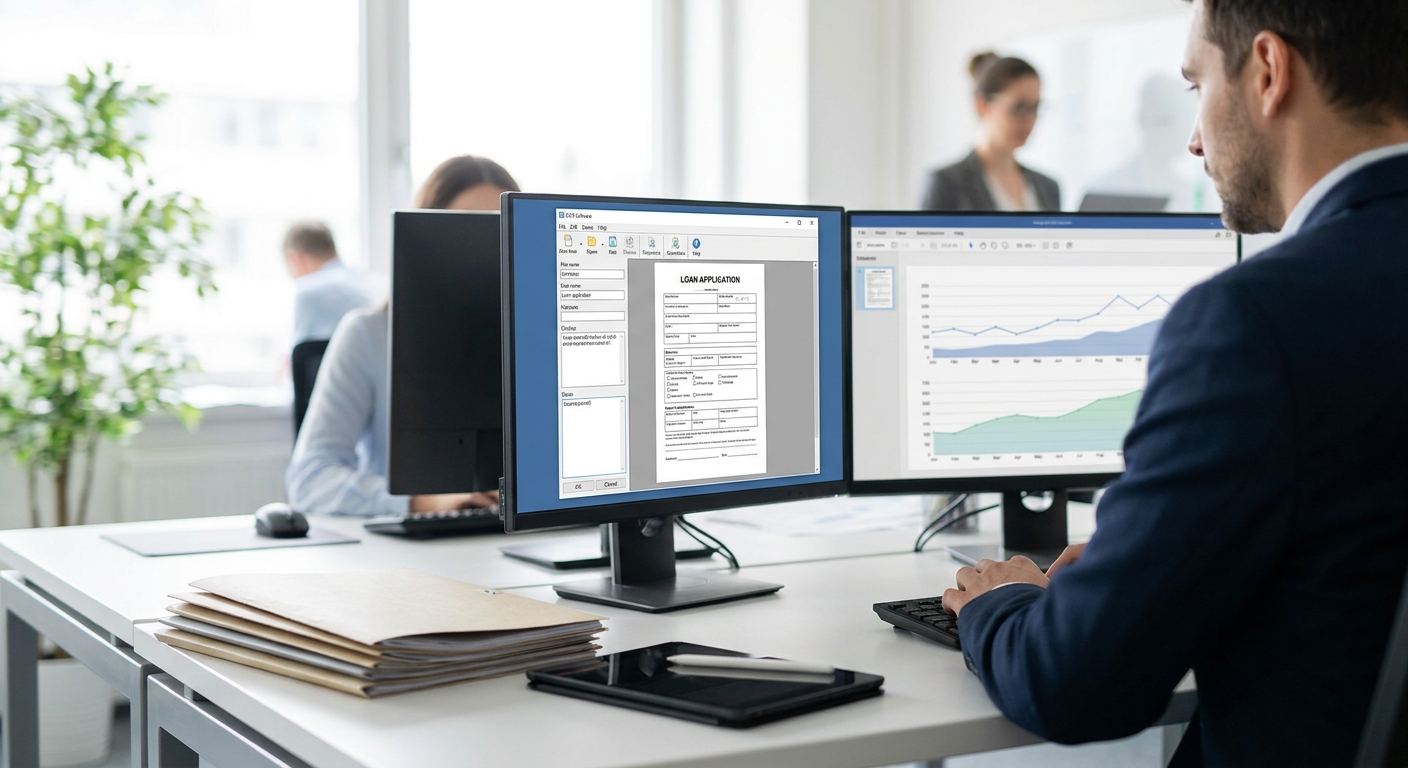
OCR data extraction software for loan origination pulls structured data out of bank statements, pay stubs, and tax returns so underwriters stop retyping numbers into the LOS by hand. This guide breaks down what actually separates a lending-grade parser from a generic OCR tool in 2026, and which approach fits your file volume.
- Format-aware parsers like ClearStaq process 900+ statement formats in under 5 seconds — the safe buy for OCR data extraction software for loan origination in 2026.
- Generic OCR platforms lack lending-specific fraud signals; skip them unless paired with a dedicated underwriting layer.
- ClearStaq cuts manual review time by 95% with 27+ fraud signals built into every parse.
- Native LOS document capture modules handle basic scans but stall on multi-account statements — a stopgap, not a solution.
Why this matters
Loan origination teams lose hours per file re-keying transaction data from PDFs into the LOS. A bank statement parsing API for loan origination systems removes that step entirely, feeding structured JSON straight into underwriting fields instead of a PDF a human has to squint at.
The problem in 2026 isn't finding OCR software — it's finding OCR built for lending. Generic document AI reads text fine. It doesn't flag a doctored deposit, catch commingled personal and business funds, or normalize seasonal revenue across 12 months of statements. Those are underwriting problems, not text-recognition problems, and most OCR vendors were never built to solve them.
Who this is for
This guide is for underwriting managers, MCA brokers, and loan ops leads at community banks, credit unions, and non-bank lenders who process more than 20 bank statement packages a week and are still doing manual data entry or spreadsheet reconciliation before a file reaches an underwriter's desk.
What to look for in OCR data extraction software for loan origination
Format coverage across banks
Chase, Bank of America, and Wells Fargo each format statements differently — column order, header labels, and multi-account layouts all vary. A parser tuned to one bank's template breaks the moment a borrower submits a statement from a regional bank or credit union. Look for coverage in the hundreds of formats, not dozens, or your team ends up manually fixing exceptions all day.
Fraud signal depth, not just text extraction
Extracting numbers is table stakes in 2026. What separates lending-grade OCR is what happens after extraction: does the software flag voided checks, structuring patterns, or doctored pay stubs automatically? A tool with 27+ fraud signals built into the parse catches problems a plain OCR read never will — see how this plays out in bank statement analysis software for credit unions.
Processing speed at your actual volume
A parser that takes 30 seconds per file sounds fine in a demo. At 200 files a week, that's over an hour and a half of pure wait time before an underwriter even opens the file. Sub-5-second processing changes the math on turnaround time, not just convenience.
Accuracy on multi-account and joint statements
Most lending files aren't single-account, single-owner statements. Joint accounts, business accounts with multiple signers, and statements with transfers between owned accounts trip up parsers that were built for simpler documents. Test any tool against your messiest real files, not a clean sample PDF.
API integration into your existing LOS
OCR that dumps a CSV you still have to import manually isn't automation — it's a smaller manual step. A real integration pushes parsed data directly into loan origination system fields via API, which matters more as file volume scales past what one ops person can babysit.
Audit trail and explainability
When a loan gets flagged or denied, someone eventually asks why. Software that surfaces which specific transactions triggered a fraud flag — not just a black-box score — holds up better under compliance review and investor audits.
See lending-grade OCR in action
27+ fraud signals, 900+ formats, sub-5-second parsing.
Top picks
ClearStaq — the safe pick
ClearStaq parses bank statements and tax returns with 99.5% accuracy across 900+ formats, processing each file in under 5 seconds. It's built specifically for lending: 27+ fraud signals run automatically on every parse, catching things like doctored pay stubs and commingled funds before an underwriter has to spot them manually. Firms using it report cutting manual review time by 95%, which matters most for teams doing automate commercial loan underwriting at scale. Buy.
Generic document AI platforms — the wildcard
Broad OCR/document AI tools extract text and tables competently and often come cheap or bundled with other software. The gap is fraud detection: these platforms read numbers, they don't know a structuring pattern from a normal deposit schedule. Fine for invoice processing, risky for loan files where the whole point is catching what looks clean but isn't. Consider only if paired with a separate fraud review step.
Native LOS document capture modules — the default
Most loan origination systems ship with a basic document scanning module. It handles single-page, single-account statements reasonably well. It breaks down fast on multi-account business statements, seasonal revenue files, or anything requiring more than surface-level text capture. Consider as a stopgap only, not a long-term solution.
Manual data entry / outsourced review teams — what to avoid at scale
Some shops still route statements to a review team that keys data by hand or spot-checks OCR output line by line. It works at low volume. Past 20-30 files a week it becomes the bottleneck that determines how fast you can close, and it scales headcount, not throughput. Skip once volume passes a few dozen files weekly.
Tax transcript verification specialists — the niche pick
If your file mix leans heavier on tax returns than bank statements, a tool built specifically around tax transcript verification software for mortgage underwriters may fit better than a bank-statement-first parser. Worth it if 1040s and transcripts make up the bulk of your underwriting packages. Consider if your file mix is transcript-heavy.
What to avoid
- OCR-only tools with no fraud layer. Extraction accuracy means nothing if the software can't flag a fabricated deposit or a doctored pay stub sitting right in the data it just pulled.
- Single-bank-format parsers. A tool tuned only to major national banks will choke the first time a borrower submits a regional credit union statement, forcing manual fallback anyway.
- Tools without an audit trail. If you can't show a regulator or investor exactly which transaction triggered a flag, you've traded manual review time for compliance risk — see reduce manual underwriting review time for what a proper audit trail should include.
“If your parser can't tell a NSF fee from a transfer between owned accounts, it isn't underwriting-ready.”
Verdict comparison
| Approach | Fraud signals | Format coverage | Processing speed | Verdict |
|---|---|---|---|---|
| ClearStaq | 27+ | 900+ | <5 sec | Buy |
| Generic document AI | None built in | Varies by vendor | Seconds to minutes | Consider (paired only) |
| Native LOS capture module | Minimal | Single-format only | Fast on simple files | Consider (stopgap) |
| Manual review / outsourced entry | Human judgment only | N/A | Hours per file | Skip at scale |
| Tax transcript specialist | Transcript-specific | Transcript formats | Varies | Consider (niche fit) |
FAQ
What is OCR data extraction software for loan origination?
It's software that reads bank statements, pay stubs, and tax returns and converts them into structured data an LOS can use, replacing manual data entry. Lending-grade versions in 2026 also run fraud checks on the extracted data, not just text recognition.
Is OCR alone enough for loan underwriting in 2026?
No. Plain OCR extracts numbers but doesn't flag doctored documents, structuring patterns, or commingled funds. Underwriting teams need a fraud detection layer on top of extraction, not extraction by itself.
How accurate does bank statement OCR need to be for lending?
Aim for 99%+ accuracy given how a single misread transaction can change a debt service ratio. ClearStaq reports 99.5% accuracy across 900+ statement formats as a working benchmark for 2026.
How fast should OCR data extraction run per file?
Under 5 seconds per statement is achievable with format-aware parsers in 2026. Anything over 30 seconds per file adds up fast once volume passes a few dozen files a week.
Can OCR software integrate directly with an LOS?
Yes, through an API that pushes parsed data straight into origination system fields instead of producing a file you import manually. This is the difference between real automation and a smaller manual step.
Does OCR data extraction help catch loan fraud?
On its own, no — it only reads text. Paired with fraud signal detection (voided check analysis, structuring pattern flags, income smoothing checks), extraction becomes a fraud-catching tool rather than just a data-entry replacement.
What's the difference between OCR and bank statement parsing for lending?
OCR reads text off a page. Bank statement parsing for lending goes further, structuring that text into categorized transactions, computing average monthly revenue, and running fraud checks specific to loan files.
One last thing
The number that matters most isn't accuracy or format count — it's the 95% cut in manual review time that format-aware, fraud-signal-integrated parsing produces. Most teams evaluating OCR data extraction software for loan origination in 2026 shop on accuracy percentage first. Shop on review-time reduction instead; that's the number that actually changes how many files close per week.
Related guides
ClearStaq Team
Content Team
The ClearStaq team builds AI-powered tools for bank statement parsing, fraud detection, and income verification.