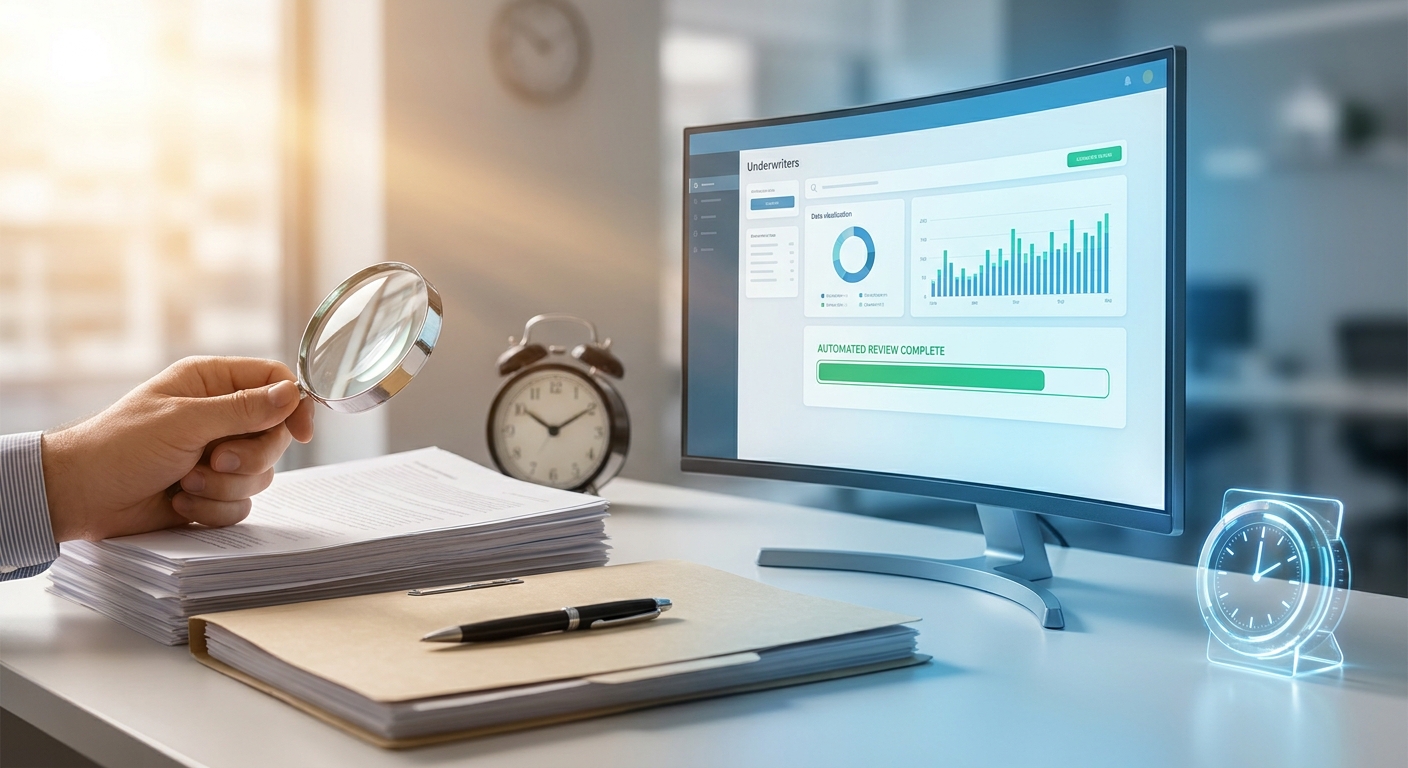
Manual underwriting review time is the single biggest bottleneck between a completed application and a funded loan. This guide breaks down the exact steps to cut that review window from hours to minutes, with the automation layers that make it stick in 2026.
- Cutting manual underwriting review time starts with automated statement parsing, not more headcount.
- ClearStaq processes a full bank statement in under 5 seconds versus 20-40 minutes of manual line-item review.
- 27+ fraud signals run automatically during parsing, catching doctored documents before an underwriter opens the file.
- Verdict: automate parsing and fraud detection first, then rebuild your review workflow around exceptions only.
Why this matters
Every hour an underwriter spends manually scrolling a PDF statement is an hour a competing lender uses to make an offer. Manual review also scales badly: add volume, and you either add headcount or let turnaround time slip, both of which hurt approval rates and borrower experience.
The fix isn't a faster human process. It's removing the human from the parts of the review that are pattern-matching, not judgment. A platform like ClearStaq handles the extraction, math, and fraud scan automatically, so the underwriter's time goes to the 10-15% of files that actually need a decision.
What you'll need
- Access to borrower bank statements or tax returns in PDF, image, or CSV format
- A parsing tool that supports the statement formats your lenders and brokers actually submit — 900+ formats is the practical floor for most shops
- A defined set of fraud signals your team already checks manually (altered balances, structuring, commingled funds, doctored pay stubs)
- A way to route flagged files to a senior underwriter instead of a full-queue review
- 2026 volume and turnaround targets so you can measure the before/after
The steps
1. Audit where the time actually goes
Before automating anything, time-stamp a sample of 20-30 files from the past month. Most shops find that manual transcription and cross-checking consumes 60-70% of total review time, not the actual credit decision.
This step matters because teams often automate the wrong stage first — usually document collection — when the real drain is line-by-line statement analysis. Track minutes per file by stage: intake, parsing, fraud check, decisioning.
Common mistake: skipping the audit and automating document intake first. Intake is rarely the bottleneck; statement analysis is.
2. Automate statement parsing before anything else
Feed statements into an automated parser instead of having an analyst read and re-key balances, deposits, and NSF counts. ClearStaq returns structured data — average daily balance, deposit velocity, NSF count, category breakdowns — in under 5 seconds per statement, at 99.5% accuracy.
That single change removes the largest chunk of manual time identified in step one. Teams running this workflow report review time dropping close to the 95% figure cited above, because the underwriter now reads a summary instead of a 12-page PDF.
Common mistake: parsing only the current month's statement. Underwriters still need 3-12 months of history to catch seasonal patterns, so make sure the parser handles multi-month batches, not single files.
3. Layer fraud detection into the same pass
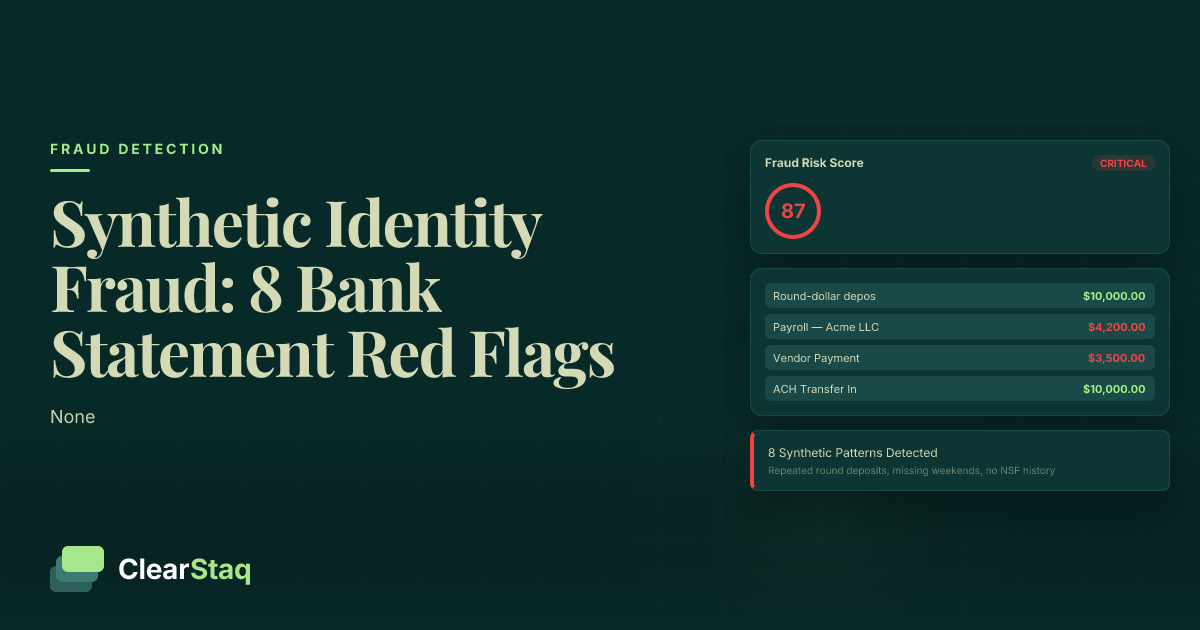
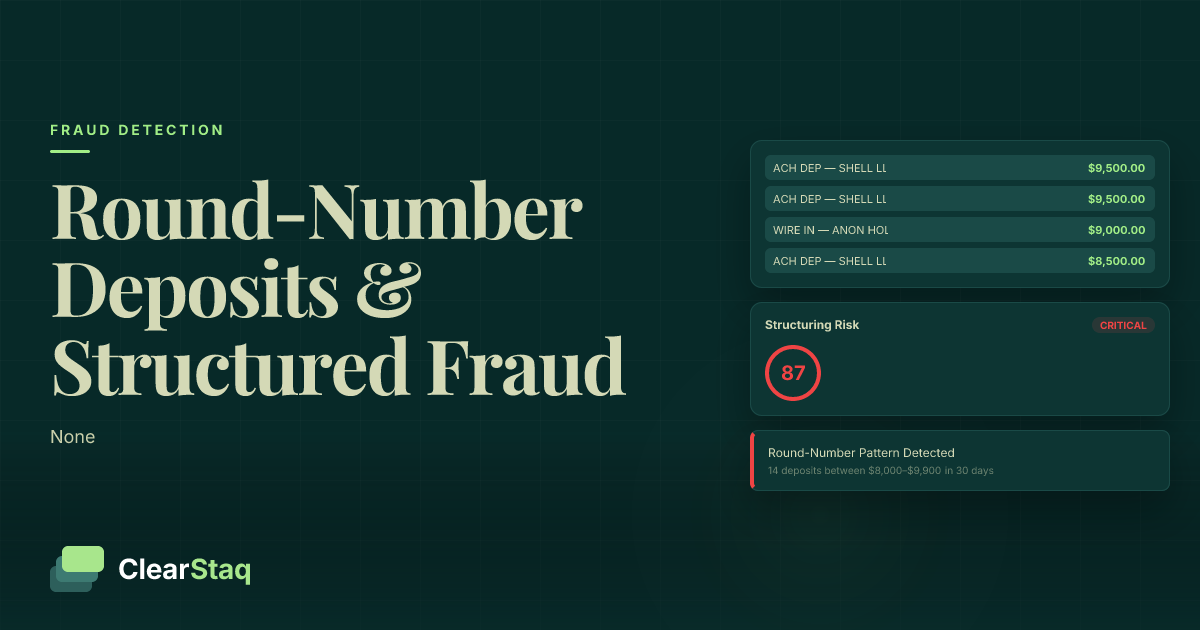
Run the fraud check at parse time, not as a separate manual step after the credit decision is drafted. A format-aware parser can flag structuring patterns, commingled personal and business funds, and doctored balances across 27+ signals in the same pass that extracts the financial data.
This matters because fraud caught late means re-underwriting a file that already looked approved. Catching it during parsing means the underwriter never spends time analyzing a document that shouldn't have advanced. Review the specific patterns your team already flags manually — the bank statement review automation guide for underwriting teams walks through which signals map to which fraud types.
Common mistake: treating fraud detection as a compliance checkbox instead of a routing filter. Flagged files should skip the standard queue entirely and go straight to a senior reviewer.
4. Build exception-only routing
Once parsing and fraud detection run automatically, split your queue into two lanes: clean files that meet pre-set thresholds move to fast-track decisioning, and flagged or borderline files go to manual review. In 2026, most lenders set thresholds around NSF count, deposit consistency, and balance volatility.
This is the step that actually reduces headcount hours, not just per-file time. If 80-85% of files are clean, your underwriters spend their day on the 15-20% that need real judgment.
Common mistake: setting thresholds too conservative, which routes nearly everything to manual review and defeats the point of automation. Start strict, then loosen thresholds once you've validated the fast-track lane against 60-90 days of outcomes.
5. Standardize self-employed and 1099 income verification
Self-employed and gig-income borrowers are usually the slowest files to review manually because there's no W-2 to anchor the analysis. Automating the income averaging across 12-24 months of statements removes the guesswork an underwriter would otherwise do by hand — see the breakdown in how to verify self-employed income for loan underwriting.
This matters because self-employed files often take 2-3x longer than W-2 files under manual review, and they're a growing share of applications in 2026.
Common mistake: averaging income over a single quarter. Seasonal businesses look insolvent in their slow months and inflated in their peak months without a full 12-month view.
6. Re-check flagged files with document-level fraud detection
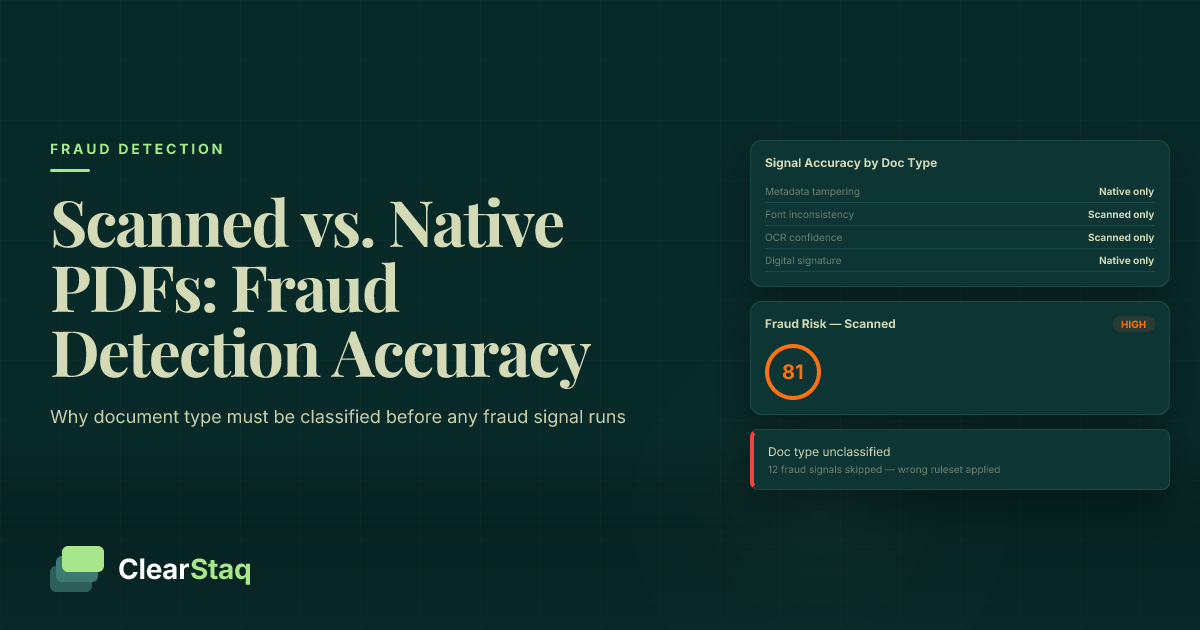
For the files that do get flagged, don't send an underwriter back to manual eyeballing. Use document-level fraud detection to confirm whether a flag is a real red flag or a false positive — metadata mismatches, font inconsistencies, and altered totals are all detectable without a human re-reading every line. The guide to detecting fake bank statements covers the specific markers worth automating first.
This keeps your senior underwriters focused on judgment calls, not forensic document review.
Common mistake: having the same underwriter who does volume decisioning also handle fraud escalations. Separate the two roles so fast-track throughput doesn't slow down every time a flag comes in.
7. Measure turnaround time weekly, not quarterly
Track average review time per file every week for the first 90 days after rollout. Weekly measurement catches drift — a parser misconfigured for a new statement format, or a threshold set wrong — before it compounds into a quarter of slow turnaround.
Common mistake: measuring only total loan cycle time. That number hides whether the underwriting stage specifically improved, since intake and closing delays can mask a real gain in review speed.
Troubleshooting
- Parsed data doesn't match the statement. Check the statement format against your parser's supported bank list — regional and credit union formats vary more than major bank formats, and a mismatch usually means the format isn't fully mapped yet.
- Too many files still routing to manual review. Your fast-track thresholds are too conservative. Loosen the NSF and volatility cutoffs incrementally and re-test against a 30-day sample.
- Fraud flags with no clear reason. Confirm the flagged signal — commingled funds and structuring alerts should cite the specific transactions that triggered them, not just a generic score.
- Review time improved but approval time didn't. The bottleneck moved downstream to decisioning or funding. Re-run the time audit from step one on the post-underwriting stages.
- Self-employed files still slow. Confirm you're pulling 12+ months of statements, not 3, before averaging income.
Tools and resources
- Statement and tax return parser with fraud detection built into the same pass
- A documented set of fast-track thresholds reviewed quarterly
- Commercial loan underwriting automation with bank statements for teams handling business credit files specifically
- A weekly turnaround-time dashboard, even a simple spreadsheet, tracked from rollout day one
What to do next
Once statement parsing and fraud detection are running, the next lever is fully automating commercial loan underwriting end to end — cash flow analysis, debt service coverage, and seasonal revenue normalization all follow the same automate-then-route logic covered here.
FAQ
What's the best way to reduce manual underwriting review time?
Automate bank statement parsing and fraud detection first, then route only flagged or borderline files to manual review. This single change cuts review time by up to 95% because underwriters stop reading raw statements line by line.
How much time does automated bank statement parsing save underwriters?
Automated parsing processes a statement in under 5 seconds compared to 20-40 minutes of manual line-item review. Across a full file with multiple months of statements, that difference compounds into hours saved per application.
Is AI-based fraud detection accurate enough to replace manual review?
Modern parsers run 27+ fraud signals at 99.5% accuracy, which is accurate enough to filter clean files from flagged ones. Manual review still handles the final judgment call on flagged files, so it's a filter, not a full replacement.
How long does it take to parse a bank statement with automation?
ClearStaq returns structured data from a bank statement in under 5 seconds. That includes deposit velocity, NSF counts, and category breakdowns, not just a raw balance figure.
What documents can be automated in underwriting review?
Bank statements, tax returns, and pay stubs are the most commonly automated documents in 2026 underwriting workflows. Each carries different fraud signals, so the parser needs format-specific logic for each document type.
How much does manual underwriting review typically cost per file?
Cost varies by lender, but the driver is underwriter hours per file, not a fixed fee. Cutting review time by 95% on clean files directly cuts the labor cost per approved loan.
Can automation catch fraud that manual reviewers miss?
Yes, pattern-based signals like structuring and commingled funds are easier for software to catch consistently than for a human scanning dozens of files a day. Manual reviewers tend to miss subtle patterns across multiple months that automated signal detection flags every time.
Do CPAs and lenders need different underwriting automation tools?
The underlying parsing and fraud detection layer is the same, but CPAs typically need quarterly metric extraction while lenders need fast-track decisioning thresholds. Both benefit from the same automated statement parsing foundation.
One last thing
The teams that see the biggest drop in review time aren't the ones with the most sophisticated fraud rules — they're the ones who separated fast-track and flagged-file review into two distinct workflows in 2026. Mixing both into one underwriter queue is what keeps average review time stuck, even after the parsing is automated.
Related guides
ClearStaq Team
Content Team
The ClearStaq team builds AI-powered tools for bank statement parsing, fraud detection, and income verification.