Sanctions screening software for wealth management firms checks client names, beneficial owners, and wire counterparties against OFAC, UN, EU, and UK OFSI lists before an account opens or a transfer settles. Private client onboarding brings trust structures, offshore entities, and family members with signing authority into the mix — a plain name-match tool misses most of that structure.
- Sanctions screening software for wealth management firms matches client and beneficial-owner names against OFAC, UN, EU and UK OFSI lists at onboarding and on a rescreening schedule.
- Manual list checks work below roughly a dozen new accounts a month; past that, fuzzy-match automation is the only way to catch alias and transliteration variants.
- PEP screening and sanctions screening are separate checks — a client can clear OFAC and still need enhanced due diligence as a politically exposed person.
- Document verification catches what a name match can't: doctored bank statements, inflated tax returns, and shell-entity ownership chains.
- Verdict for 2026: automate the list match, then verify the documents behind every match with a separate fraud-detection layer.
Why sanctions screening matters for wealth management firms
A wealth management firm's client base looks nothing like a retail bank's. Accounts get opened through trusts, family LLCs, and offshore holding vehicles, and each of those structures adds a layer of beneficial owners who never appear on the account application itself.
Referral-driven onboarding compounds the risk. A relationship manager under pressure to close a new account fast is the person most likely to screen the named client and skip the co-trustee, the authorized signer, or the adult child added to the account six months later. PEP screening for wealth management firms runs alongside sanctions screening for exactly this reason — the two checks catch different risks and neither substitutes for the other.
Wire activity raises the stakes further. International wires to correspondent banks route through multiple intermediaries, and a sanctions hit discovered after a transfer clears is a regulatory problem, not a business one.
Update your list coverage before you build a workflow
Start with which lists you're actually checking against. Firms that screen only the OFAC SDN list and stop there are missing coverage that regulators expect.
- OFAC SDN and Non-SDN Consolidated Sanctions Lists
- UN Security Council Consolidated List
- EU Consolidated Financial Sanctions List
- UK OFSI Consolidated List
- Internal watchlists for terminated or previously flagged clients
Screen every account holder, not just the primary signer
A sanctions check that stops at the named account holder is a check that misses trustees, co-owners, and signers added after onboarding. Screening high-net-worth clients for PEP status requires the same expanded name list — every party with control or benefit needs a match run.
- The named account holder or account owner
- Trust grantors, trustees, and named beneficiaries
- Beneficial owners above your firm's ownership threshold
- Authorized signers and holders of power of attorney
- Family members added to an account mid-relationship
Layer PEP screening on top of the sanctions check
A client can pass every OFAC, UN, and EU list and still be a foreign government official, a state-owned enterprise executive, or a close associate of one. That status doesn't block the relationship — it triggers enhanced due diligence and ongoing monitoring instead of a one-time check.
- Domestic and foreign PEP categories, scored separately
- Family members and known close associates of PEPs
- Former officials, since PEP status typically carries forward
- State-owned enterprise executives and board members
- Escalation rules distinct from a sanctions hit
Tune match thresholds to cut false positives
Common names generate volume. A fuzzy-match engine set too loose returns dozens of near-matches for every real hit, and analysts start rubber-stamping alerts to keep pace. Reducing false positives in sanctions screening is mostly a threshold and data-quality exercise, not a bigger headcount problem.
- Fuzzy-match sensitivity tuned to your client name pool
- Secondary fields (date of birth, nationality, address) to break ties
- Whitelisting for confirmed false positives, reviewed periodically
- Name-order logic for naming conventions that don't follow first/last format
- Transliteration variants for names romanized from non-Latin scripts
Rescreen on a schedule, not just at onboarding
Sanctions lists update on their own timeline, not yours. A client who cleared screening in January can appear on an OFAC update in June, and a firm that only screens at onboarding has no way to catch it.
- Nightly or weekly batch rescreening against updated list files
- Event-triggered rescreening on wires, address changes, or beneficiary edits
- Immediate rescreening the day any list publishes an update
- An annual full-book sweep as a backstop
Verify the documents behind the name match
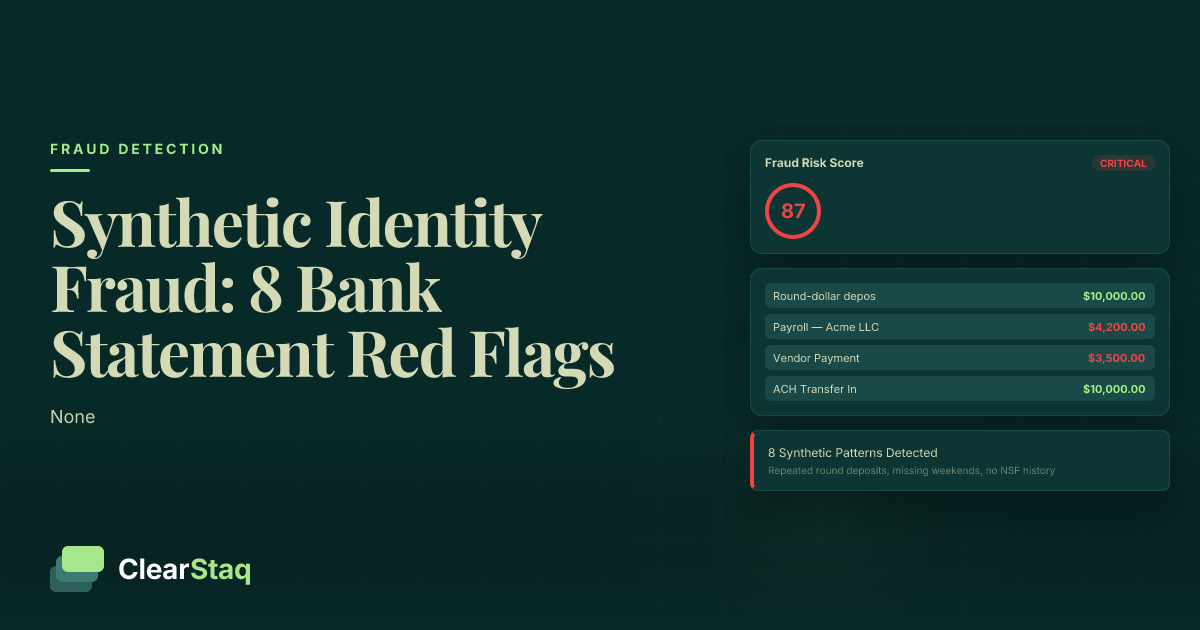
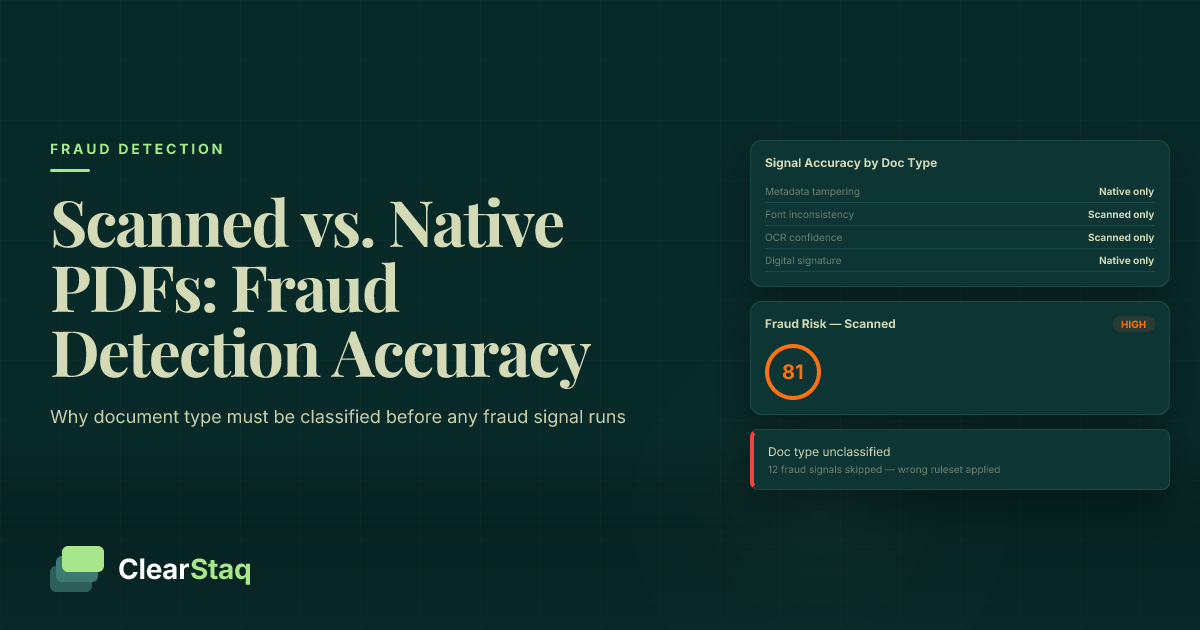
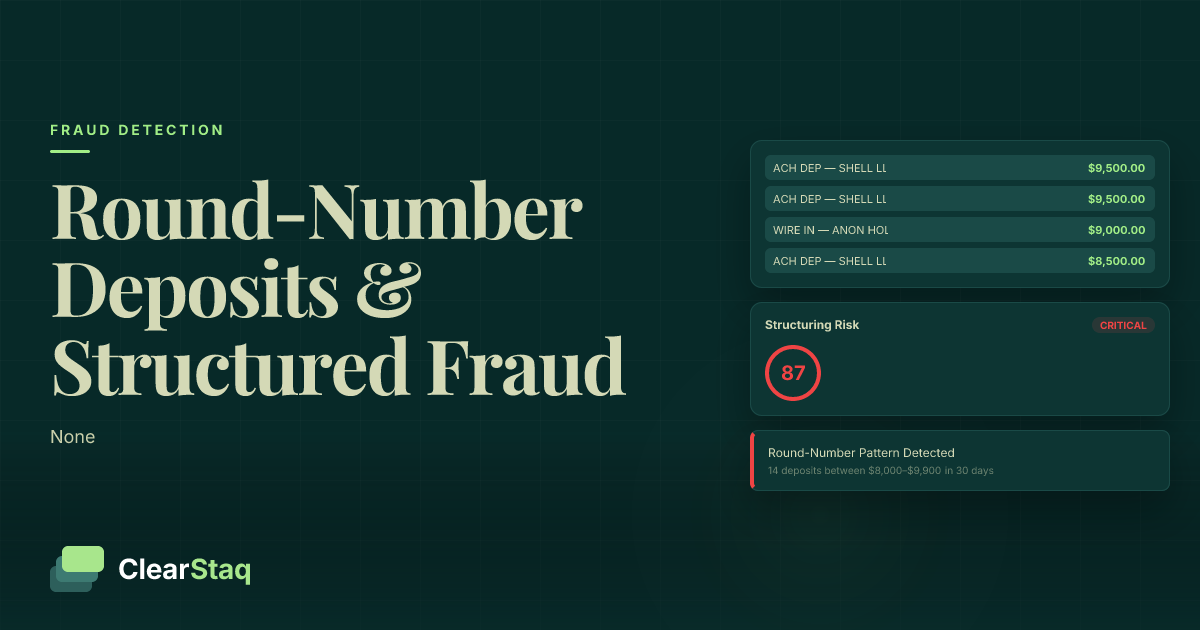
A clean sanctions match doesn't confirm the source-of-funds story a client tells you. Bank statements get altered, tax returns get inflated, and shell entities get formed specifically to obscure who's actually funding an account. ClearStaq's fraud detection layer runs 27+ signals against bank statements and tax returns to catch doctored documents and shell-entity ownership chains before they support a large deposit or wire — a separate check from the list match itself, run on the paperwork rather than the name.
- Bank statements supporting a client's stated source of funds
- Tax returns backing declared income and asset levels
- Entity formation documents for trusts, LLCs, and holding companies
- Signatures on power-of-attorney and account authorization forms
Document the program for examiners
A screening program that lives in one analyst's head fails the first time an examiner asks for it in writing.
- Written screening policies and escalation thresholds
- Documented decisions on every alert, cleared or escalated
- Training records for staff running the screening workflow
- An independent testing schedule, typically annual
Comparing sanctions screening options for wealth management firms
| Option | Best for | Key limitation |
|---|---|---|
| Manual list checks against published OFAC/UN/EU PDFs | Firms opening a handful of new accounts a month | No fuzzy matching; misses alias, transliteration, and name-order variants |
| Dedicated sanctions/watchlist screening platforms | Firms needing real-time matching across multiple government feeds | Doesn't verify the documents behind a name match |
| Full KYC/AML suites with bundled screening | Broker-dealers running a complete AML program end to end | Generic fuzzy-match logic often drives high false-positive rates |
| ClearStaq document parsing and fraud detection | Firms that need to verify bank statements, tax returns, and entity structures behind a match | Does not replace a dedicated sanctions list matching engine — pair the two |
The direct verdict: no single tool covers both the list match and the document verification behind it in 2026 — a wealth management firm needs a sanctions/PEP matching engine plus a document-fraud layer like ClearStaq's, not one tool standing in for both.
See how ClearStaq verifies onboarding documents
Bank statement and tax return parsing with 27+ fraud signals, built for lending and compliance teams.
Common mistakes wealth management firms make
- Screening only the primary account holder and skipping trustees, co-signers, and beneficiaries added later.
- Treating PEP and sanctions screening as one check when they require separate escalation paths.
- Skipping rescreening after onboarding, despite list updates that can land weekly.
- Under-verifying source-of-funds documents on large wires from offshore entities, relying on the name match alone.
- Whitelisting too aggressively to cut alert volume, which quietly widens the gap a real match could slip through.
FAQ
What is sanctions screening software for wealth management firms?
It's software that matches client names, beneficial owners, and transaction counterparties against government sanctions lists like OFAC, UN, EU, and UK OFSI. Wealth management firms run it at onboarding and on a rescreening schedule, since list updates happen continuously through 2026.
Is sanctions screening the same as PEP screening?
No, they check different things. Sanctions screening confirms a client isn't on a government blocked-persons list; PEP screening flags politically exposed status that triggers enhanced due diligence rather than an outright block.
How often should a wealth management firm rescreen clients?
At minimum, rescreen on every list update and on any account event like a wire, address change, or new beneficiary. An annual full-book sweep catches anything missed between events.
Which sanctions lists matter most for wealth management firms?
The OFAC SDN and Non-SDN Consolidated Lists, the UN Security Council Consolidated List, the EU Consolidated Financial Sanctions List, and the UK OFSI Consolidated List cover the jurisdictions most wealth management firms operate across.
Can a small RIA screen clients manually in 2026?
A firm opening a small number of accounts a month can check names against published list PDFs manually, but it will miss alias and transliteration variants that fuzzy-match software catches automatically.
What is a false positive in sanctions screening?
A false positive is an alert triggered by a name similar to a sanctioned individual but belonging to someone else entirely. Loose match thresholds and common names drive most false-positive volume.
Does ClearStaq perform sanctions list screening?
ClearStaq's role is document parsing and fraud detection on bank statements and tax returns, run alongside a dedicated sanctions/PEP matching engine rather than in place of one. It catches doctored documents and shell-entity ownership chains that a name match alone won't flag.
How does beneficial ownership screening work for trusts?
Every trustee, grantor, and beneficiary above a firm's ownership threshold gets screened individually, not just the trust entity itself. Entity formation documents show who those parties actually are, which is why document verification matters alongside the name match.
One last thing
The gap that gets wealth management firms in trouble isn't usually the sanctions match itself — it's the beneficial owner who never got added to the screening list in the first place. A trust with three co-trustees and a family LLC with four members generates seven names that need checking for what looks like one account on the surface. Build the workflow to expand every account into its full ownership list before the first name gets run, not after an examiner asks for it.
Related guides
ClearStaq Team
Content Team
The ClearStaq team builds AI-powered tools for bank statement parsing, fraud detection, and income verification.