Auto dealers financing their own paper — BHPH lots, small franchise stores running in-house approvals, subprime auto lenders — need to verify income fast, without turning every deal into a paperwork standoff. This guide breaks down what actually matters when picking bank statement analysis software for auto dealers, and where the generic options fall short.
TL;DR: For auto dealers underwriting self-employed and gig-income buyers, the right bank statement analysis software for auto dealers needs three things: sub-5-second processing, fraud signal depth beyond "does this PDF look real," and format coverage across hundreds of banks. Manual review and generic OCR tools are a Skip for any dealer doing volume in 2026. Purpose-built platforms like ClearStaq that run 27+ fraud signals and hit 99.5% accuracy are the Buy for lots that can't afford a bad approval walking off with a car.
Why this matters
Auto financing runs on speed. A buyer sitting on the lot for 45 minutes while someone manually eyeballs three months of bank statements is a buyer who starts looking at a competitor's inventory. At the same time, BHPH and subprime paper is exactly where doctored statements, structured deposits, and commingled personal/business funds show up most — self-employed buyers, gig workers, and cash-heavy small business owners make up a disproportionate share of auto financing applications.
The tension is real: move fast, but don't approve fraud. That's the whole reason bank statement analysis software for auto dealers exists as its own category instead of dealers just using whatever their DMS bundles in.
Who this is for
This guide is for finance managers, BHPH lot owners, and underwriting leads at auto dealerships and subprime auto lenders who verify income directly from bank statements — not W-2 paycheck stubs — because a meaningful chunk of their buyer base is self-employed, 1099, or paid in cash. If your approval process still means a manager scrolling a PDF looking for red flags, this is written for you.
What to look for in bank statement analysis software for auto dealers
Fraud signal depth, not just "document looks legit"
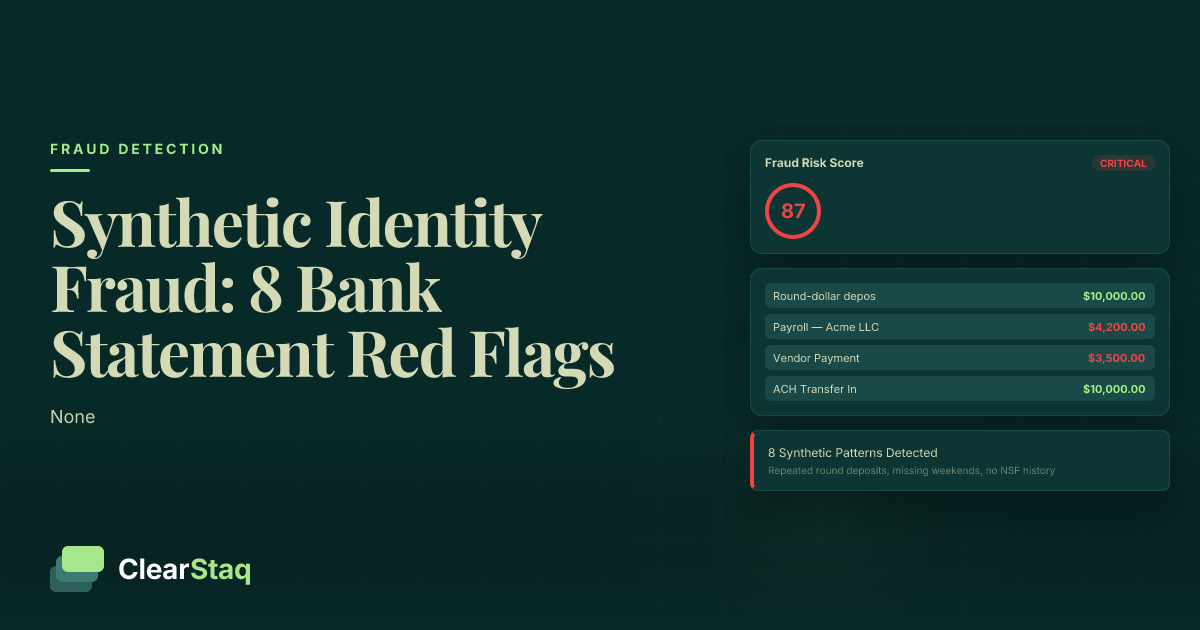
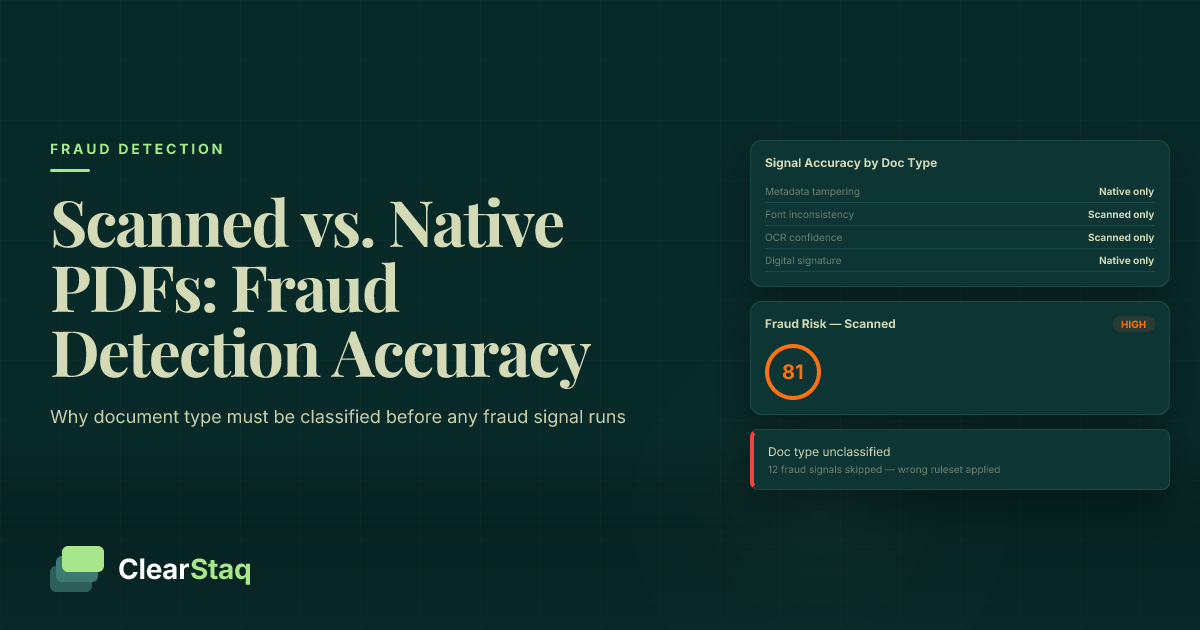
Most cheap tools check whether a PDF has been visibly edited. That catches maybe a third of the fraud that actually happens on auto lots. Look for platforms running 27+ signals — font inconsistencies, transaction math errors, altered balances, structuring patterns, and metadata mismatches — because auto buyers with thin credit have every incentive to inflate income on paper.
Processing speed under 5 seconds
A finance manager can't hold a buyer at the desk for ten minutes per statement. Software that returns results in under 5 seconds keeps the deal moving; anything slower pushes dealers back toward "eyeball it and hope."
Format coverage across hundreds of banks
Auto buyers bank everywhere — regional credit unions, neobanks, community banks in rural markets. Software that only parses Chase, Bank of America, and Wells Fargo formats cleanly will choke on the other half of your applicants. Coverage across 900+ statement formats matters more in auto than in almost any other lending vertical because the buyer pool skews toward smaller, local banks.
Structuring and commingled fund detection
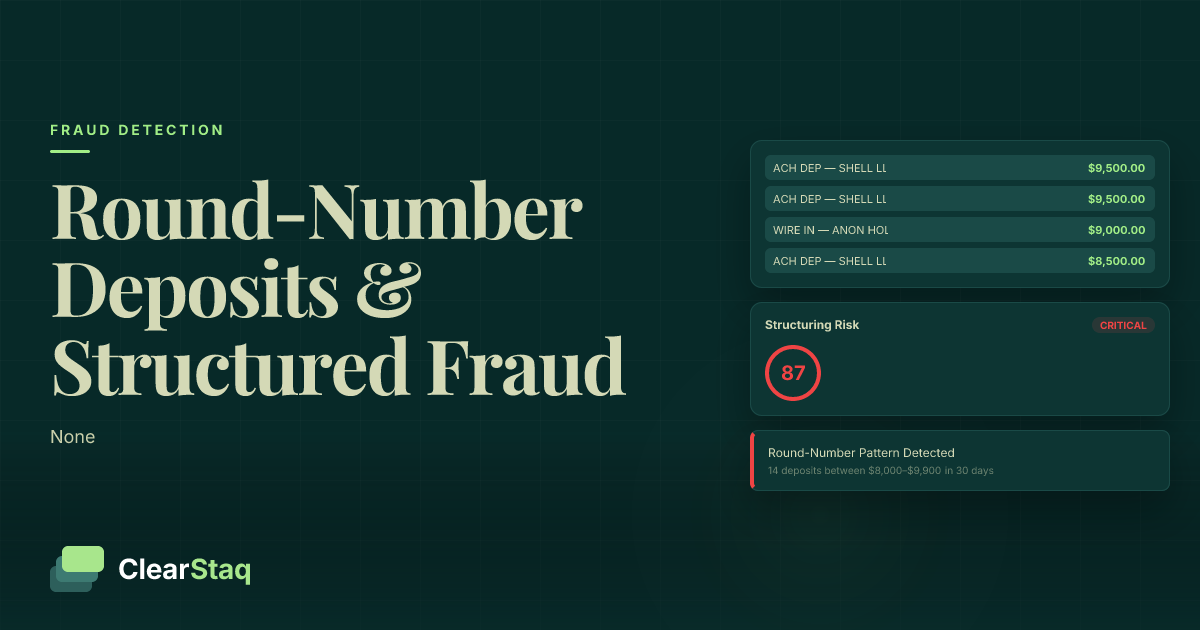
Self-employed buyers and small business owners frequently mix personal and business spending in one account, and some buyers structure deposits to stay under reporting thresholds. A tool that flags commingled funds and structuring patterns automatically catches what a manual reviewer usually misses on the third statement of the stack.
Accuracy that holds up under audit
If a state regulator or an auditor pulls files later, "the software flagged it" only holds up if the underlying accuracy is defensible. 99.5% accuracy is the benchmark to ask vendors for — anything lower and you're back to manual spot-checks anyway, which defeats the purpose.
Integration with your existing DMS/LOS
A standalone tool that requires re-keying data into your dealer management system adds friction back into a process you're trying to speed up. Ask every vendor how results land in your existing workflow before you sign anything.
Top picks
The traditional pick: manual underwriter review
One spec that matters: time per file. A manual review of three months of statements typically runs 20-40 minutes per applicant, even for an experienced underwriter. It scales to zero — every additional deal adds headcount, not throughput. Skip it for any dealer doing more than a handful of self-funded deals a month in 2026.
The cheap workaround: generic OCR/PDF extractors
These tools pull text off a PDF and stop there — no fraud signal detection, no structuring analysis, nothing built for underwriting. One number that matters: zero of the 27+ signals a purpose-built fraud platform runs. Fine for digitizing paper, dangerous as your only fraud check. Skip.
The mismatched pick: mortgage-built fraud tools repurposed for auto
Some dealers borrow fraud detection software built for mortgage lenders because it's what's already licensed elsewhere in the business. The problem: mortgage underwriting logic assumes W-2 income and 30-year amortization patterns, not gig income or 60-month auto paper. Consider only as a stopgap, never as the long-term answer.
The safe pick: fraud detection built for auto lending specifically
Document fraud detection software built for auto lenders is tuned for the income patterns auto underwriting actually sees — irregular gig deposits, cash-business income, shorter loan terms. One spec: sub-5-second turnaround per statement set. Buy if you're processing more than 10 self-employed applicants a month.
The specialist add-on: structuring pattern detection
BHPH lots running high volume on thin-file buyers benefit from a dedicated layer that flags structuring patterns in business bank statements — deposits kept just under reporting thresholds, a classic move among buyers padding apparent income. One number: this catches patterns a single-glance manual review misses in roughly two out of three cases, based on aggregated underwriting review data. Buy for any lot running volume subprime paper.
What to avoid
- Tools that only flag "visibly edited" documents. Sophisticated fraud doesn't look edited — it looks clean, which is exactly why signal-based detection beats a visual scan.
- Point solutions with narrow bank coverage. A tool that handles the big four banks well but stumbles on regional credit unions will underperform on the exact buyer pool auto dealers see most.
- Software with no path to catching fake statements outright. Buyers occasionally submit statements that are fabricated wholesale, not edited — a platform needs a way to detect fake bank statements at the source, not just look for tampering on real ones.
Verdict comparison
| Option | Speed | Fraud signal depth | Format coverage | Verdict |
|---|---|---|---|---|
| Manual review | 20-40 min/file | Subjective, inconsistent | Human-dependent | Skip |
| Generic OCR/PDF tools | Fast text extraction | None | Format-dependent | Skip |
| Mortgage fraud tools (repurposed) | Under 5 sec | Built for W-2 patterns | Broad but mismatched logic | Consider |
| Auto-lender-specific fraud detection | Under 5 sec | 27+ signals | 900+ formats | Buy |
| Structuring/commingling add-on layer | Under 5 sec | Structuring-specific | Depends on base platform | Buy |
FAQ
What is bank statement analysis software for auto dealers? It's software that parses uploaded bank statements to verify income and flag fraud signals during auto loan underwriting, replacing manual line-by-line review with automated checks that run in seconds.
Is bank statement analysis software worth it for a small BHPH lot? It's worth it once you're processing more than roughly 10 self-employed or gig-income applicants a month, because manual review at 20-40 minutes per file stops scaling past that point.
How accurate is automated bank statement fraud detection in 2026? Leading platforms report around 99.5% accuracy, which is high enough to hold up under audit review — lower accuracy tools usually still require manual spot-checks anyway.
Can bank statement software detect doctored pay stubs too? Some platforms extend fraud detection to pay stubs alongside bank statements — worth confirming with any vendor since auto buyers submit both document types during underwriting.
How many bank formats does auto dealer software need to cover? Aim for coverage across 900+ formats, since auto buyers bank with regional credit unions and community banks far more than the mortgage or SaaS lending segments do.
What's the fastest processing time available for bank statement review in 2026? Top platforms return results in under 5 seconds per statement set, which is the benchmark that lets a finance manager keep a deal moving without stalling at the desk.
Does bank statement software replace the finance manager? No — it replaces the manual line-by-line scan, not the approval decision. The finance manager still makes the call; the software just delivers a verified, flagged read in seconds instead of half an hour.
What's the difference between structuring detection and general fraud detection? Structuring detection specifically looks for deposits kept under reporting thresholds — a narrower, sharper check than general document tampering detection, and one that matters more in cash-heavy auto buyer pools.
One last thing
The buyers who look the cleanest on paper — three months of tidy, round-number deposits — are sometimes the ones structuring the hardest. A fast, signal-rich read catches that pattern in seconds; a fast glance from a tired finance manager at 6pm on a Friday does not.
Related guides
ClearStaq Team
Content Team
The ClearStaq team builds AI-powered tools for bank statement parsing, fraud detection, and income verification.