Landlords who screen tenants without a real income check are one doctored pay stub away from a bad twelve-month lease. This guide breaks down what to look for in income verification software for landlords, which approaches actually catch fraud, and where the free options fall short.
- ClearStaq parses bank statements and tax returns with 27+ fraud signals — Buy for self-managing landlords and small portfolios.
- Manual pay stub review misses edited PDF templates; treat it as a Consider, not a primary method.
- Paycheck-linked instant verification works for W2 tenants but Skips gig and self-employed applicants entirely.
- Bank statement analysis software for property managers now processes documents in under 5 seconds per file.
Why this matters
A lease application with a forged pay stub looks identical to a real one until someone checks the font kerning, the employer metadata, or the deposit pattern against 90 days of actual bank activity. Landlords who rely on a single document type — just the pay stub, just the offer letter — have no second signal to catch a fabrication.
Bank statement parsing changes the math. Instead of trusting one document, the software cross-references deposit timing, employer names in memo lines, and account-level anomalies across months of data. ClearStaq built this for lenders and MCA brokers first, and the same parsing engine applies directly to rental income verification: same fraud patterns, same document types, lower dollar amounts.
Who this is for
This guide is for landlords and small property managers handling 2 to 50 units who can't justify a full underwriting team but still get burned by fake documentation. If you're renting to a mix of W2 employees, 1099 contractors, and self-employed applicants, a single-document check leaves gaps. Portfolio owners scaling past a dozen doors in 2026 are the group most likely to see forged statements, since volume attracts applicants who know manual review doesn't catch much.
What to look for in income verification software for landlords
Format coverage across banks
Tenants bank everywhere — Chase, a regional credit union, a neobank like Chime. Software that only reads three statement layouts forces you back to manual review for the fourth applicant. Look for platforms that handle 900+ statement formats without a manual template setup for each new bank.
Fraud signal depth, not just OCR
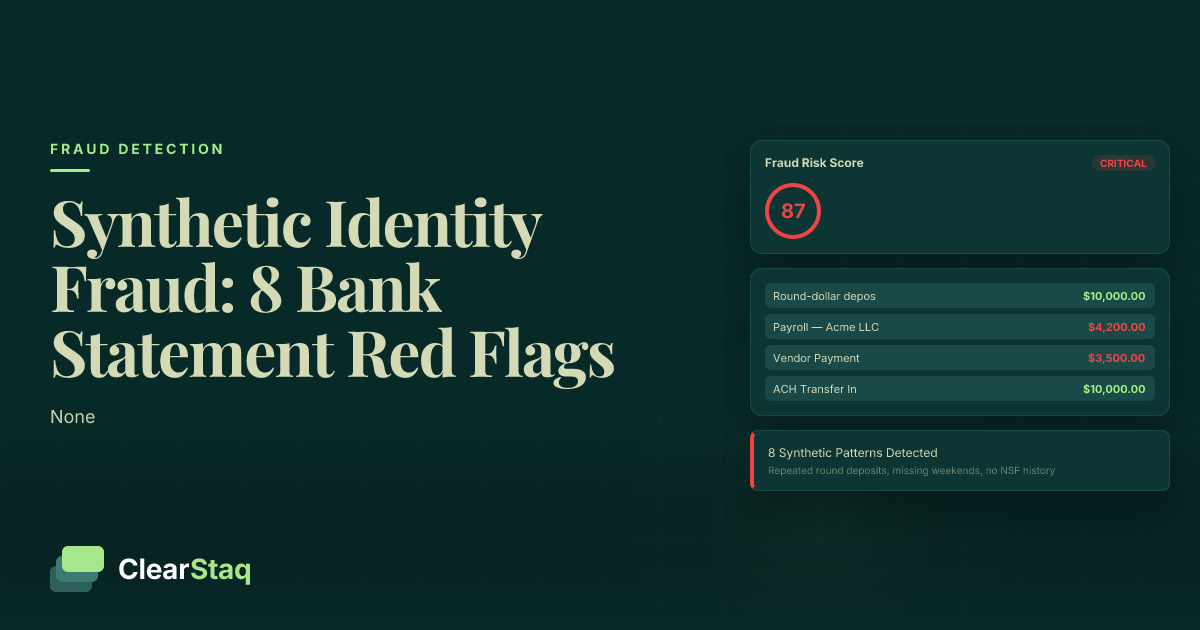
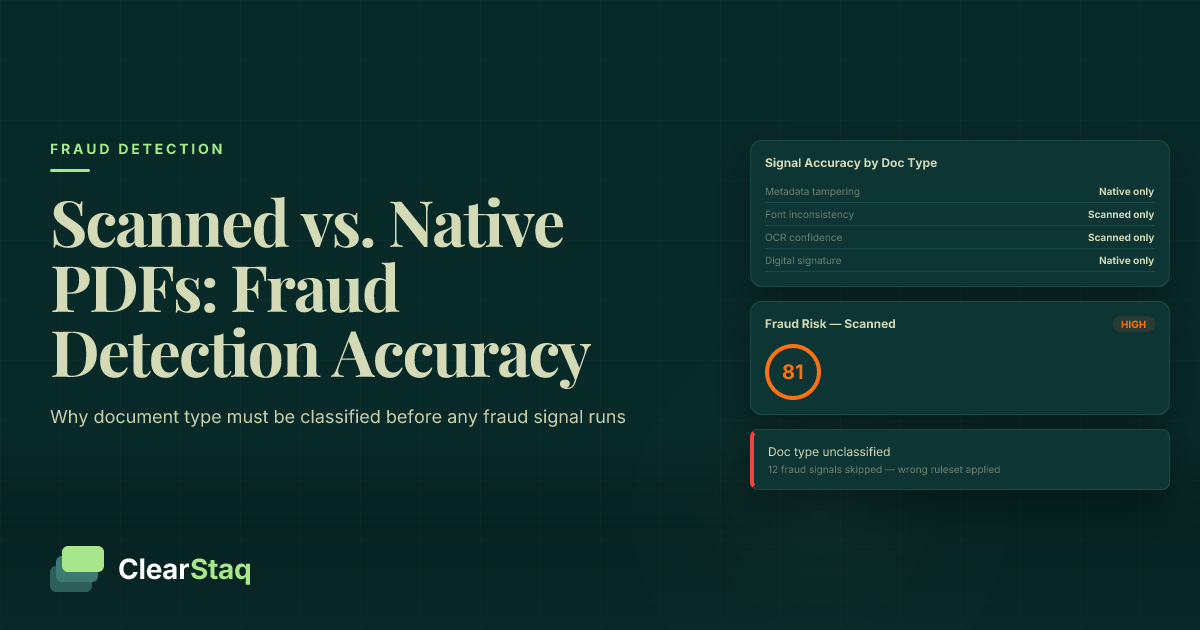
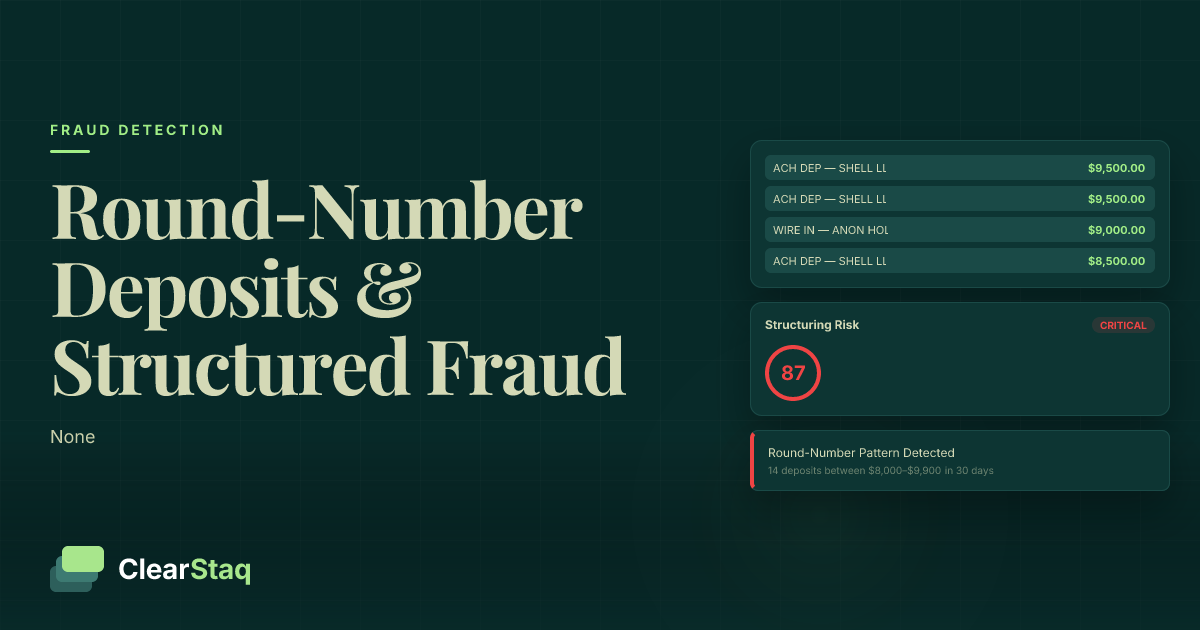
Extracting numbers from a PDF isn't the hard part — catching an altered one is. A tool needs to flag round-number deposits that look staged, mismatched date sequences, and metadata inconsistencies in the file itself. Software running 27+ distinct fraud signals catches patterns a landlord scanning a PDF by eye will never see.
Processing speed against your lease timeline
A good unit doesn't sit vacant for a week while you wait on a manual review. Parsing that returns results in under 5 seconds per document means you can turn around an approval or decline same-day instead of losing the applicant to a faster-moving landlord down the street.
Self-employed and gig income handling
W2 pay stubs are the easy case. Self-employed and 1099 applicants need tax return parsing and multi-month bank statement analysis to establish a real income average, not a single strong month cherry-picked from a screenshot.
Accuracy you can defend
If a rejected applicant disputes your decision, you need a number to point to, not a gut feeling. Parsing accuracy around 99.5% gives you a defensible basis for the call, versus "it looked off to me."
Fit for your portfolio size
A platform priced for enterprise lenders processing thousands of files a month is overkill for a landlord with 8 units. Match the tool to your volume before you commit to anything.
Top picks for landlords in 2026
ClearStaq — the fraud-catcher. Parses bank statements and tax returns directly, running 27+ fraud signals per document with results in under 5 seconds. It's built for lenders and CPAs verifying income at scale, and the same engine applies to rental income verification without extra setup. Verdict: Buy for any landlord tired of guessing whether a pay stub is real.
Manual employer verification calls — the free option. Calling HR to confirm employment costs nothing but your time, and it does confirm employment. It does nothing to verify actual income level, doesn't work for self-employed applicants, and takes 20-30 minutes per call when HR actually picks up. Verdict: Consider only for a 1-2 unit portfolio where volume is low enough to absorb the time cost.
Paycheck-linked instant verification services — the fast pass. These connect directly to payroll systems for instant, real-time confirmation of W2 income. Fast and accurate for salaried tenants, but blind to the self-employed and gig-economy applicants who make up a growing share of renters in 2026. Verdict: Consider as a supplement, never as your only method.
Screening bundle income "estimates" — the bundle trap. Tenant screening services that bundle a credit report with an income estimate often infer income from credit limits or self-reported figures rather than parsing an actual document. It looks like verification. It isn't. Verdict: Skip if income accuracy matters more than convenience.
Spreadsheet plus eyeballing PDFs — the DIY approach. Free, and it's what most independent landlords do by default. No fraud signal detection, no format handling beyond what you can read manually, and no defensible accuracy number if an applicant disputes a decision. Verdict: Skip past your second unit.
What to avoid
- Screening services that infer income from credit data alone. A high credit limit doesn't confirm current income; it confirms past approval decisions by other lenders.
- Accepting screenshots of a banking app instead of a parsed statement or downloaded PDF. Screenshots are trivially edited and carry none of the metadata a parser checks.
- Trusting pay-stub-only verification for self-employed applicants. Editable pay stub templates are widely available online, and doctored pay stubs are one of the most common document fraud patterns underwriting teams flag.
Verdict comparison
| Method | Format coverage | Fraud detection | Speed | Self-employed handling | Verdict |
|---|---|---|---|---|---|
| ClearStaq (bank statement + tax return parsing) | 900+ formats | 27+ signals | Under 5 sec | Yes, via tax return parsing | Buy |
| Manual employer calls | N/A | None | 20-30 min/call | No | Consider (tiny portfolios) |
| Paycheck-linked instant services | Payroll-integrated only | Limited | Instant | No | Consider (W2 only) |
| Screening bundle income estimates | N/A | None | Instant | Partial | Skip |
| Spreadsheet/manual PDF review | Reader-dependent | None | Hours | Manual only | Skip |
FAQ
What is the best income verification software for landlords in 2026?
For landlords who need to verify both W2 and self-employed applicants, ClearStaq's bank statement and tax return parsing with 27+ fraud signals is the strongest option in 2026 because it checks the underlying document, not just a self-reported number.
Is income verification software better than manual pay stub review?
Yes, for anything beyond a couple of units. Manual review can't catch edited PDF templates or cross-reference deposit patterns across months, while parsing software with fraud signal detection can.
How much does income verification software cost for a small landlord?
Pricing varies by platform and volume, so check current rates directly with the provider. Portfolio size should drive the decision — enterprise lending platforms are typically overbuilt for a handful of units.
Can income verification software catch a fake bank statement?
Software built to detect fake bank statements checks metadata, formatting consistency, and deposit patterns against known fraud signatures rather than just reading the numbers on the page. That's the gap manual PDF review can't close.
Do I need separate tools for self-employed tenants?
No, if the platform parses tax returns alongside bank statements. Self-employed and gig-economy applicants need multi-month income averaging that a single pay stub can't provide.
How fast is bank statement parsing for rental applications?
Modern parsing engines return results in under 5 seconds per document in 2026, fast enough to approve or decline an applicant the same day instead of losing the unit to a faster-moving landlord.
What's the difference between tenant screening and income verification?
Tenant screening typically covers credit and background checks; income verification specifically confirms the applicant can afford the rent using parsed financial documents. Many screening bundles skip real income verification and estimate instead.
Is 99.5% parsing accuracy good enough to defend a rejection?
Yes. A documented accuracy rate gives you a defensible basis for an approval or decline decision, which matters if an applicant disputes the outcome.
One last thing
The applicants worth worrying about aren't the ones with obviously fake documents — those get caught by anyone paying attention. It's the mid-tier forgery: a real bank statement template with three deposit lines quietly edited, run through a parser that checks metadata and deposit consistency across 90 days instead of one PDF page. That's the exact gap a 27-signal fraud check closes and a manual glance never will.
Related guides
ClearStaq Team
Content Team
The ClearStaq team builds AI-powered tools for bank statement parsing, fraud detection, and income verification.