Buy now pay later underwriting runs on speed — most platforms decide in under a second at checkout. That speed is also why BNPL books carry more income-verification blind spots than traditional installment lending: nobody has time to call an employer or wait on a pay stub upload before the customer abandons the cart.
- Bank statement parsing can verify income for buy now pay later underwriting in under 5 seconds per file at 99.5% accuracy.
- Gig and 1099 income swings are the top false-negative risk in BNPL underwriting — check 60-90 days of deposits, not one statement.
- 27+ fraud signals catch doctored pay stubs and edited bank statements before funding, not after a chargeback.
- Automated income checks let clean files auto-approve while flagged files route to manual review, keeping checkout speed intact.
Why this matters
BNPL applicants skew younger and gig-heavier than traditional credit borrowers, which means income is lumpy — a big Uber payout one week, nothing the next. Underwrite off a single pay stub or one bank statement screenshot and you'll approve installment plans against income that doesn't recur.
The fix isn't slower underwriting. It's parsing the right data — 60 to 90 days of bank statement deposits run through a fraud-aware bank statement parsing and income verification platform — so the decision stays instant but the income figure is real. In 2026, BNPL delinquency scrutiny from regulators and lenders alike makes this the difference between a plan that gets repaid and one that gets written off in month two.
What you'll need
- 60-90 days of bank statements from the applicant, PDF or bank-linked export — not a single-month screenshot
- A parser that reads formats across major and regional banks, not just PDF text extraction
- A fraud detection layer that flags altered balances, inconsistent formatting, and deposit anomalies
- 1099s or pay stubs if your BNPL product tier requires supplemental documentation
- A defined income floor or debt-to-installment ratio tied to the credit line size you're approving
The steps
1. Collect the right statement window
Pull 60-90 days of statements, not the most recent 30. BNPL applicants skew toward irregular income — gig payouts, tips, seasonal retail shifts — and one month hides that volatility.
Request a direct PDF download or bank-linked pull covering the last three statement cycles. Expected outcome: three months of deposit history to average against. Common mistake: accepting a single screenshot of one month's ending balance as proof of income.
2. Extract deposits into categorized income, not raw totals
A parser should separate payroll deposits, gig payouts, peer transfers, and loan proceeds automatically. Bank statement parsing that runs in under 5 seconds per file across 900+ formats does this without a human scrolling line by line.
Ending balance tells you nothing about income quality — a $4,000 balance from a single loan deposit reads completely differently than $4,000 built from four biweekly paychecks. Expected outcome: a categorized deposit ledger with recurring income flagged separately from one-off transfers. Common mistake: treating ending balance as income proof.
3. Calculate average monthly income across the full window
Average qualifying deposits across the full 60-90 day window instead of picking the best month. Flag any month that swings sharply from the rest of the pattern — that's the signal worth a second look, not the headline number.
Expected outcome: a normalized average monthly income figure that survives a bad month or a great one. Common mistake: underwriting off the peak month because it makes the application look stronger.
4. Run fraud signal checks before you approve anything
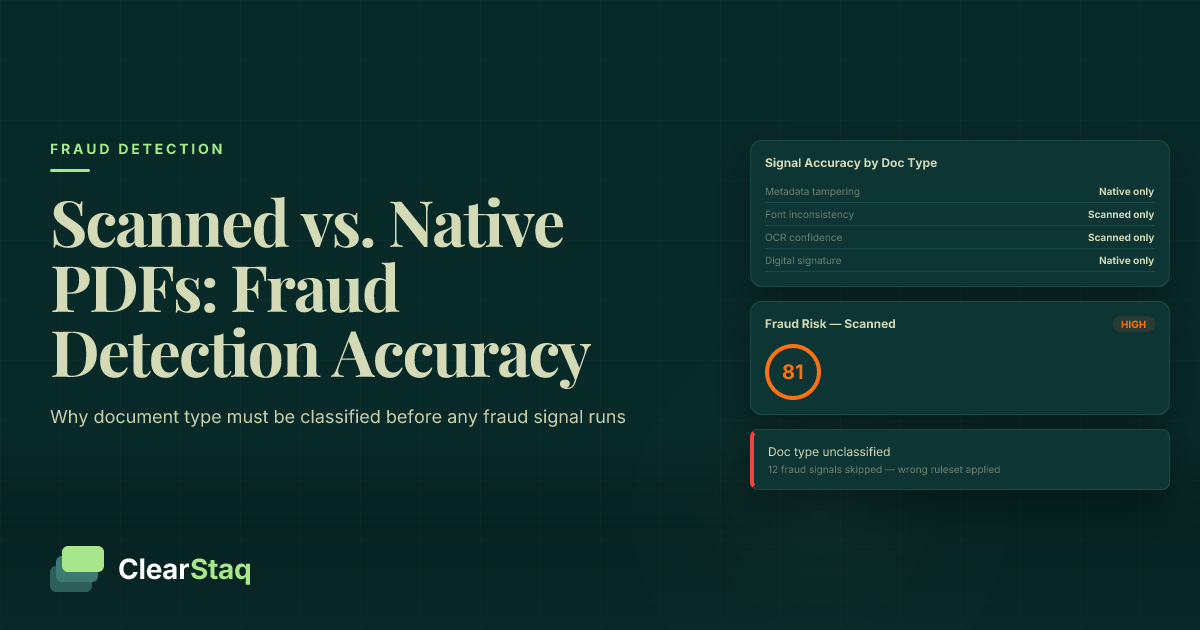
BNPL fraud shows up as synthetic identities and edited PDFs submitted for instant credit — a skilled edit can move a decimal point in a balance without leaving a visible trace. Screening every file against signals like altered running balances, mismatched fonts, inconsistent routing numbers, and deposit patterns typical of doctored documents catches what a visual scan misses.
A fraud layer checking 27+ signals per file is standard for this now; synthetic identity fraud detection built for buy now pay later platforms is worth reviewing if your current process is manual PDF review. Expected outcome: flagged files route to a review queue instead of auto-approving. Common mistake: relying on eyeballing a PDF for tampering.
5. Cross-check gig and 1099 income against deposit timing
Self-reported income on a BNPL application is often gross platform revenue, not net after fees. Match what the applicant claims against what actually deposits — verifying 1099 contractor income for underwriting walks through subtracting platform commissions so the number you underwrite against is the number that lands in the account.
Expected outcome: an income figure that matches actual cash flow, not a self-reported estimate. Common mistake: underwriting off gross gig revenue instead of net deposits.
6. Set an income floor tied to installment size
A flat income threshold doesn't work across BNPL tiers — a $150 purchase and a $3,000 financed plan carry different repayment risk. Tie your minimum verified monthly income to the size of the credit line before auto-approving.
Expected outcome: consistent approval logic instead of case-by-case judgment calls at different price points. Common mistake: applying the same income floor to a $99 checkout plan and a $2,500 electronics financing plan.
7. Automate the decision path for clean files
Build the workflow so files that clear all fraud signals and meet the income floor auto-approve, while flagged files queue for manual underwriting. This is what keeps BNPL's checkout-speed promise intact without approving blind.
Expected outcome: approval stays near-instant for clean applicants while risk gets caught before funding, not after a chargeback. Common mistake: auto-approving 100% of applicants to protect conversion rate, skipping the fraud check entirely.
See income verification in action
Parse statements and screen fraud signals before you fund the next BNPL plan.
Troubleshooting
- Applicant has income split across multiple accounts. Request statements from every account receiving deposits, not just the one they lead with — a single account often understates real income.
- Statement is a screenshot, not a bank export. Reject it and request a direct PDF download or bank-linked pull. Screenshots are the easiest format to doctor and the hardest to verify.
- Gig income shows up under a personal name, not the platform name. Cross-reference deposit memo lines against known payout naming patterns instead of taking the applicant's label at face value.
- Income looks stable but the balance keeps dropping near zero. Check for overdraft or NSF activity before approving — qualifying deposits with a near-zero running balance signal financial stress the income number alone won't show.
- Self-employed applicant has no pay stub or W-2. Use bank deposits as the primary verification source instead of requiring documents that don't exist for that borrower type.
- An unfamiliar regional bank's statement won't parse. Use a parser with broad format coverage — 900+ formats — instead of building one-off parsing logic per bank.
Tools and resources
- A bank statement parser with built-in fraud detection, covering major and regional bank formats
- 1099 contractor income verification for applicants without traditional payroll
- A defined fraud signal checklist — altered balances, font mismatches, deposit anomalies — reviewed before every funding decision
- An installment-tier income floor documented and applied consistently across every credit line size
What to do next
Once income verification is running clean, the next bottleneck is usually manual review volume on flagged files. Automating income checks for personal loan underwriting covers how to shrink that queue without loosening fraud screening.
FAQ
What's the best way to verify income for buy now pay later underwriting?
Parse 60-90 days of bank statement deposits and run them through fraud signal checks before approving. A single pay stub or one month of statements misses income volatility that's common among BNPL applicants.
How much does income verification cost for BNPL platforms?
Cost depends on the parsing and fraud detection tool used and the volume of applications processed monthly. Check current pricing directly with the vendor rather than assuming a flat per-file rate.
Is bank statement parsing better than pay stub review for BNPL underwriting?
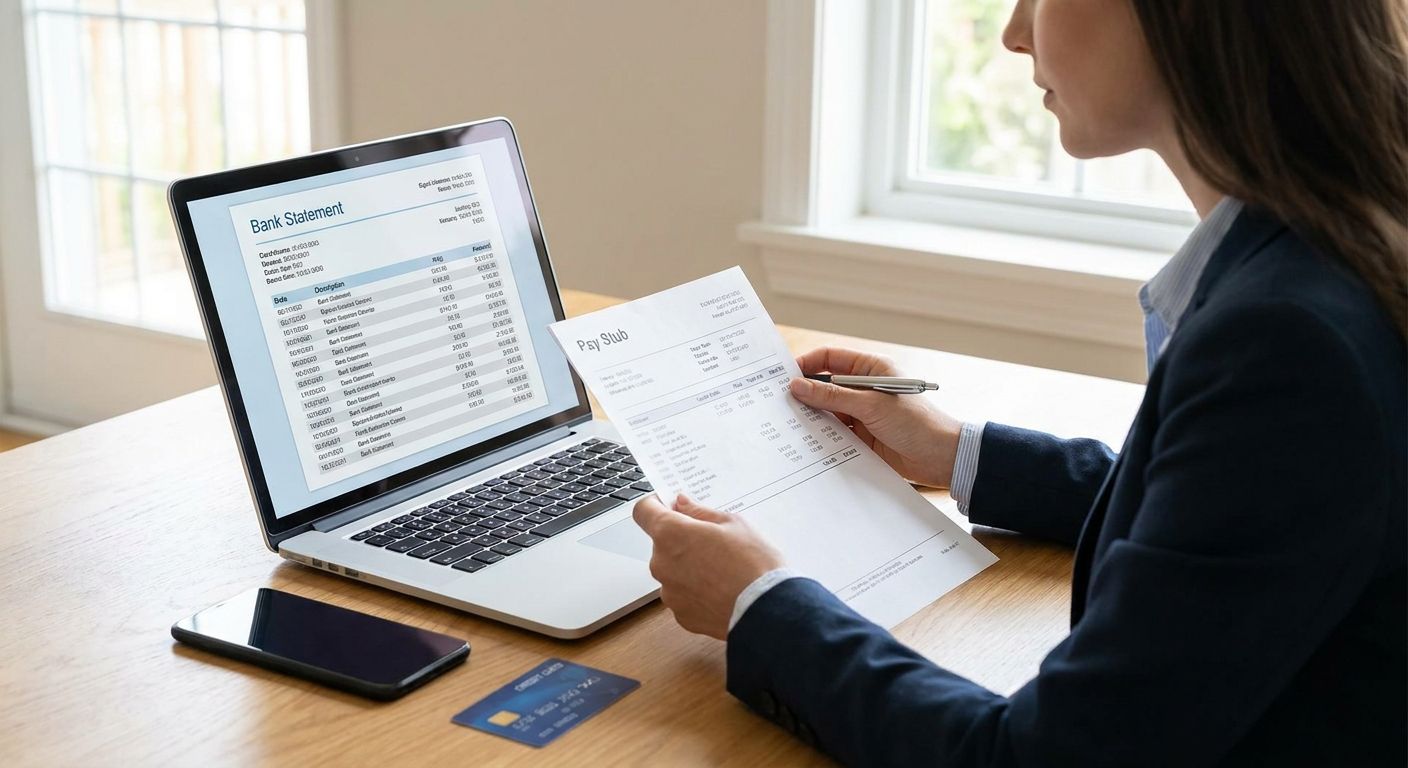
Bank statement parsing is generally more reliable because deposits show actual cash flow, not a self-reported document. Pay stubs are also easier to doctor than a full bank statement with 60-90 days of transaction history.
How many fraud signals should a BNPL underwriting workflow check?
A fraud detection layer checking 27+ signals — altered balances, formatting inconsistencies, deposit anomalies — catches most doctored bank statements and pay stubs before funding. Fewer signals leave more edited documents undetected.
Can gig economy income qualify for BNPL underwriting?
Yes, gig income qualifies when it's verified against actual deposit timing rather than self-reported gross revenue. Subtract platform fees and average across 60-90 days to normalize the income figure.
How fast can income verification run without slowing down BNPL checkout?
Automated bank statement parsing can process a file in under 5 seconds, which keeps clean applications moving at checkout speed. Only flagged files need to route to manual review.
What documents are needed to verify income for BNPL underwriting?
60-90 days of bank statements are the primary document, supplemented by a 1099 or pay stub when the product tier requires it. Bank statements alone are often sufficient for smaller credit lines.
Does BNPL underwriting need a full credit check in addition to income verification?
Many BNPL platforms use income and fraud signal verification alongside a soft credit pull rather than a full underwriting credit check. The exact mix depends on the platform's risk model and product size.
One last thing
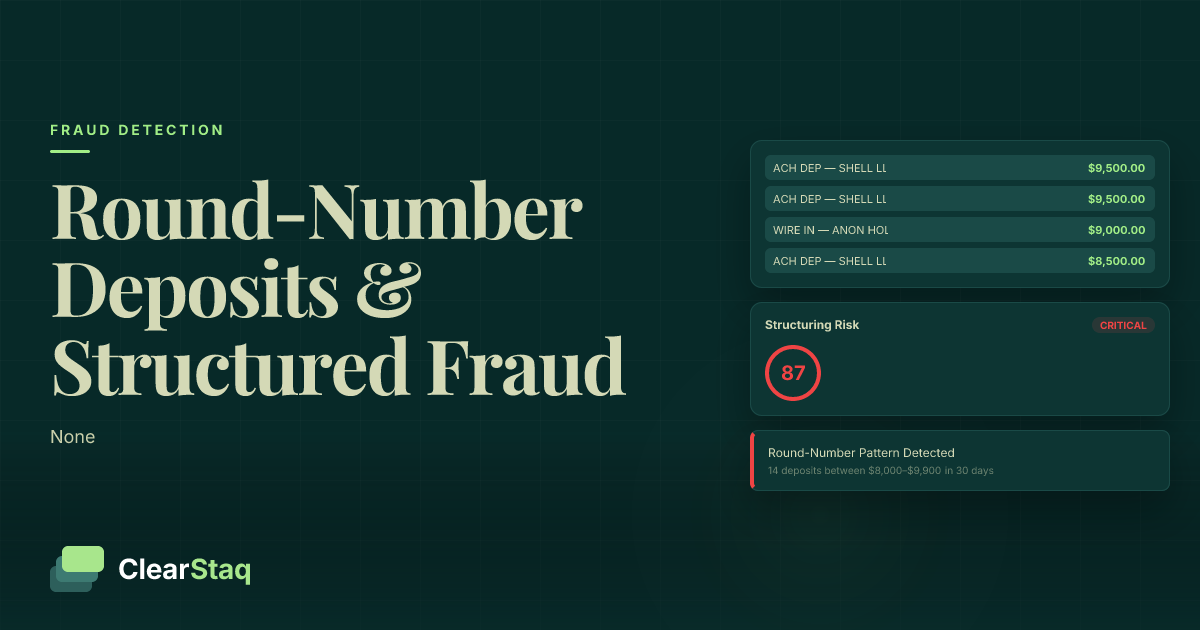
The applications that look cleanest on paper — steady balance, no overdrafts, round-number deposits every two weeks — are sometimes the easiest to fabricate. A doctored statement with a consistent, tidy pattern is a bigger red flag than a messy real one with a missed rent payment. Fraud signal checks exist precisely because "looks fine" and "is fine" aren't the same thing in 2026's BNPL fraud landscape.
Related guides
ClearStaq Team
Content Team
The ClearStaq team builds AI-powered tools for bank statement parsing, fraud detection, and income verification.