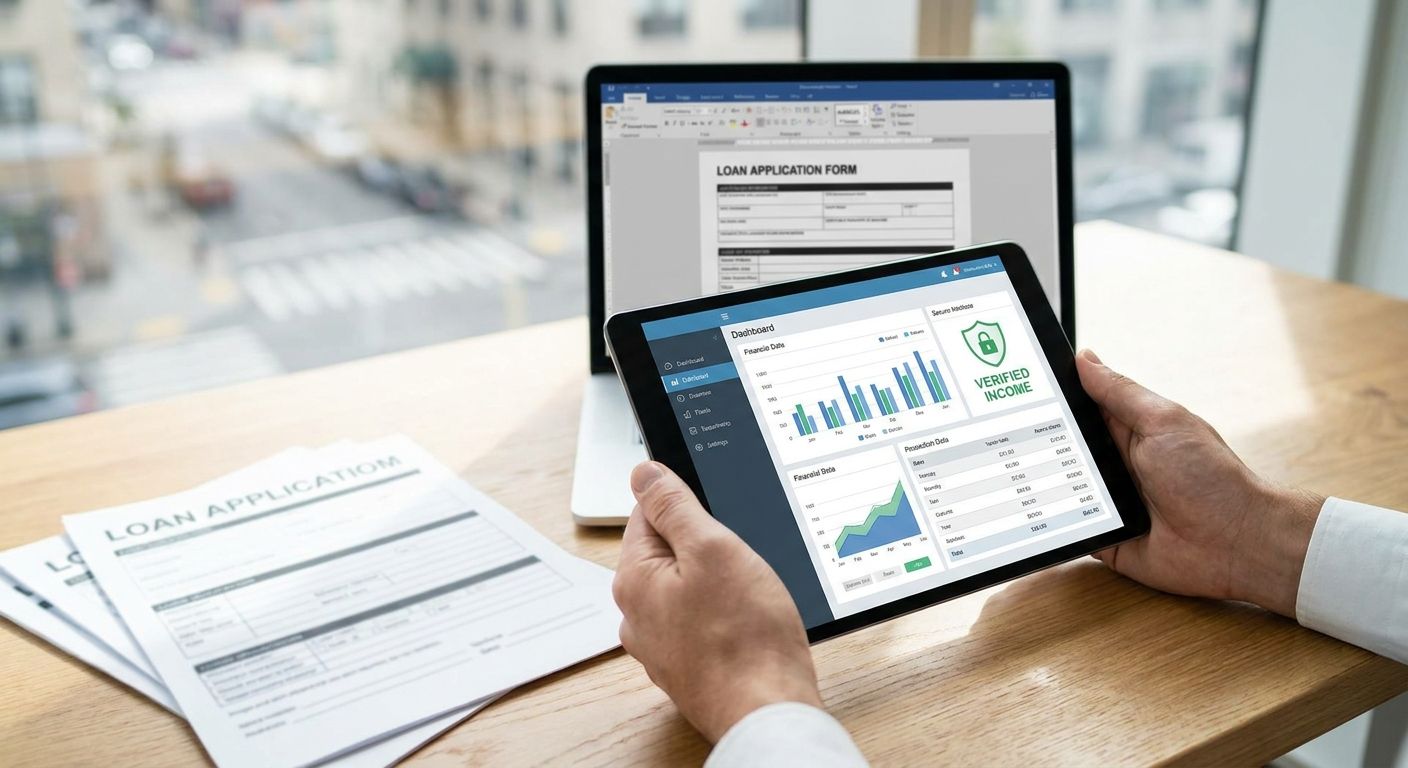
Personal loan underwriters still lose hours chasing pay stubs, calling employers, and squinting at PDF bank statements to confirm a borrower can actually afford the payment. You can automate income checks for personal loan underwriting with document parsing and fraud-detection software that turns a stack of statements into a verified income figure in under five seconds.
- ClearStaq parses bank statements and tax returns in under 5 seconds with 99.5% accuracy across 900+ formats.
- Automating income checks for personal loan underwriting cuts manual review time by up to 95% in 2026.
- 27+ AI fraud signals catch doctored pay stubs and altered statements before funding.
- Self-employed and 1099 borrowers need cash-flow-based verification, not just stated income, to avoid overstatement.
Why this matters
Manual income verification is the single slowest step in personal loan underwriting. An underwriter opening a PDF, cross-checking deposit dates against a pay stub, and re-keying totals into a loan origination system burns 15 to 30 minutes per file, and that's before anyone questions whether the pay stub is real.
In 2026, lenders processing thin-file or gig-economy applicants face two problems at once: verification speed and document fraud. Doctored pay stubs and edited bank statements are common enough that a purely manual review misses inconsistencies a parsing engine catches on the first pass. Automating the check does both jobs — it verifies income and screens for fraud in the same step.
What you'll need
- A bank statement or tax return parser that reads PDFs and scanned images, not just CSV exports
- Fraud-detection signals layered on top of parsing — deposit pattern anomalies, font/metadata inconsistencies, altered balance checks
- An API or upload workflow that connects to your loan origination system (LOS)
- A defined income calculation method (gross deposits, net of transfers, or trailing 3-month average)
- 10-15 minutes to configure verification rules the first time; near-zero setup after that
Income verification software built for personal loan lenders handles all five of these in one workflow instead of stitching together a PDF viewer, a spreadsheet, and a phone call to the employer.
The steps
1. Collect the right documents upfront
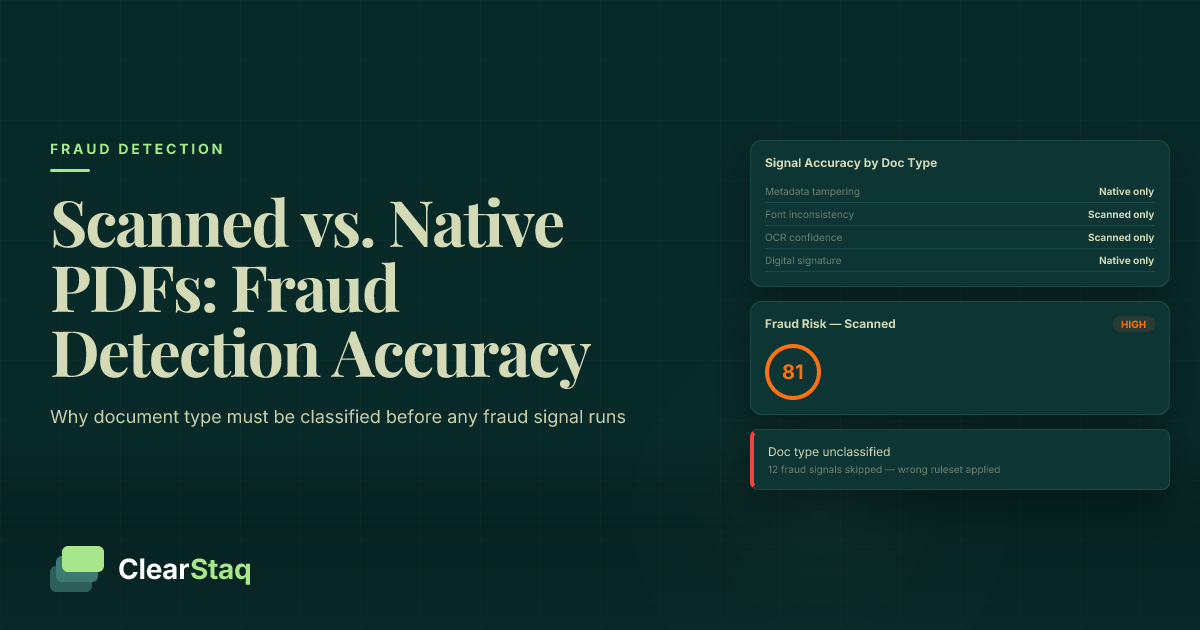
Request 2-3 months of bank statements plus the most recent pay stub or 1099, and specify PDF or direct bank-feed format if your intake form allows it. Scanned images work with a capable OCR engine, but native PDFs process faster and with fewer errors.
Common mistake: accepting screenshots of a mobile banking app. They strip metadata that fraud detection relies on, which forces a manual fallback review.
2. Run the statement through a format-aware parser
Upload the statement to a parsing engine that recognizes the borrower's bank layout rather than applying one generic template. A parser handling 900+ bank formats extracts transaction-level data — deposits, withdrawals, running balance — in under 5 seconds per file, versus 15-20 minutes of manual line-item review.
Expected outcome: a structured transaction list with deposit dates, amounts, and source categorization ready for income calculation.
3. Calculate verified income, not stated income
Don't take the pay stub total at face value. Cross-reference recurring payroll deposits against the stated income on the application. For salaried borrowers, this means matching deposit frequency (biweekly, semimonthly) to the stub's pay period. For self-employed or 1099 borrowers, calculate a trailing 3-month average of net business deposits instead of relying on a single tax return line.
The self-employed income verification workflow covers the deposit-averaging method in more detail if your book skews toward 1099 or gig applicants.
Common mistake: averaging gross deposits without excluding transfers between the borrower's own accounts, which inflates income by double-counting the same money.
4. Run fraud signals against every statement
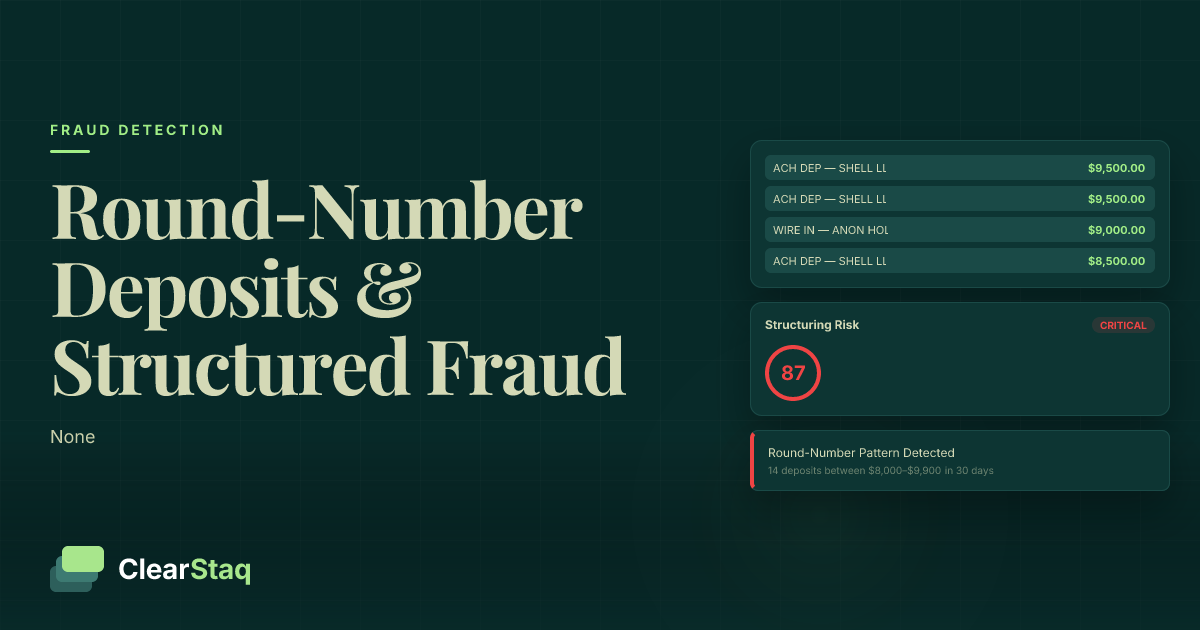
Apply automated fraud detection before a human ever opens the file. Look for altered balance totals, inconsistent fonts within the same PDF, deposit patterns that don't match the claimed employer's pay schedule, and metadata edits in the document properties. ClearStaq's platform runs 27+ of these signals simultaneously and flags anomalies for manual review instead of forcing a full manual audit on every file.
Expected outcome: a risk score or flag list attached to the file, not a pass/fail verdict — the underwriter still makes the final call, but on a filtered set of exceptions instead of every application.
5. Reconcile stated income against verified deposits
Compare the borrower's application-stated income to the parsed deposit total. A gap under 5-10% is normal (bonuses, timing). A gap over 20% is a flag worth a follow-up question, not an automatic decline — some of that gap is legitimate (a raise mid-quarter, seasonal work).
Common mistake: treating every variance the same way. Build tiered thresholds instead of one hard cutoff.
6. Route flagged files to a human, clear the rest automatically
Set a rule: files with no fraud flags and income variance under your threshold move straight to the credit decision engine. Files with any flag route to a underwriter queue with the specific anomaly highlighted, not a generic "review needed" tag. This is where the time savings compound — most lenders find 70-85% of files clear automatically once the rules are tuned, based on aggregated processing patterns in 2026.
7. Log the decision trail for compliance
Store the parsed data, fraud signals triggered (or not triggered), and the final income figure used for underwriting alongside the loan file. Regulators and auditors ask for this trail during exams, and it protects the lender if a borrower disputes the income calculation later.
“If a borrower's stated income and their trailing 3-month deposit average differ by more than 20%, that's a conversation, not an automatic decline.”
Troubleshooting
- Parser returns incomplete transaction data: The statement is likely a scanned image below usable resolution. Request a native PDF or direct bank export instead of a phone-camera photo.
- Fraud signals flag a legitimate self-employed borrower: Irregular deposit timing is normal for gig and seasonal income. Adjust the flag threshold for self-employed applicants rather than applying the same rules used for salaried borrowers.
- Income variance keeps triggering false flags: Check whether the calculation includes internal transfers between the borrower's checking and savings accounts. Exclude same-owner transfers from the deposit total.
- Pay stub details don't match bank deposits: This is the exact pattern automated fraud detection is built to catch — cross-check the stub against the doctored pay stub detection guide before escalating to a decline.
- Processing takes longer than expected: Sub-5-second processing assumes a native PDF and a format the parser already recognizes. Uncommon bank formats or heavily formatted statements from small credit unions sometimes need a fallback OCR pass.
- Underwriters still manually re-check every cleared file: That defeats the point of automation. Trust the fraud-flag threshold once it's been running for 30-60 days and the false-positive rate is measured, not assumed.
Tools and resources
- A bank statement and tax return parser with API access for direct LOS integration — see the bank statement parsing API for loan origination systems for how the connection works
- Fraud-detection rules tuned separately for salaried vs. self-employed vs. gig-economy borrower segments
- A compliance log that captures every parsed document and flag for audit purposes
- Defined income-variance thresholds reviewed quarterly, not set once and forgotten
See automated income checks in action
Parse a real statement and see the fraud flags in under 5 seconds.
What to do next
Once income checks run automatically, the next bottleneck in personal loan underwriting is usually the manual review queue itself. The guide to reducing manual underwriting review time covers how to shrink that queue further once fraud flags and income variance are already handled.
FAQ
What's the best way to automate income checks for personal loan underwriting?
Pair a format-aware document parser with layered fraud detection so income gets calculated and screened for fraud in the same pass. ClearStaq processes statements in under 5 seconds with 99.5% accuracy and 27+ fraud signals, which removes the need for a separate manual fraud review step.
How long does automated income verification take per applicant?
A parsing engine processes a bank statement or tax return in under 5 seconds once configured. Manual review of the same document typically takes 15-30 minutes, so the time savings compound fast across a loan pipeline.
Can automated systems verify self-employed or 1099 income?
Yes, but the calculation method differs from salaried income. Use a trailing 3-month average of net business deposits rather than a single tax return figure, since self-employed income fluctuates month to month.
Is income verification software better than manual pay stub review?
Software catches inconsistencies a manual reviewer misses, including altered fonts, metadata edits, and deposit patterns that don't match a claimed pay schedule. Manual review still has a role for edge cases, but automated screening should run first on every file.
How much does automated income verification cost for a personal loan lender?
Pricing varies by lender volume and integration scope, so check current pricing directly with the vendor. The cost comparison that matters is against the 15-30 minutes of manual review time per file that automation replaces.
What fraud signals matter most for personal loan applications?
Altered balance totals, inconsistent document metadata, and deposit patterns that don't match the claimed employer's pay schedule are the most common red flags in 2026. A system running 27+ signals catches most of these before a human ever opens the file.
Does automating income checks slow down loan approval?
No, it speeds approval up. Files with no fraud flags and income variance under threshold can route straight to the credit decision engine, while only exception files reach a human underwriter.
How do I handle a borrower whose stated income doesn't match verified deposits?
Set tiered variance thresholds instead of one hard cutoff. A gap under 5-10% is usually normal timing, while a gap over 20% warrants a follow-up question before any decision.
One last thing
The underwriters who resist automating income checks usually aren't worried about accuracy — they're worried about losing the judgment call on edge cases. The fix isn't full automation, it's automating the 70-85% of files that clear cleanly and reserving human judgment for the flagged minority, which is exactly the split that makes the 95% review-time reduction possible without cutting corners on fraud detection.
Related guides
ClearStaq Team
Content Team
The ClearStaq team builds AI-powered tools for bank statement parsing, fraud detection, and income verification.