First-party fraud in loan applications means the person applying is real, but the numbers, documents, or intent behind them aren't. You detect it by matching what an applicant claims — income, employment, cash flow — against what their bank statements, tax transcripts, and pay stubs actually show, then flagging the gaps: inflated income with no matching deposits, PDFs with metadata that doesn't belong to a real bank export, or the same identity reapplying across multiple lenders with slightly altered details. The hard part is that a real person is behind the file, so identity verification passes clean while the financial story underneath is fabricated or exaggerated.
- Detecting first-party fraud in loan applications means cross-checking stated income against actual bank statement deposits and tax transcripts.
- ClearStaq screens parsed bank statements and tax returns against 27+ fraud signals in under 5 seconds per document.
- Common first-party fraud markers: altered PDF metadata, doctored pay stubs, voided check fraud, and serial reapplication under identity variants.
- First-party fraud is harder to catch than synthetic identity fraud because the applicant and core identity are both real.
Why this matters
First-party fraud costs lenders more than stolen-identity fraud in raw dollar terms because the underwriter approved the file believing every number in it. There's no chargeback trigger, no victim calling to dispute a loan they never took out — just a borrower who inflated income by a few thousand dollars a month or edited a PDF bank statement to smooth over three overdraft weeks.
MCA brokers and short-term lenders see this constantly in 2026 because bank statement PDFs are trivial to edit and manual underwriters rarely check file metadata. A loan officer scanning 40 statements a week isn't opening the file properties panel on each one. That's the gap first-party fraud lives in.
How to detect first-party fraud in loan applications
Detection comes down to six checks, run in sequence, on every file before approval:
- Cross-check stated income against bank deposits. If the application says $18,000 a month but deposits average $9,400, that gap needs an explanation before underwriting proceeds.
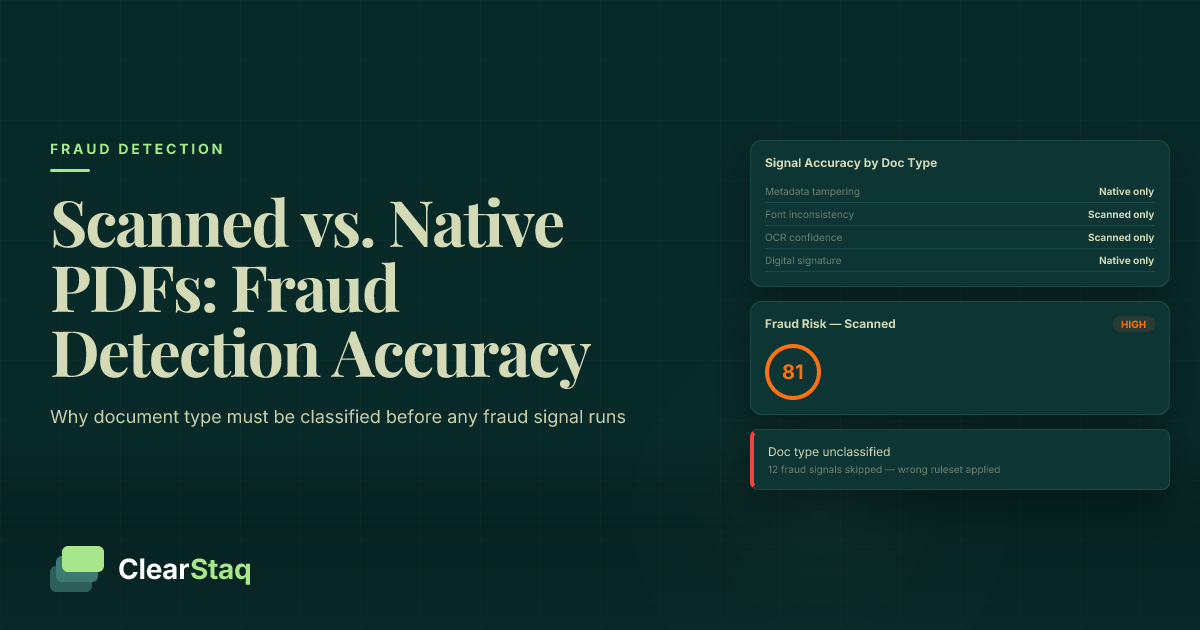
- Verify document authenticity at the file level, not just the visual layout — altered bank statements often carry PDF producer tags, font substitutions, or misaligned transaction totals that don't match a genuine bank export.
- Screen pay stubs and tax transcripts for internal consistency — YTD totals that don't divide evenly by pay periods, or doctored pay stubs with employer details that don't match a payroll provider's known format.
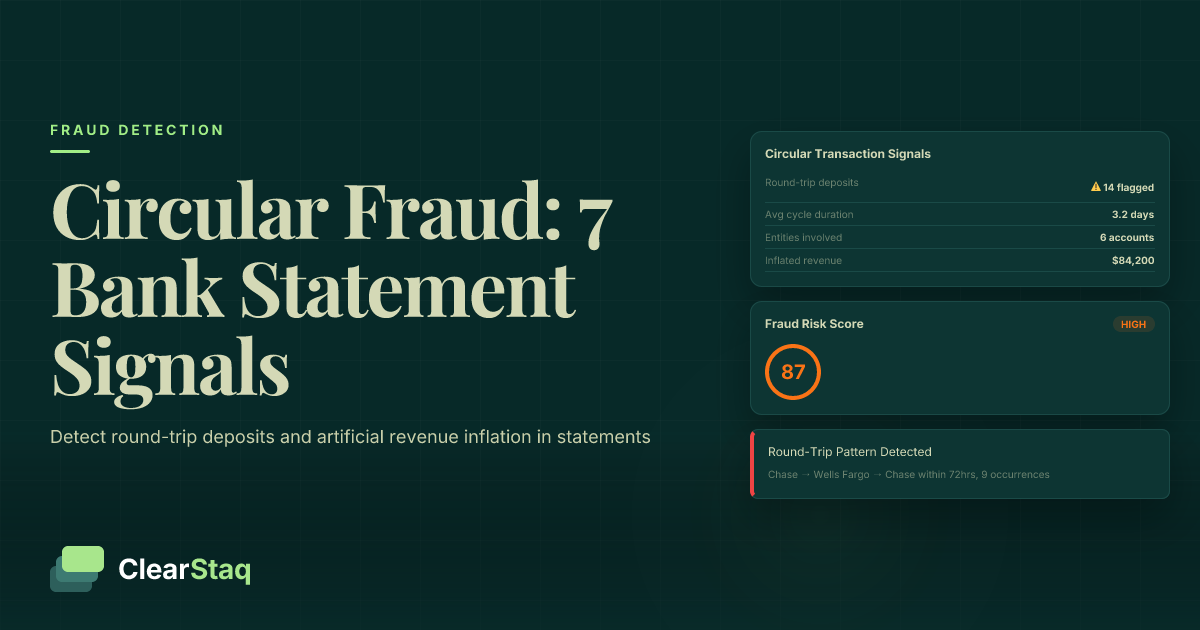
- Watch for voided check fraud and check kiting patterns — checks marked void that still show partial clearing, or deposits that bounce between accounts to inflate apparent balance.
- Run cross-application identity checks to catch straw borrower patterns — the same phone number or address reapplying under name variants across lenders.
- Flag serial reapplication and rapid resubmission within short windows, a signal that an applicant is shopping the same fabricated financial story across multiple originators.
The applicant is real. The numbers aren't. That distinction is why first-party fraud slips past checks built for identity theft.
First-party fraud vs. other fraud types
Lenders often conflate first-party fraud with synthetic identity fraud or stolen-identity fraud, but the detection approach is different for each.
| Fraud type | Who's real | Common signal | Best defense |
|---|---|---|---|
| First-party fraud | Real applicant, real identity | Income inflation, doctored pay stubs, edited bank statements | Document parsing + cross-source verification |
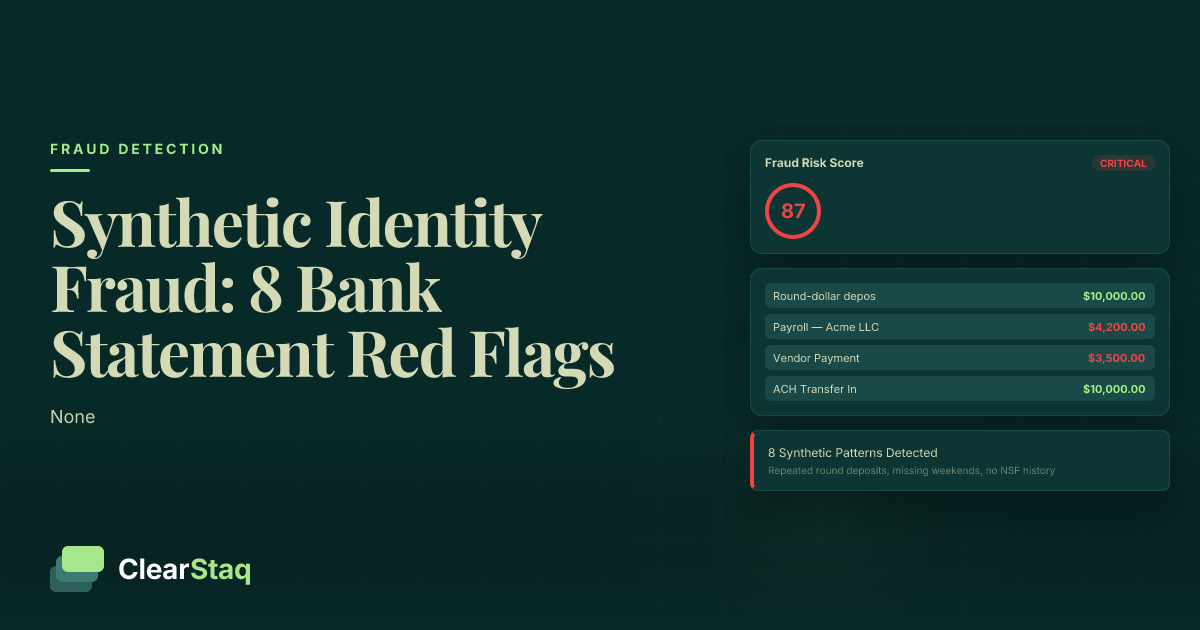
| Synthetic identity fraud | Fabricated identity built from real and fake data | No prior credit history, fresh address, thin file | Identity verification + credit bureau cross-check |
| Third-party/stolen identity fraud | Real identity, not the applicant | Mismatched biometrics, stolen documents | Biometric liveness detection |
If your team is only running synthetic identity fraud checks, first-party fraud walks right through — the SSN, name, and address all check out because they belong to the person sitting across from your underwriter.
Why first-party fraud is hard to catch
- The applicant is a real person with a valid SSN, so identity verification passes without a flag.
- Bank statement PDFs can be edited in common tools without breaking the visual layout underwriters actually look at.
- Manual reviewers scanning dozens of statements a week don't have time to check file metadata on each one.
- Fraud signals overlap with legitimate financial hardship — NSF fees and irregular deposits happen to honest borrowers too.
- MCA and short-term lenders see the same applicant reapply across multiple platforms under small identity variations.
- Cross-referencing bank statements, tax returns, and pay stubs by hand takes hours per file, so most teams sample-check instead of reviewing every document.
“The applicant is real. The numbers aren't.”
Parsing software closes this gap by running every document against the same fraud signal set every time, instead of relying on an underwriter's attention span at 4pm on a Friday. ClearStaq parses bank statements and tax returns and checks them against 27+ fraud signals in under 5 seconds, at 99.5% accuracy, which means the metadata and consistency checks that a manual reviewer would skip get run on every file, not a sample.
Is first-party fraud the same as synthetic identity fraud?
No. First-party fraud involves a real applicant misrepresenting their own finances; synthetic identity fraud involves a fabricated identity built from a mix of real and invented data. The detection methods barely overlap — first-party fraud needs document and income cross-checks, synthetic identity fraud needs credit history and identity verification checks.
How is first-party fraud different from application fraud generally?
First-party fraud is a subset of application fraud where the person applying intends to repay but misrepresents their financial picture to qualify or get better terms. Broader application fraud can include third parties using someone else's identity entirely, which requires biometric and identity verification rather than document analysis.
Can bank statement parsing software actually catch first-party fraud?
Yes, when the software checks document-level metadata and cross-references stated figures against parsed transaction data rather than just reading the numbers on the page. ClearStaq flags mismatches between claimed income, deposit patterns, and document formatting across 27+ signals per file.
Screen every loan file for fraud
Run 27+ fraud signals on bank statements and tax returns in under 5 seconds.
FAQ
What is first-party fraud in lending?
First-party fraud in lending is when a real applicant misrepresents their own income, employment, or financial history to qualify for a loan or better terms. It differs from identity theft because no one else's identity is being used.
How do lenders detect first-party fraud in 2026?
Lenders detect first-party fraud in 2026 by cross-checking stated income against bank statement deposits, screening documents for altered metadata, and flagging serial reapplications under identity variants. Automated parsing tools run these checks on every file rather than a sample.
Is first-party fraud more common than synthetic identity fraud?
Both are common in lending, but they require different detection methods: first-party fraud needs income and document cross-checks, while synthetic identity fraud needs credit history and identity verification.
What documents get faked most often in first-party fraud?
Bank statements and pay stubs are altered most often because they're easy to edit in common PDF tools without breaking the visible layout an underwriter checks. Tax transcripts are harder to fake convincingly because of their standardized format.
Can PDF metadata reveal a doctored bank statement?
Yes, a genuine bank export carries specific producer and creation tags, and an edited file often shows a different software signature or inconsistent font rendering. This is one of the fastest checks for first-party fraud in loan applications.
Does ClearStaq detect first-party fraud?
ClearStaq parses bank statements and tax returns and screens them against 27+ fraud signals, including document authenticity and income consistency checks, in under 5 seconds per file.
What's the difference between first-party fraud and check kiting?
Check kiting is a specific first-party fraud technique where an applicant moves funds between accounts to inflate an apparent balance before a bank statement is pulled. It's one signal among several, not the whole category.
One last thing
The fastest tell in first-party fraud detection isn't a number on the page — it's the file itself. A genuine bank statement export carries specific metadata; a version edited in Photoshop, Word, or a generic PDF editor almost always leaves a different producer tag or a font substitution somewhere in the document. Check the file properties before you check the deposit column, and you'll catch a meaningful share of doctored statements before they ever reach an underwriter's income calculation.
Related guides
ClearStaq Team
Content Team
The ClearStaq team builds AI-powered tools for bank statement parsing, fraud detection, and income verification.