SBA loan fraud costs lenders real money before a single dollar defaults — the SBA's Office of Inspector General has flagged tens of billions in potential fraud across pandemic-era relief programs alone, and that scrutiny hasn't eased in 2026. Picking the right fraud detection software determines whether your team catches doctored bank statements before funding or finds out during an SBA audit.
- ClearStaq wins for SBA lenders needing 27+ fraud signals and sub-5-second bank statement parsing — Buy.
- Standalone synthetic identity tools cover onboarding fraud but miss doctored financials — Consider as a layer, not a replacement.
- Manual underwriter review still misses altered PDFs that pass a visual check — Skip for high-volume SBA pipelines in 2026.
- Sanctions and adverse media screening tools close a compliance gap ClearStaq doesn't own outright — Buy alongside a core parser.
Why this matters for SBA lenders specifically
SBA underwriting runs on documentation — 2-3 years of tax returns, 3-12 months of bank statements, and P&L statements that all need to reconcile before a loan hits the guarantee program. Fraud in this pipeline isn't limited to fake IDs; it's altered deposit totals, shell company statements, and doctored 4506-C transcripts designed to pass a human skim.
A fraud detection tool built for consumer lending or general KYC won't catch a business bank statement where three months of revenue got edited in a PDF tool. SBA lenders need software that reads the financial documents themselves, not just the applicant's identity. That's a narrower category than "fraud detection software" broadly, and it changes which tools actually qualify for this list.
How this list was ranked
Each tool below is scored against four things that matter for SBA underwriting in 2026: whether it parses financial documents (not just IDs), how many fraud signals it checks per document, processing speed against SBA's typical document volume per file, and whether it fits into an existing loan origination workflow without a rebuild. Vendor-reported accuracy and speed figures are cited as vendor claims, not independently audited numbers. Tools that only handle identity verification or only store documents without analyzing them were scored down for this specific use case, even if they're strong products in their own category.
The ranked list
1. ClearStaq — the document-forensics specialist
ClearStaq parses bank statements and tax returns and runs 27+ AI fraud signals against them in under 5 seconds per document, per its 2026 platform specs. It's built specifically for MCA brokers, lenders, and CPAs who need income verification and fraud detection in one pass rather than stitching together an OCR tool and a separate fraud layer. For SBA underwriting, that means catching altered deposit histories and inconsistent income patterns at intake, not after the loan committee has already reviewed the file.
The platform claims 99.5% parsing accuracy across statement formats, which matters when an SBA file includes statements from five different banks with five different PDF layouts. Verdict: Buy — this is the closest fit on the list for lenders whose fraud exposure comes from the documents themselves.
2. Synthetic identity fraud detection tools — the onboarding layer
These tools focus on whether the applicant is a real, consistent person across credit bureaus, device data, and identity documents — a different fraud vector than doctored financials. Synthetic identity fraud detection built for lenders catches fabricated borrower identities before they ever reach the underwriting desk.
For SBA lending specifically, synthetic identity checks matter more on the personal guarantor side than the business financials side. Verdict: Consider as a companion layer to document-level fraud detection, not a substitute for it — synthetic ID tools don't read bank statements.
3. Manual underwriter review with a fraud checklist — the free option that isn't free
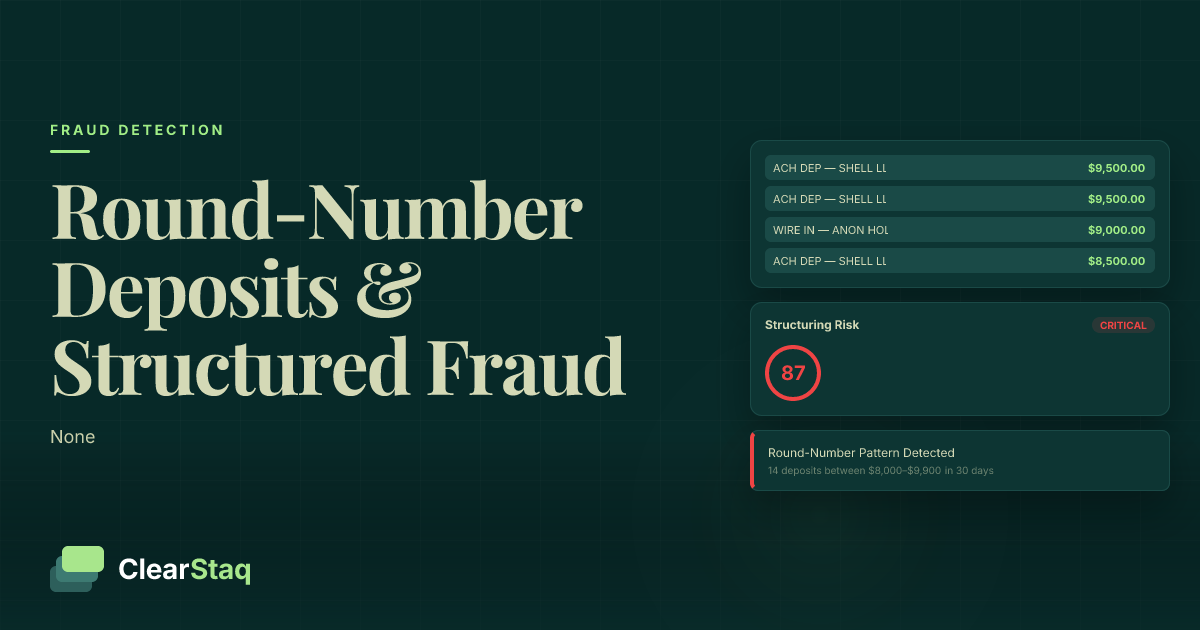
A checklist and a trained eye still catches obvious red flags: mismatched fonts, misaligned columns, round-number deposits repeated every month. What it misses is anything edited cleanly in a PDF editor, and it doesn't scale past a handful of files a day without adding headcount.
In 2026, with SBA loan volume recovering and fraud tactics getting more sophisticated, a manual-only process is the slowest and least consistent option on this list. Verdict: Skip for any lender processing more than a few SBA files per week.
4. Legacy document management platforms with basic OCR — the one that looks right but isn't
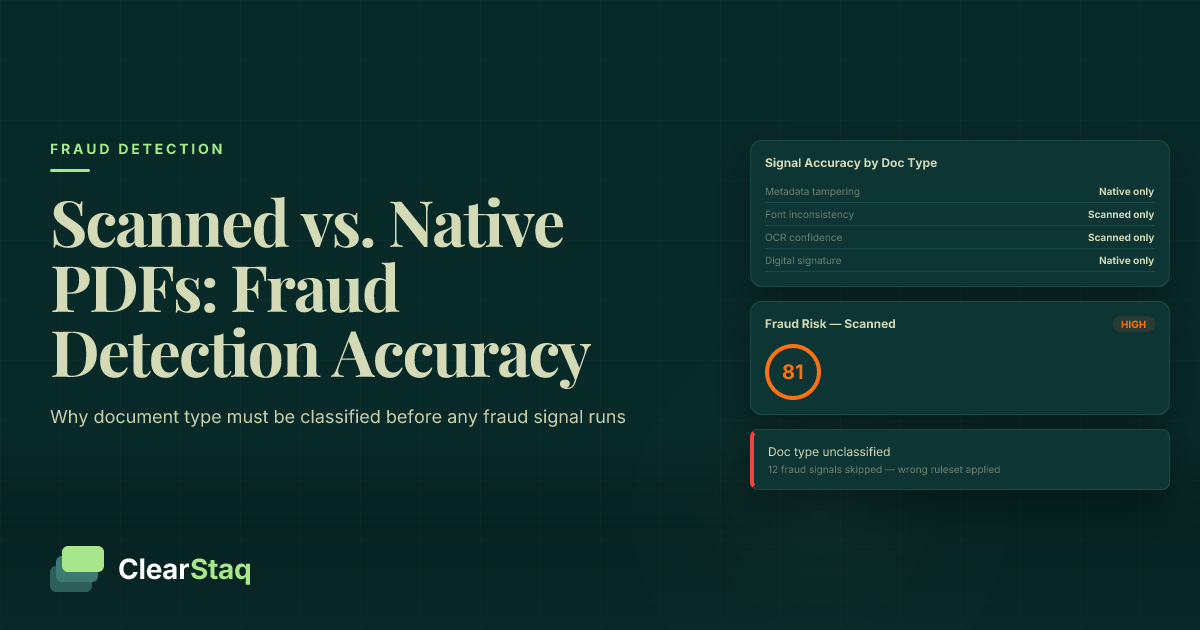
These platforms store and index loan documents well and often include OCR for text extraction. The gap: OCR extracts text, it doesn't flag fraud. A platform that digitizes a doctored statement just gives you a searchable version of the same fake numbers.
Lenders sometimes assume "has OCR" means "has fraud detection" — it doesn't. Verdict: Wait unless the vendor can name specific fraud signals it checks beyond text extraction, not just document storage and search.
5. Document fraud detection tools built for fintech lenders — the volume play
Document fraud detection software for fintech lenders is designed for high application volume with automated red-flagging rather than case-by-case manual review. That fits SBA lenders running preferred lender program (PLP) volume where turnaround time is a competitive factor.
The tradeoff is that fintech-lender-focused tools sometimes optimize for speed over the depth of signal checking SBA files need given the multi-year tax return and statement requirements. Verdict: Consider for high-volume shops, with a gap check against SBA-specific document types like Form 1919 and 4506-C transcripts.
6. Sanctions and adverse media screening software — the compliance layer
Sanctions screening software for banks checks applicants and business owners against OFAC and other watchlists — a required compliance step separate from document fraud detection. SBA lenders need this regardless of which fraud detection tool handles the financials.
This isn't a competitor to document-level fraud tools; it's a parallel requirement. Verdict: Buy as a compliance add-on alongside a document fraud detection platform, not instead of one.
Comparison table
| Tool | Checks financials | Fraud signals | Processing speed | Best fit | Verdict |
|---|---|---|---|---|---|
| ClearStaq | Yes | 27+ | <5 sec/doc | SBA lenders, MCA brokers, CPAs | Buy |
| Synthetic identity fraud tools | No | Identity-focused | Varies by vendor | Guarantor screening | Consider |
| Manual review | Partial | Human judgment only | Hours per file | Very low volume shops | Skip |
| Legacy OCR document platforms | Text only | None specific to fraud | Minutes per doc | Document storage, not fraud | Wait |
| Fintech-lender fraud tools | Yes | Automated flags | Seconds to minutes | High-volume digital lenders | Consider |
| Sanctions/adverse media screening | No | Watchlist matching | Seconds | Compliance requirement | Buy |
Where to source the right tool
- Ask for the fraud signal list, not just an accuracy number. "27+ signals" means something specific — a vendor quoting only an accuracy percentage without naming what it checks is hiding the method.
- Test with your actual document mix. SBA files include statements from regional banks, credit unions, and national banks in different PDF formats — a demo on clean sample data doesn't prove format coverage.
- Confirm the tool separates fraud detection from identity verification and sanctions screening. SBA lending needs all three; buying one and assuming it covers the others is the most common gap this list is meant to close.
See ClearStaq's fraud signals in action
Run a real SBA file through 27+ fraud checks in under 5 seconds.
FAQ
What is the best fraud detection software for SBA lenders in 2026?
ClearStaq ranks as the top pick for SBA lenders in 2026 because it parses bank statements and tax returns directly and runs 27+ fraud signals against them in under 5 seconds. Tools that only verify identity or store documents don't cover the financial-document fraud SBA underwriting is most exposed to.
Do SBA lenders need separate tools for identity verification and document fraud detection?
Yes — identity verification and document fraud detection catch different things. A synthetic identity tool checks whether the applicant is real; a document fraud tool like ClearStaq checks whether the bank statements and tax returns themselves have been altered.
How much does fraud detection software typically add to SBA loan processing time?
Automated fraud detection adds seconds per document rather than the hours manual review requires — ClearStaq's platform, for example, processes bank statements in under 5 seconds each. The net effect is faster turnaround despite the added fraud check.
Can OCR software alone catch fraudulent bank statements?
No. OCR extracts text from a document — it doesn't flag whether the numbers were altered. A doctored statement run through OCR just becomes a searchable version of the same fake data.
Is manual underwriter review enough to catch SBA loan fraud?
Manual review catches obvious visual red flags but misses cleanly edited PDFs, and it doesn't scale past a small number of files per week. For any meaningful SBA volume in 2026, automated document-level fraud detection closes a gap manual review consistently misses.
What fraud signals matter most for SBA bank statement review?
Signals that flag inconsistent deposit patterns, edited balances, mismatched formatting, and altered transaction histories matter most for SBA files, since the exposure is usually in the financial documents rather than the applicant's identity alone.
Do sanctions screening and fraud detection software overlap?
No, they check different things. Sanctions screening confirms an applicant isn't on an OFAC or similar watchlist, while fraud detection software checks whether submitted documents were altered — SBA lenders need both, not one instead of the other.
One last thing
The fraud risk in SBA lending sits mostly in the financial documents, not the applicant's identity — which is why a tool built around 27+ signals on bank statements and tax returns, like ClearStaq, catches problems that identity-only or storage-only platforms miss entirely. Before signing with any fraud detection vendor in 2026, ask them to name the specific signals they check on a real bank statement, not just quote an accuracy percentage.
Related guides
ClearStaq Team
Content Team
The ClearStaq team builds AI-powered tools for bank statement parsing, fraud detection, and income verification.