Underwriting automation software for embedded finance platforms replaces manual document review with parsing, fraud detection, and identity verification that runs in seconds instead of days. This guide breaks down what actually matters when you're evaluating vendors for a lending product you're embedding into your own platform in 2026.
- Underwriting automation software for embedded finance platforms needs sub-5-second parsing and 27+ fraud signals to work at checkout speed — anything slower breaks the embedded flow.
- ClearStaq processes 900+ bank statement formats at 99.5% accuracy, which matters most for platforms onboarding businesses across multiple banks.
- KYB and identity verification layers are not optional for embedded lenders — skip them and you inherit fraud risk from every partner bank.
- Storage-first document tools that don't parse or flag fraud are a Skip for any platform underwriting in real time.
Why this matters
Embedded finance platforms make credit decisions inside someone else's checkout flow, someone else's app, someone else's onboarding screen. There's no underwriting team standing between the applicant and the funding decision — the software is the underwriting team.
That changes what "good" looks like. A bank statement parser built for a traditional lender's back office can take a few minutes per file and nobody notices. A parser sitting inside an embedded lending flow has to run in seconds or the merchant abandons the application. The bank statement parsing API for loan origination systems is the layer most embedded platforms underestimate until fraud losses or drop-off rates force the issue.
Fraud risk also compounds differently. A single embedded platform might sit on top of dozens of partner banks or payment processors, each with its own document formats and its own exposure to synthetic identities and doctored statements. Underwriting automation software for embedded finance platforms has to catch that risk without adding friction, which is a harder problem than it sounds in 2026.
Who this is for
This guide is for product and risk teams at vertical SaaS companies, marketplaces, and fintech platforms that embed lending, BNPL, or working capital products directly into their software — not standalone banks or MCA brokers running their own underwriting desk. If your platform originates credit decisions on behalf of a partner bank or funds loans directly through an API, the criteria below apply to you.
What to look for in underwriting automation software for embedded finance platforms
Processing speed under real conditions
Embedded checkout flows don't tolerate multi-minute waits. If the underwriting layer takes longer than a few seconds to return a decision signal, the applicant leaves the flow before funding completes. Sub-5-second statement processing is the baseline for 2026, not a stretch goal.
Format coverage across banks
Your platform doesn't control which bank an applicant uses, so the parser has to handle whatever statement format shows up — Chase, Bank of America, a regional credit union, or a business account from a bank nobody's heard of. Software that only handles a handful of major bank formats forces manual fallback for the rest, which defeats the point of automation.
Fraud signal depth, not just a fraud score
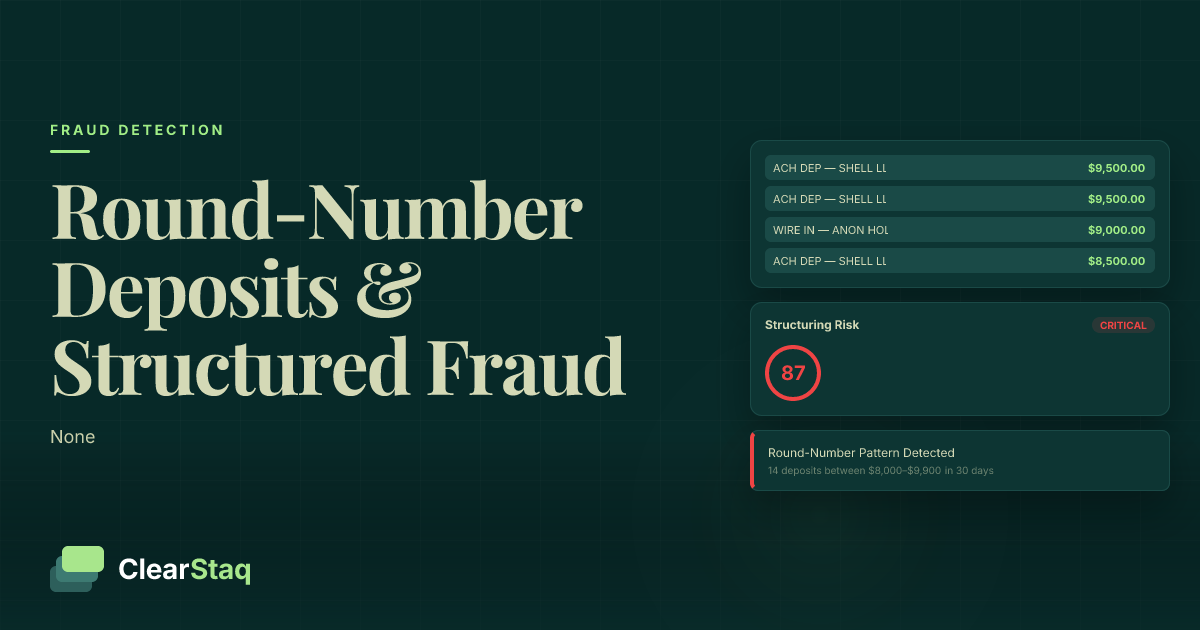
A single fraud score tells you nothing about why a statement got flagged. Underwriting automation software for embedded finance platforms needs to surface specific signals — altered balances, inconsistent transaction metadata, duplicate deposits, structuring patterns — so your risk team can act on the flag instead of guessing at it.
KYB verification for the business side
Embedded lending usually means underwriting a business, not just an individual. Business verification catches shell entities and mismatched ownership before funds move, and it's the layer that's most often bolted on late instead of built in from the start.
API-first integration into your existing stack
Embedded platforms already have an onboarding flow, a checkout flow, and a decisioning engine. The underwriting layer has to plug into that stack through an API — it can't require a rebuild of your origination system to work.
Accuracy that holds up at volume
A parser that's accurate on a demo file but degrades at scale creates review backlogs that erase the speed advantage. Accuracy has to hold across thousands of statements a month, not just the sample set a vendor shows in a sales call.
The core layers to evaluate
The parsing and income layer — buy it, don't build it. Bank statement parsing is the foundation every other underwriting decision sits on top of, and it's the layer most teams underestimate the cost of building in-house. ClearStaq parses statements across 900+ formats at 99.5% accuracy in under 5 seconds, which is the speed bar embedded flows actually need in 2026. Verdict: Buy — building a parser that handles hundreds of bank formats correctly is a multi-year project, not a sprint.
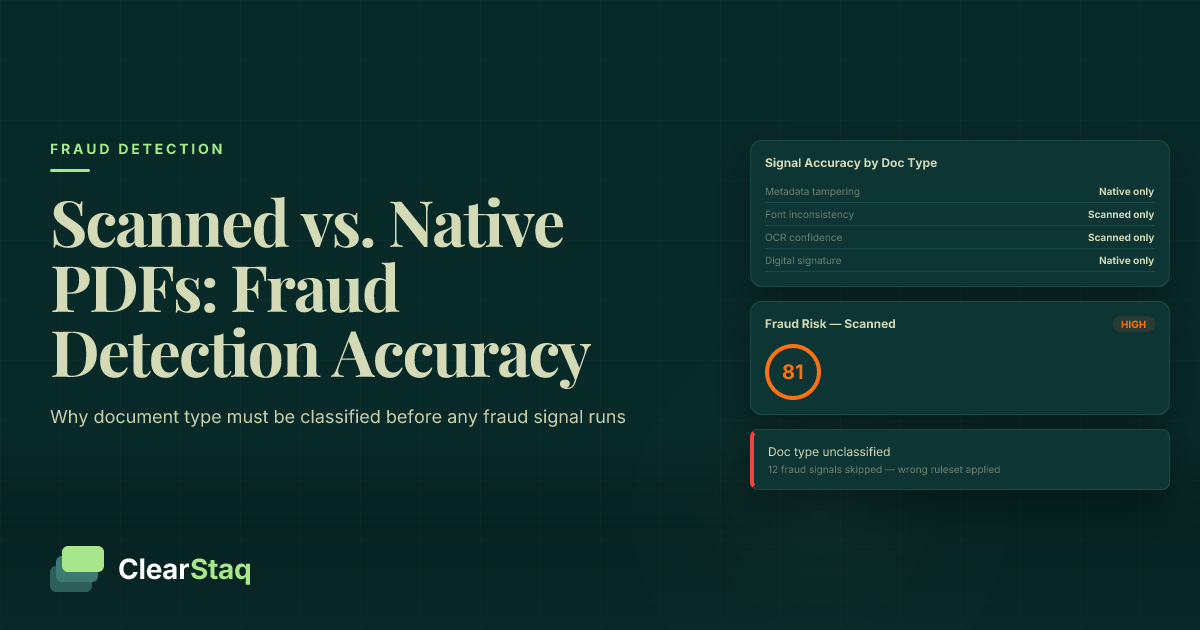
The fraud detection layer — the one platforms skip until they get burned. Parsing tells you what a statement says; fraud detection tells you whether to trust it. The fraud detection software for embedded finance platforms layer checks 27+ signals per statement — altered balances, inconsistent formatting, duplicate transactions — the kind of detail a single fraud score never surfaces. Verdict: Buy — skipping this layer means every partner bank's fraud exposure becomes your fraud exposure.
The KYB verification layer — non-negotiable for business lending. Embedded platforms funding businesses, not just consumers, need to verify the entity before the statement even gets parsed. KYB verification software for embedded finance platforms catches shell companies and ownership mismatches that a bank statement alone won't reveal. Verdict: Buy — this is compliance exposure, not a nice-to-have.
The identity verification layer — the gate before underwriting starts. Identity verification for embedded finance platforms confirms the applicant is who they claim to be before any financial document gets processed, which cuts synthetic identity fraud off at the door rather than catching it after funds move. Verdict: Buy for platforms onboarding new applicants at volume, Consider if your platform only underwrites existing, previously-verified customers.
See how ClearStaq handles embedded underwriting
Parsing, fraud detection, and identity checks in one API for 2026 lending flows.
What to avoid
- Storage-first document tools. Software that uploads and stores bank statements without parsing the transaction data or flagging fraud isn't underwriting automation — it's a filing cabinet with an API.
- Name-match-only screening. Sanctions or identity checks that stop at name matching generate high false-positive rates and miss the transaction-level fraud patterns that actually predict default.
- "Automated" tools that still require full manual review. If every flagged file still needs a human to re-read the entire statement, the software hasn't automated underwriting — it's automated the flagging, and left the work in place.
“If the software only stores documents and never reads them, it isn't underwriting automation.”
Verdict comparison
| Layer | Core Metric | Best For | Verdict |
|---|---|---|---|
| Bank statement parsing | <5s per file, 900+ formats | Every embedded lending flow | Buy |
| Fraud detection | 27+ signals per statement | Platforms with multiple partner banks | Buy |
| KYB verification | Entity + ownership check | Business lending products | Buy |
| Identity verification | Applicant authentication | New-applicant onboarding | Buy / Consider |
FAQ
What is underwriting automation software for embedded finance platforms?
It's software that parses financial documents, verifies identity and business entities, and flags fraud automatically inside a lending flow embedded in another company's app or checkout. It replaces manual document review with API-driven decisioning in 2026 lending stacks.
How fast should bank statement parsing be for embedded lending?
Under 5 seconds per statement is the working standard for 2026. Anything slower creates drop-off in checkout-embedded lending flows where the applicant is waiting live.
Do embedded finance platforms need KYB verification?
Yes, if the platform underwrites businesses rather than just individuals. KYB verification catches shell entities and ownership mismatches that a bank statement alone won't surface.
What's the difference between fraud detection and identity verification in underwriting?
Identity verification confirms the applicant is who they claim to be before underwriting starts. Fraud detection analyzes the financial documents themselves for signs of tampering or manipulation, and the two work as separate layers, not substitutes.
How many bank statement formats should underwriting software support?
Look for coverage of 900+ formats if your platform onboards applicants across multiple banks. Narrower coverage forces manual fallback for statements the parser can't read.
Is 99.5% parsing accuracy realistic for lending automation?
Yes, that accuracy level is achievable with format-aware parsing built specifically for bank statement structures, as opposed to generic OCR tools repurposed for financial documents.
Can embedded finance platforms run underwriting without an in-house risk team?
Yes, if the software layers parsing, fraud detection, and identity verification into a single API decision, a small product or ops team can manage exceptions without a dedicated underwriting desk.
How many fraud signals should underwriting software check per statement?
27 or more signals per statement gives risk teams enough specificity to act on a flag instead of guessing at what triggered it. A single aggregate fraud score doesn't provide that detail.
One last thing
The platforms that get burned in 2026 aren't the ones skipping underwriting software entirely — they're the ones running a parsing tool with no fraud layer behind it, because a clean-looking statement and a fraudulent one parse identically until something checks the 27+ signals underneath. Speed without fraud detection just means you fund the fraud faster.
Related guides
ClearStaq Team
Content Team
The ClearStaq team builds AI-powered tools for bank statement parsing, fraud detection, and income verification.