Embedded finance platforms hand out credit lines, BNPL installments, and working capital advances inside someone else's checkout flow — and fraud detection software for embedded finance platforms is what keeps synthetic identities, doctored bank statements, and layered fraud rings from riding along with every approval.
- ClearStaq processes bank statements and tax returns in under 5 seconds, built for approvals happening inside someone else's checkout flow — Buy for embedded lending stacks.
- Synthetic identity screening needs 27+ signals minimum; single-bureau checks miss layered fraud rings that embedded platforms attract at scale.
- BNPL-specific synthetic identity screening handles high-volume, low-friction approvals well — Consider it a companion layer, not a replacement.
- Manual document review is a Skip once a platform clears a few hundred applications a month in 2026 — throughput collapses first, fraud catches second.
Why this matters
Embedded finance strips out the bank in the middle, which means the software company now owns the fraud risk the bank used to absorb. A marketplace offering merchant cash advances, a payroll app offering earned wage access, a vertical SaaS tool offering equipment financing — all three are underwriting decisions inside someone else's brand, often with none of the fraud infrastructure a chartered lender built over decades.
That gap gets exploited fast. Fraud rings target embedded flows specifically because approval speed is the selling point — a platform that promises instant credit inside checkout has less time to catch a fabricated bank statement than a traditional lender running a five-day underwrite. ClearStaq exists for that exact compression: parsing bank statements and tax returns fast enough to keep the embedded experience instant while still running 27+ fraud signals underneath.
Who this is for
This guide is for product and risk teams at embedded finance platforms — BNPL apps, vertical SaaS companies bolting on lending, marketplaces financing their sellers, payroll platforms offering earned wage access, and banking-as-a-service providers underwriting on behalf of a partner brand. If your platform makes a credit decision without a human underwriter reviewing every file, this is your buyer's guide.
What to look for in fraud detection software for embedded finance platforms
Document-level parsing, not just identity checks
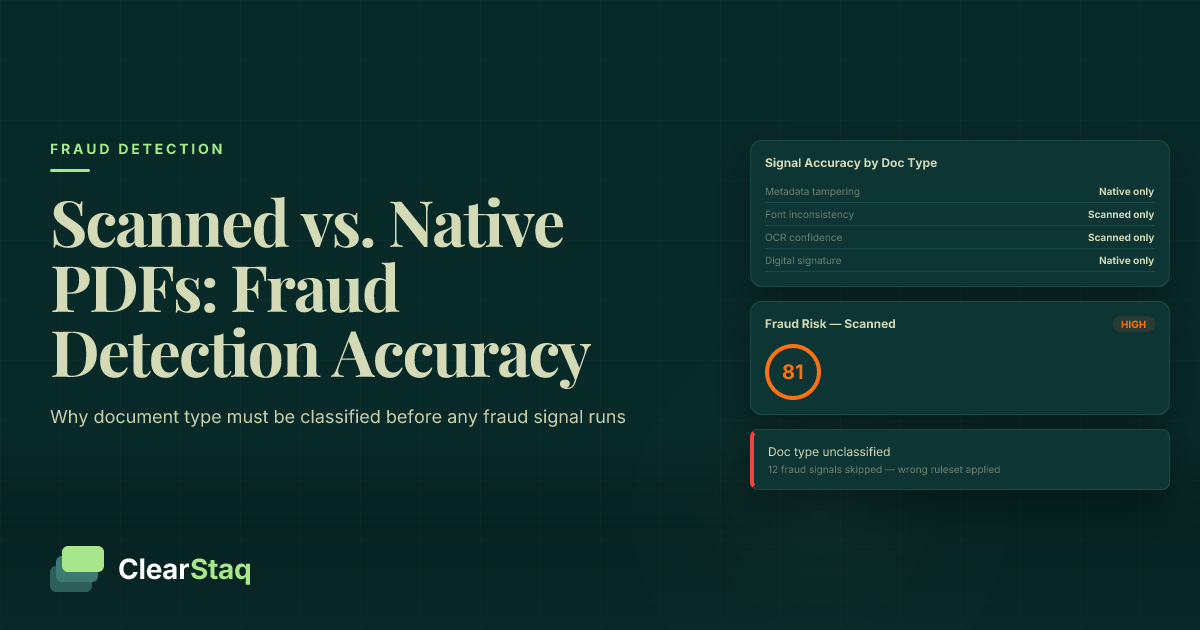
Most embedded platforms already run KYC and device fingerprinting. That catches stolen identities, not fabricated income. A platform needs software that opens the actual bank statement or tax return PDF and checks whether the numbers, formatting, and metadata are internally consistent — because a synthetic applicant with a real-looking identity can still submit a doctored statement.
Signal depth on synthetic identity
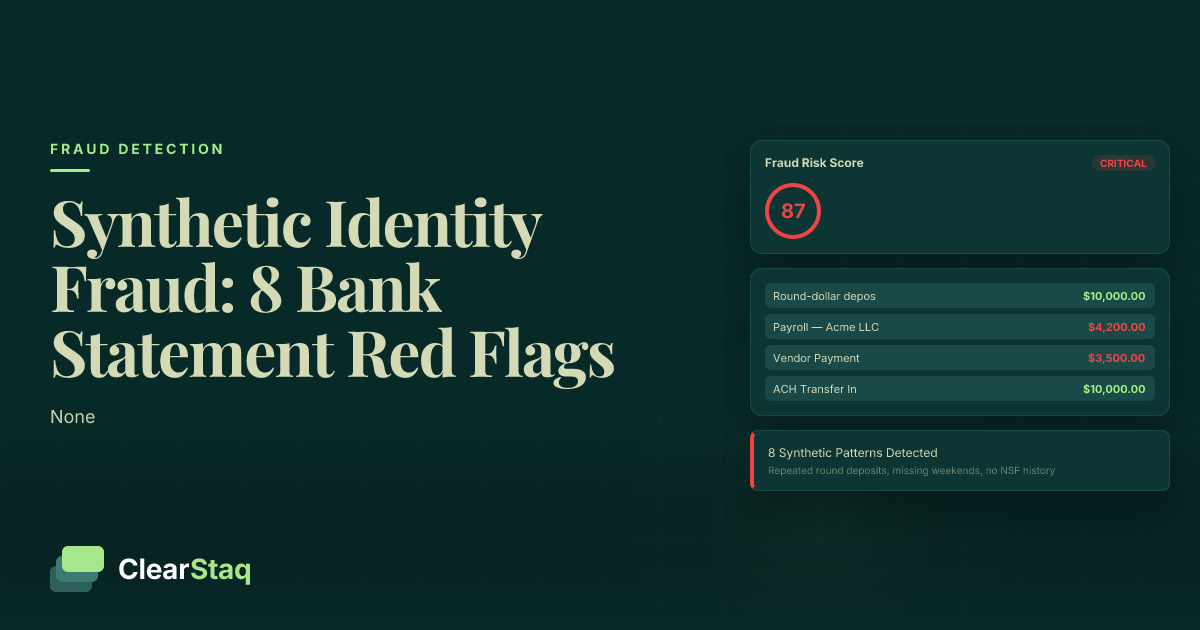
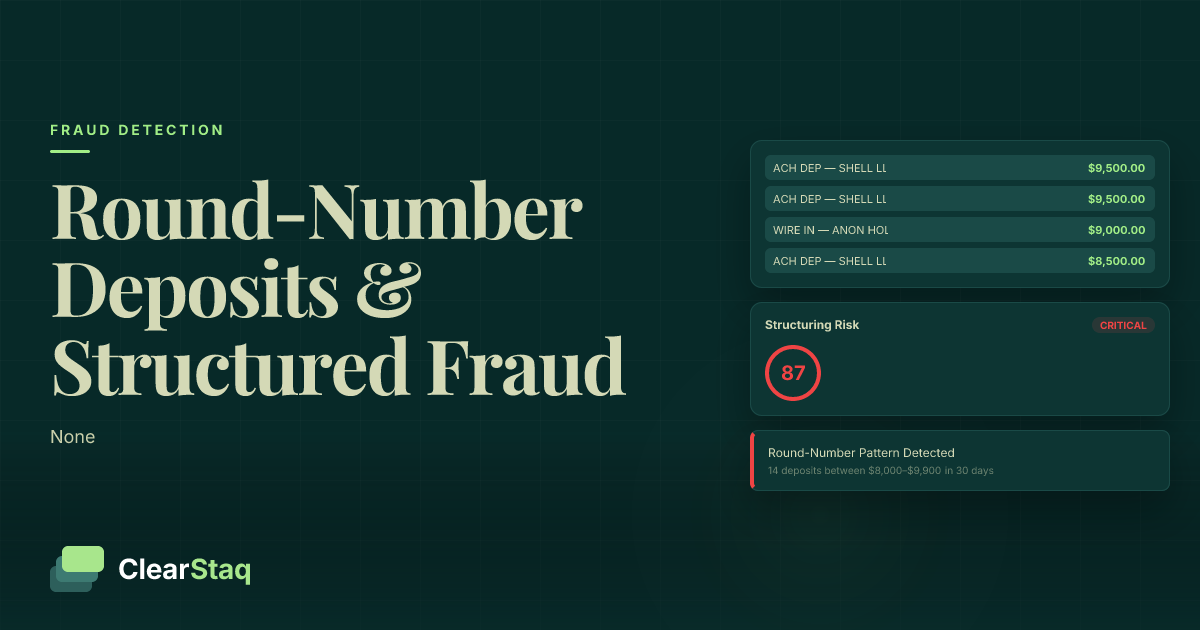
Synthetic identity fraud blends real and fake data into an applicant that passes basic verification. Software screening for it needs to cross-reference income patterns, deposit timing, and document metadata simultaneously — a single red flag rarely proves fraud, but 27+ signals firing together does.
Processing speed that survives an embedded UX
An embedded checkout can't wait 48 hours for a fraud review. If the product promise is instant approval, the fraud layer has to run in seconds, not overnight batches — sub-5-second document processing is the bar for 2026, not an aspiration.
Format coverage across every bank a partner's customers use
Embedded platforms don't get to pick their applicant pool's bank. A tool that only parses the top five banks cleanly will choke on the regional credit union statement or the odd PDF export format — coverage across 900+ statement formats matters more here than in a single-bank vertical.
Embeddable, API-first integration
This has to sit inside an existing product experience, not send the applicant to a third-party portal. API-first fraud detection that returns a structured verdict — not a PDF report a human has to read — is the only integration model that survives an embedded flow.
Audit trail for the partner bank or program manager
Most embedded finance programs answer to a sponsor bank or a program manager who needs to see why an application was flagged or cleared. Software without a clear, signal-by-signal audit trail creates compliance friction the moment a regulator or partner bank asks for documentation.
Top picks for embedded finance fraud detection
Document fraud detection for fintech lending flows — the speed pick. Sub-5-second processing on bank statements and tax returns means the fraud check doesn't become the bottleneck in an instant-approval flow. This is the layer that catches a statement where the balance history doesn't match the deposit pattern before the applicant ever sees a decision. Buy — see the full breakdown in document fraud detection software for fintech lenders.
Synthetic identity screening at onboarding — the safety net. 27+ AI signals running against income data, deposit timing, and document metadata catch the blended real-plus-fake identity that basic KYC waves through. Embedded platforms onboarding thousands of applicants a month need this running before the first credit decision, not after a chargeback shows up. Buy — details in synthetic identity fraud detection for fintech onboarding.
BNPL-specific synthetic identity screening — the checkout pick. Built for the volume and friction constraints of buy-now-pay-later approvals, where the entire decision window is measured in seconds and the applicant pool skews toward first-time credit users. It's a strong companion layer for BNPL programs specifically, but it's tuned for smaller ticket sizes than a working-capital embedded product. Consider it alongside a broader document fraud layer, not as the only screen.
Manual document review scaled with spreadsheets — the cautionary pick. A human reviewer eyeballing bank statement PDFs works at low volume, but it falls apart past a few hundred applications a month — review time stacks up, and fatigue misses the same doctored-balance patterns software catches consistently. Skip this once volume passes what one underwriter can review in a workday.
What to avoid
- KYC-only tools with no document parsing. They verify the applicant is a real person; they say nothing about whether the bank statement that person submitted is real.
- Generic OCR without fraud logic. OCR extracts text from a PDF — it doesn't flag when deposit timing looks manufactured or when metadata suggests the document was edited after the fact.
- Batch-processing tools built for overnight underwriting. A fraud tool designed for a five-day traditional loan cycle will bottleneck an embedded flow built around instant approval.
Verdict comparison
| Pick | Processing speed | Fraud signal depth | Best for | Verdict |
|---|---|---|---|---|
| Document fraud detection (fintech-tuned) | Under 5 seconds | 27+ signals | Instant embedded approvals | Buy |
| Synthetic identity screening at onboarding | Real-time | 27+ signals | High-volume onboarding | Buy |
| BNPL-specific identity screening | Real-time | Tuned for small-ticket volume | Checkout-speed BNPL | Consider |
| Manual document review | Hours per file | Reviewer-dependent | Sub-100 applications/month | Skip |
FAQ
What is fraud detection software for embedded finance platforms?
It's software that screens bank statements, tax returns, and identity data for fabrication or synthetic fraud before an embedded platform approves a credit line, BNPL installment, or advance. It runs inside the platform's own product experience rather than sending applicants to a separate portal.
How does synthetic identity fraud show up in embedded lending?
A synthetic applicant combines a real Social Security number with fabricated income and employment history, which passes basic KYC but fails document-level checks. Screening across 27+ signals — deposit timing, document metadata, income consistency — catches the mismatch that identity verification alone misses.
Is document fraud detection necessary if I already run KYC?
Yes — KYC confirms the applicant's identity is real, not that the bank statement or tax return they submitted is genuine. A real person can still upload a doctored document, which is why document-level parsing runs as a separate layer.
How fast does fraud detection need to run in an embedded checkout flow?
Under 5 seconds is the standard for 2026 embedded flows, since most embedded approvals promise an instant decision at checkout. Anything slower turns the fraud check into the bottleneck the product was built to avoid.
Can BNPL platforms use the same fraud detection as small business lenders?
Partially — BNPL-specific synthetic identity screening is tuned for smaller ticket sizes and higher application volume than a working-capital lender sees. Most BNPL platforms pair it with a general document fraud layer rather than relying on it alone.
What's the difference between OCR and AI-powered document parsing for fraud detection?
OCR extracts text from a PDF; it has no logic for whether the numbers or formatting were altered. AI-powered parsing checks internal consistency across the document and runs fraud signals on top of the extracted data.
How many fraud signals should embedded finance platforms screen for?
27 or more, run simultaneously, catches the layered patterns that single-signal checks miss — a mismatched deposit pattern alone isn't proof of fraud, but paired with document metadata anomalies it usually is.
Does this work for platforms that don't originate loans directly?
Yes — banking-as-a-service providers and program managers underwriting on behalf of a partner bank still need document-level fraud detection, since the partner bank will ask for an audit trail on every flagged or cleared application.
One last thing
The applicant pool in embedded finance is disproportionately young accounts and thin-file borrowers — exactly the profile synthetic identity fraud is built to mimic. Platforms that add document-level fraud detection late, after a fraud loss forces the issue, are usually retrofitting a check that should have shipped with the product's first credit decision, not its thousandth.
Related guides
ClearStaq Team
Content Team
The ClearStaq team builds AI-powered tools for bank statement parsing, fraud detection, and income verification.