Synthetic identity fraud detection for fintech onboarding means catching identities built from a real Social Security number stitched to a fake name, address, or date of birth before that identity opens an account, draws a credit line, or defaults with no one to chase. This guide covers what to look for in a detection stack, which layers actually work, and what to skip.
TL;DR: Bureau checks alone miss synthetic identity fraud because the SSN is real — the fraud is in the combination. The strongest 2026 stacks pair identity resolution with bank statement and tax return analysis, since synthetic identities almost always show thin, brand-new account histories with no organic transaction pattern. Buy a platform that scores 27+ fraud signals per document in under 5 seconds; skip anything that relies on manual review queues to catch volume. ClearStaq's parsing engine is one option built specifically around that combination.
Why this matters
Synthetic identity fraud doesn't trip a stolen-identity alert because no single victim reports it — the SSN might belong to a child, a deceased person, or simply an unused number. Fintech onboarding teams that rely only on bureau pulls and device fingerprinting approve these applications routinely, then discover the fraud months later when the account defaults with a balance and no real person behind it.
Bank statement and tax return data closes that gap. A synthetic identity can pass a soft credit pull, but it can't fake 12 months of organic deposit behavior, matching income sources, and consistent spending patterns. ClearStaq's parsing platform runs that check in the background during onboarding, flagging accounts where the paper trail doesn't match a real financial life. In 2026, that layer is the difference between catching synthetic fraud at intake versus writing it off at charge-off.
Who this is for
This guide is built for risk and compliance teams at digital lenders, neobanks, BNPL providers, and embedded finance platforms onboarding thousands of applicants a month, where a two-minute manual review per file isn't an option. If your onboarding funnel processes more applications than your fraud team can eyeball, the criteria below apply directly to your stack.
What to look for in synthetic identity fraud detection for fintech onboarding
Cross-referenced identity data, not single-bureau checks
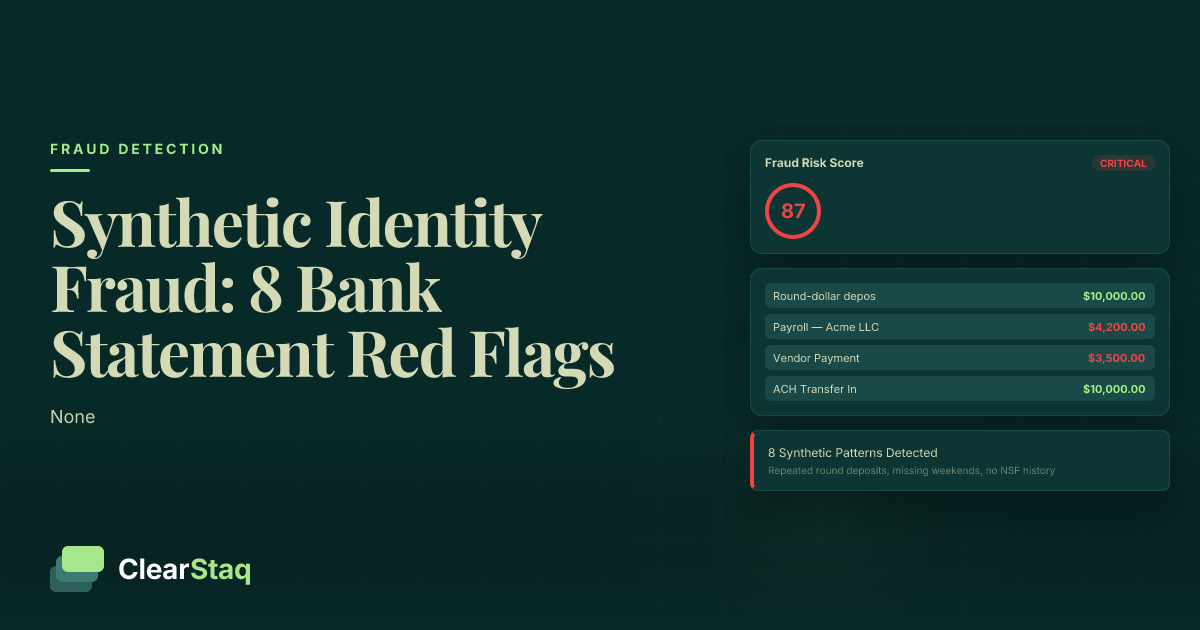
A synthetic identity is designed to pass a single bureau pull — that's the whole point of the fraud. Detection has to cross-reference SSN issuance patterns, address history, and financial document data together, because no one signal alone tells the full story in 2026's fraud environment.
Bank account age and transaction depth
Synthetic identities almost always show accounts opened within the last few months with no organic deposit history before the application. A parser that reads 12 months of statement history and flags accounts under a certain age with thin transaction counts catches this pattern before underwriting does.
Document authenticity signals on statements and tax returns
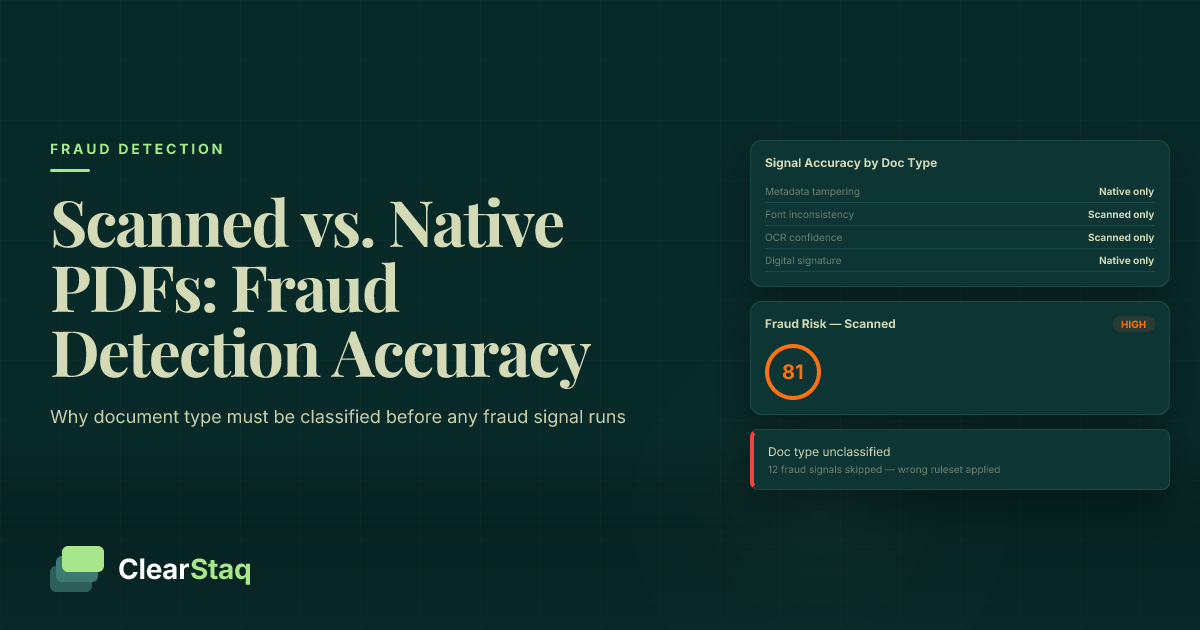
Fraud rings frequently pair a real SSN with fabricated or altered bank statements to manufacture income history. A platform that checks metadata, formatting consistency, and balance math across 900+ statement formats catches doctoring that a human reviewer skims past.
Explainable, itemized fraud signals
A fraud score with no breakdown is useless to a compliance team that has to document the decision. Look for a platform that itemizes each signal — 27+ separately scored flags, not one composite number — so underwriters can see exactly why an application got flagged.
Processing speed inside the onboarding funnel
Every second of onboarding friction costs conversion. A fraud check that takes minutes per applicant either gets skipped under volume or drives abandonment. Sub-5-second processing keeps the check invisible to legitimate applicants while still running the full signal set.
Format coverage across banks and document types
Synthetic identity applicants pull statements from whatever bank the fake profile happened to open an account with — Chase, regional credit unions, online-only banks. A parser that only handles the top three national banks misses the long tail where fraud rings often operate.
Top picks for synthetic identity fraud detection
The foundation layer — bank statement and tax return parsing. This is the base every other check sits on top of. A platform scoring 27+ fraud signals per document at 99.5% accuracy gives underwriters the raw material — income consistency, deposit patterns, account age — that identity checks alone can't see. See the full breakdown in best document fraud detection software for fintech lenders. Verdict: Buy.
The document forensics check — fake statement detection. Synthetic identities paired with doctored bank statements are one of the most common combinations fraud teams see in 2026 onboarding pipelines. A dedicated check for altered balances, edited transaction lines, and formatting mismatches catches what a bureau pull never will — see how to detect fake bank statements in loan applications. Verdict: Buy.
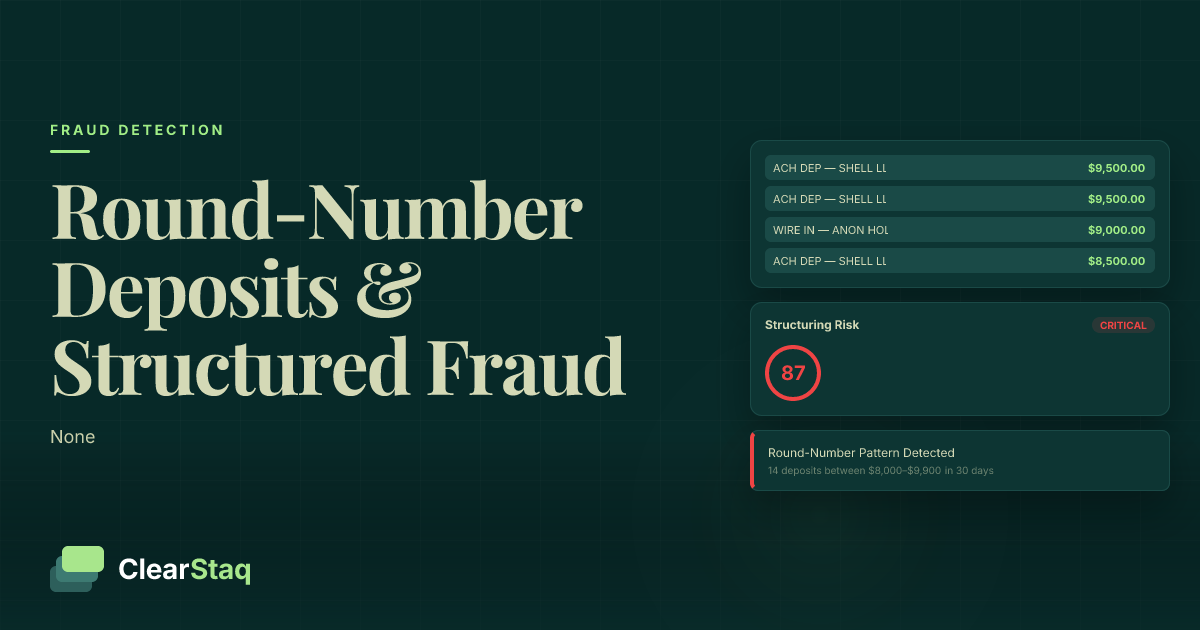
The transaction pattern lens — velocity and structuring analysis. Synthetic identity accounts often show deposit structuring designed to stay under reporting thresholds while building a fake income history. This layer catches patterns that look like income on the surface but don't hold up across a full statement cycle. Verdict: Consider if your current stack skips transaction-level pattern analysis entirely.
The vertical specialist — segment-specific fraud tooling. Credit unions and community lenders face a different synthetic identity profile than consumer neobanks, often tied to membership eligibility fraud. A tool tuned to that segment's document formats and fraud patterns adds precision a generic platform misses. Verdict: Consider for lenders with a concentrated member base.
The manual review holdout — human-only KYC queues. Relying entirely on a human reviewer to catch synthetic identity fraud at volume doesn't scale past a few hundred applications a month, and reviewers miss the same subtle transaction-pattern signals software catches automatically. Verdict: Skip once your onboarding volume exceeds what one analyst can review in a shift.
What to avoid
- Bureau-only identity checks — a real SSN with a fabricated identity passes these every time; they weren't built to catch the fraud type.
- Single-point-in-time document checks — a statement that looks clean in isolation can still sit inside a synthetic identity's fabricated income history; you need pattern analysis across months, not a single upload.
- Fraud scores with no signal breakdown — a black-box score gives compliance nothing to document when an application gets declined or escalated.
Verdict comparison
| Approach | Signal depth | Speed | Best for | Verdict |
|---|---|---|---|---|
| Bank statement + tax return parsing | 27+ signals | Under 5 seconds | High-volume onboarding | Buy |
| Fake statement / document forensics | Metadata + math checks | Under 5 seconds | Doctored income history | Buy |
| Transaction pattern / structuring analysis | Deposit velocity | Minutes (batch) | Fabricated income trails | Consider |
| Vertical-specific fraud tooling | Segment-tuned | Varies | Credit unions, niche lenders | Consider |
| Manual KYC review only | Analyst judgment | Hours to days | Low volume only | Skip |
FAQ
What is synthetic identity fraud in fintech onboarding? Synthetic identity fraud combines a real SSN — often one that's unused, belongs to a minor, or belongs to someone deceased — with a fabricated name, address, or date of birth to create an applicant profile that passes a standard bureau check.
Can bureau checks alone catch synthetic identity fraud? No. Bureau checks validate that an SSN exists and has some credit history, but they don't verify that the name and identity attached to it are real, which is exactly the gap synthetic identity fraud is built to exploit.
How does bank statement analysis help detect synthetic identities? Synthetic identity accounts typically show short account tenure, thin transaction history, and income patterns that don't match a real financial life, all of which show up clearly when a parser reads 12 months of statement data.
Is synthetic identity fraud detection different for auto lenders vs fintech lenders? The core signals overlap, but document formats and fraud patterns differ by lending vertical — auto lenders see different fraud tells than credit unions or factoring companies, so segment-tuned tooling adds precision generic checks miss.
How fast should synthetic identity fraud detection run during onboarding? Under 5 seconds per document is the 2026 benchmark for keeping fraud checks invisible to legitimate applicants while still processing the full signal set before an approval decision.
Does document format coverage matter for catching synthetic identities? Yes. Fraud rings often use accounts at smaller or online-only banks specifically because format-limited parsers miss them; coverage across 900+ statement formats closes that gap.
What's the biggest mistake fintech onboarding teams make with synthetic identity fraud? Treating it as purely an identity-verification problem and skipping financial document analysis, when the strongest tell is almost always in the bank statement or tax return, not the identity fields.
How many fraud signals should a detection platform check per document? Look for at least 27+ itemized signals per document rather than a single composite score, since compliance teams need the breakdown to document why an application was flagged or declined.
One last thing
Synthetic identity accounts frequently share the same deposit velocity fingerprint across dozens of applications from the same fraud ring, because the same operator is funding multiple fake identities from a shared source of funds. That pattern shows up as commingled deposits and structured transfers, not as anything a bureau check would ever surface. If your onboarding fraud checks stop at identity verification, that overlap goes undetected until charge-off.
Related guides
ClearStaq Team
Content Team
The ClearStaq team builds AI-powered tools for bank statement parsing, fraud detection, and income verification.