Employment and income verification software for HR teams in 2026 has to do more than file a PDF — it has to prove the number on the pay stub is real before an offer letter goes out.
- Employment and income verification software for HR teams should confirm income, not just collect a document — ClearStaq flags fraud across 27+ signals in under 5 seconds.
- Payroll-linked aggregators cover W-2 employees well but leave 1099 and gig income unverified.
- Manual reference calls still work in 2026 for one-off hires but stall past a handful of verifications a week.
- Skip any tool that accepts a pay stub screenshot with no cross-check against bank deposits or tax filings.
Why this matters
HR teams hired at record volume through 2024 and 2025 without a matching increase in verification staff, and 2026 is the year that backlog turns into risk. Doctored pay stubs are a downloadable-template problem now, not a rare forgery — a candidate can edit gross pay in a PDF editor in minutes.
The gap widens for self-employed, 1099, and gig-economy applicants, who make up a growing share of candidate pools in trades, delivery, healthcare staffing, and finance roles. A payroll database has nothing on file for someone who invoices clients directly, which pushes HR teams back to manual document review — the slowest, most error-prone step in the hiring funnel.
Who this is for
This guide is for HR and People Ops teams verifying income or employment for candidates who don't fit a clean W-2 record: contractors converting to full-time roles, gig workers, staffing agency placements, and any hire where compensation history or self-reported income needs a document check rather than a database lookup. It's also for compliance-sensitive employers — fintech, healthcare, financial services — where a bad hire tied to falsified income has downstream regulatory exposure.
Platforms built around document parsing, like ClearStaq, sit outside the traditional payroll-database model. ClearStaq's core use case is lenders and CPAs verifying bank statements and tax returns, but the same parsing and fraud-detection layer applies directly to HR teams checking a candidate's self-reported income against real bank activity.
What to look for in employment and income verification software for HR teams
Turnaround time that doesn't stall the offer
Candidates drop out of processes that stretch past a few days of limbo, especially in competitive markets. A verification step measured in seconds rather than days keeps time-to-offer intact instead of adding a silent delay nobody budgeted for.
Coverage of self-employed, 1099, and gig income
A tool that only queries payroll databases returns nothing for a candidate who invoices clients or drives for three different apps. Software built to parse 1099 contractor income directly from bank statements and tax returns closes that gap instead of forcing a manual workaround.
Built-in fraud and document-tampering detection
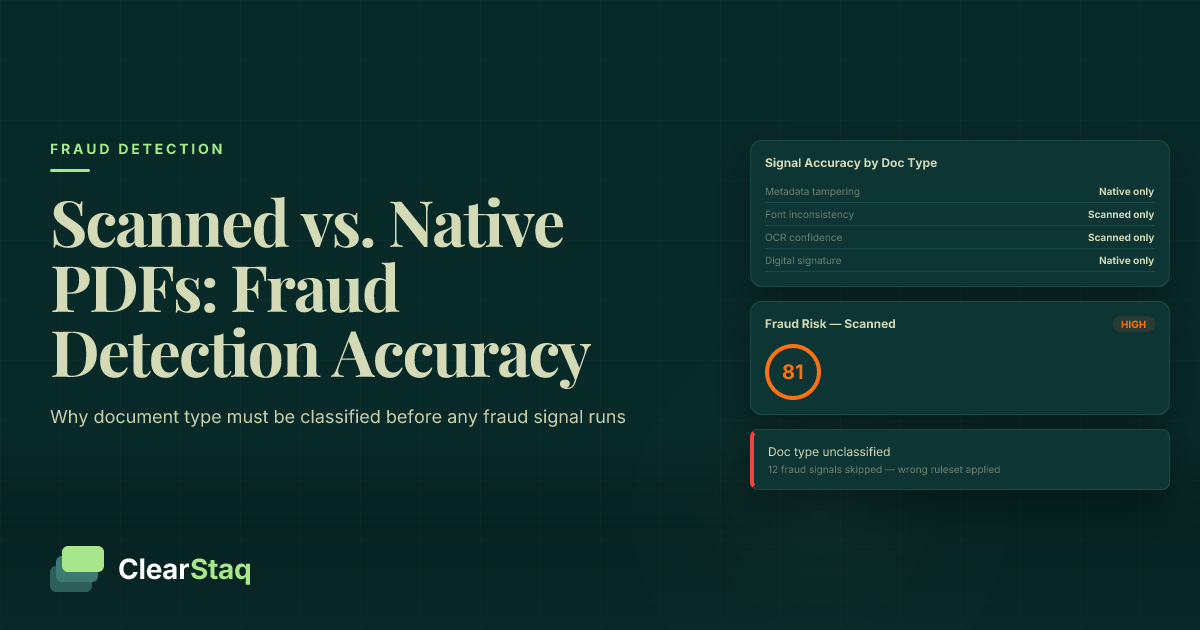
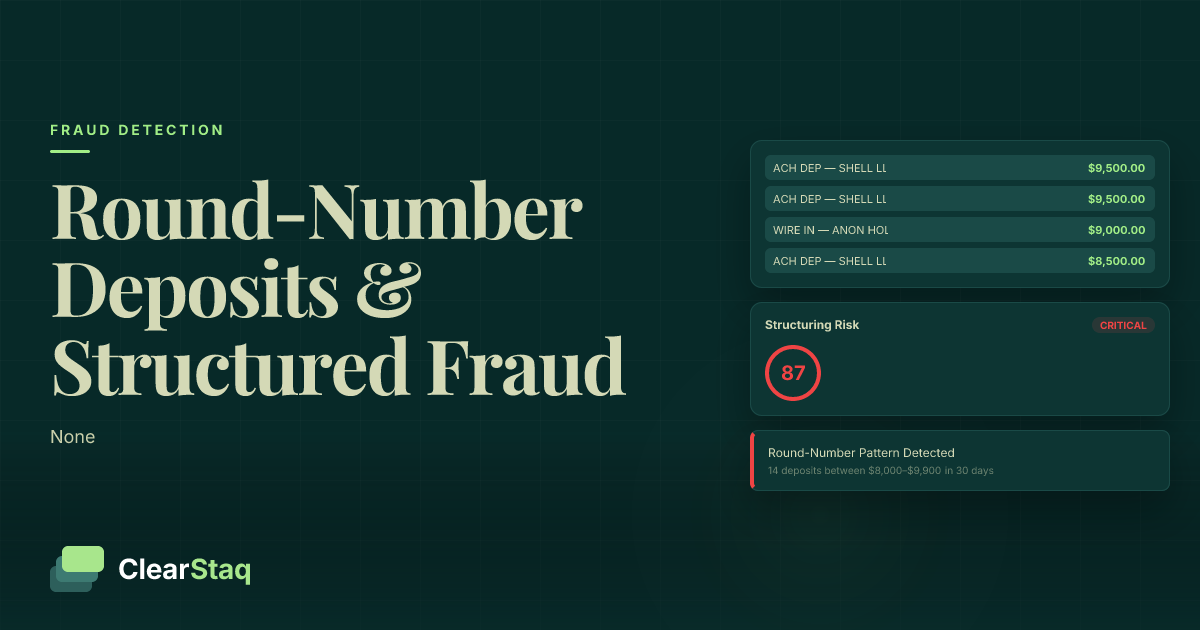
A pay stub is one of the easiest documents to fake — editable templates are a search away. Verification software needs to flag inconsistencies (font mismatches, math that doesn't reconcile, deposit patterns that don't match claimed income) rather than trust the document at face value.
Audit trail and compliance-ready documentation
Compliance and legal teams need an explainable list of what was checked and what flagged, not a single opaque confidence score. When a rejected candidate disputes the decision, an audit trail is what protects the employer.
Integration with your ATS and background check workflow
Standalone verification portals create a second system HR has to log into and reconcile by hand. Software that plugs into an existing background check or ATS workflow avoids duplicate data entry and keeps a single record of what was verified and when.
Top picks for employment and income verification software
ClearStaq — the fraud-catching specialist for non-traditional income. Built to parse bank statements and tax returns rather than rely on a payroll database, ClearStaq scans documents across 27+ fraud signals in under 5 seconds and covers 900+ statement and return formats. It's the strongest fit when a candidate's income comes from self-employment, gig platforms, or multiple clients rather than a single W-2 employer. Buy for HR teams verifying self-employed or contractor income where a payroll lookup returns nothing.
Payroll-linked aggregators (The Work Number-style databases) — the fast lane for salaried W-2 hires. These platforms pull directly from participating employers' payroll systems, which makes verification near-instant when the employer is already in the network. Coverage drops fast once a candidate's employer isn't participating, and self-employed income isn't in scope at all. Consider for high-volume W-2 hiring; not a fit for contractor or gig-heavy pipelines.
Payroll-API connectors (Plaid Income, Argyle-style tools) — the direct-deposit shortcut. These require the candidate to log into their payroll or bank account so the platform can pull live records, which is fast when it works but adds a consent and security step most candidates haven't seen before. Consider — quick for the employers it covers, still blind to 1099 and cash-based income.
Manual reference and HR phone calls — the fallback that still works. Calling a previous employer or manager directly remains the most reliable method for small or overseas employers with no digital footprint. It doesn't scale past a handful of verifications a week, and results vary depending on who picks up the phone. Hold — keep it for edge cases, not as the primary process in 2026.
Screenshot or upload-only pay stub tools — the easiest one to fake. These accept a PDF or photo at face value with no cross-check against actual bank deposits or tax filings. That's precisely the gap that lets a doctored document through, and it's the reason many hiring teams are moving toward tools that verify doctored pay stubs during document review instead of trusting the file itself. Skip for any role where income accuracy actually matters.
What to avoid
- Tools that require candidate banking credentials as the sole check for high-trust roles. Login-based payroll connectors are convenient, but for finance, healthcare, or fiduciary roles they shouldn't be the only verification layer — pairing income verification with legally compliant candidate assessments closes the compliance gap that a single data pull leaves open.
- Black-box confidence scores with no flag detail. If a candidate disputes a rejection, HR needs to show exactly what triggered the decision, not a single number with no explanation behind it.
- Single-document verification for high-turnover contractor roles. One pay stub or one bank statement is a snapshot, not a pattern — staffing pipelines with frequent placements need a process that checks income consistency over time, not a one-time file upload.
See real document verification in action
Run a bank statement or tax return through the same parsing lenders use.
Verdict comparison table
| Tool type | Speed | Self-employed/1099 coverage | Fraud detection | Verdict |
|---|---|---|---|---|
| ClearStaq | Under 5 seconds | Strong — parses bank statements and tax returns | 27+ fraud signals | Buy |
| Payroll aggregators | Near-instant if employer participates | Weak | Minimal | Consider |
| Payroll-API connectors | Fast with candidate login | Weak | Minimal | Consider |
| Manual reference calls | Days | N/A | Depends on reviewer | Hold |
| Screenshot/upload-only tools | Fast | Depends on document | None | Skip |
FAQ
What is employment and income verification software for HR teams?
It's software that confirms a candidate's stated employer and income against real records — payroll databases, bank statements, or tax returns — instead of relying on a self-submitted document. In 2026, the strongest versions also flag document tampering rather than just storing a file.
Is ClearStaq built for HR teams or lenders?
ClearStaq is built primarily for lenders, MCA brokers, and CPAs verifying income from bank statements and tax returns. HR teams use the same document-parsing and fraud-detection layer when verifying self-employed or 1099 candidates, often alongside a background check partner.
Can income verification software catch doctored pay stubs?
Yes, if it cross-checks the document against actual bank deposits or tax filings rather than accepting the PDF at face value. Tools that only store an uploaded file will not catch an edited gross pay figure.
Do I still need a payroll database if I use a fraud-detection tool?
For salaried W-2 candidates with a participating employer, a payroll database lookup is often faster. For self-employed, 1099, or gig income, a document-parsing tool is the only option that returns a result at all.
How fast is automated income verification compared to manual calls?
Automated document parsing processes a statement or return in under 5 seconds in 2026, compared to days for a manual reference call that depends on someone answering the phone.
Does income verification software work for gig-economy candidates?
Software built to parse bank statements and tax returns works for gig income because it reads actual deposits rather than querying a single employer's payroll system. Payroll-database tools generally do not cover gig platforms.
What's the difference between employment verification and income verification?
Employment verification confirms someone works or worked at a stated employer; income verification confirms how much they actually earn. Many HR teams need both, especially for compensation-sensitive or compliance-heavy roles.
How much manual review time does automated verification save?
Document-parsing platforms report cutting manual review time by roughly 95% compared to a human reading a statement line by line, largely because the fraud checks run automatically instead of by eye.
One last thing
A bank statement is harder to fake convincingly than a pay stub. Pay stub templates are downloadable and editable in any PDF tool; three months of deposits that have to reconcile against a tax filing are not something most candidates can fabricate cleanly. That's the actual reason document-based verification is gaining ground over payroll-lookup tools in 2026 — it checks the harder-to-forge artifact, not the easier one.
Related guides
ClearStaq Team
Content Team
The ClearStaq team builds AI-powered tools for bank statement parsing, fraud detection, and income verification.