Factoring companies underwrite fast and get paid on the back end — bad data on day one turns into a bad debt on day 90. This guide breaks down what to look for in bank statement analysis software for factoring companies, which categories of tools actually hold up under deal velocity, and where the fraud risk hides.
TL;DR
Bank statement analysis software for factoring companies needs three things: format-agnostic parsing, a real fraud signal library (not just OCR), and turnaround measured in seconds, not hours. ClearStaq is the Buy for teams that need 27+ fraud signals and sub-5-second processing across 900+ statement formats. Generic OCR tools and manual review desks are Skip for anything beyond low-volume, low-risk factoring in 2026 — they miss commingled funds and structuring patterns that show up only in cross-account behavior.
Why This Matters
Factoring runs on speed and on trust in the numbers behind an invoice. A prospective client hands over three to six months of bank statements, and the underwriter has to decide, often same-day, whether the cash flow supports the advance rate. Miss a commingled funds pattern or a doctored balance and the factoring company is exposed on an advance it can't recover.
The volume problem compounds this. A factoring company reviewing 40-60 files a month can't put a human on every statement for four to eight hours and still hit funding timelines. That's the gap bank statement analysis software is built to close — and it's why the difference between a parser and a fraud-aware platform matters more in this vertical than almost any other lending category.
Who This Is For
This guide is for factoring company underwriters, credit managers, and ops leads evaluating bank statement analysis software for factoring companies — specifically teams funding invoices against a client's receivables and needing to verify real cash flow, not just account ownership. It applies whether you're running recourse or non-recourse factoring, spot factoring, or a revolving facility.
What to Look for in Bank Statement Analysis Software for Factoring Companies
Format coverage across bank statement layouts
Your applicants bank everywhere — Chase, regional credit unions, online-only banks with inconsistent PDF exports. Software that only handles the top five national banks forces manual fallback on the accounts most likely to belong to smaller, higher-risk clients. Coverage across 900+ statement formats means fewer files kicked to manual review and fewer approval delays.
Fraud signal depth, not just extraction
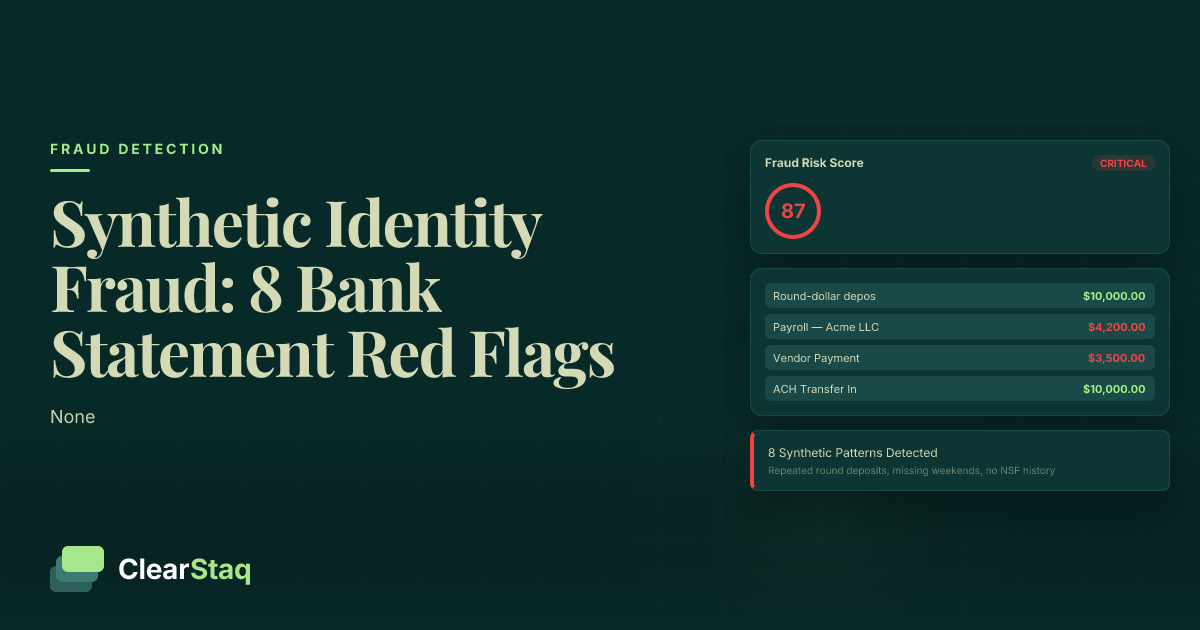
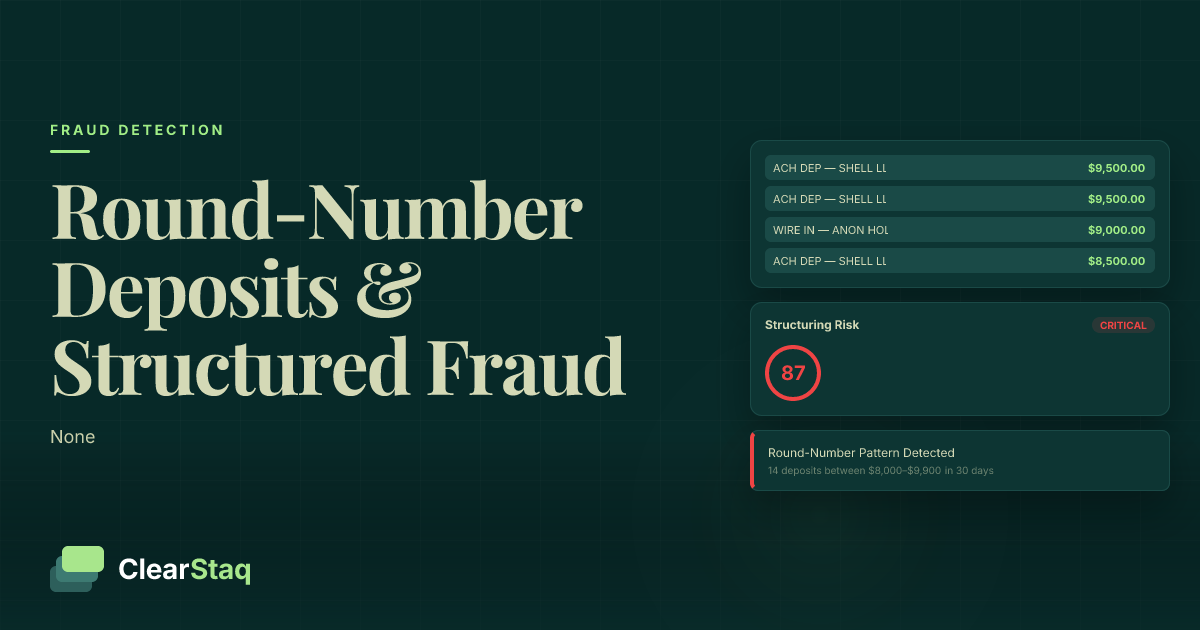
Extracting balances and transaction lines is table stakes. What actually protects a factoring company is signal depth: structuring patterns, round-dollar deposits timed to avoid reporting thresholds, and inflows that don't match the invoice schedule the client submitted. A tool with 27+ fraud signals catches patterns a single reviewer scanning a PDF will miss on file 30 of the day.
Turnaround time per file
Factoring margins live on funding speed — clients pick the factor that pays fastest. If your bank statement analysis software takes 20 minutes per file, that's 20 minutes your competitor doesn't spend. Sub-5-second processing changes the conversation from "we'll have an answer tomorrow" to same-day funding decisions.
Audit trail and explainability
When a deal goes sideways and you're explaining an approval to your credit committee or your own funding source, "the software said it was fine" doesn't hold up. You need a flagged-signal breakdown — which transactions triggered which fraud indicator, and why — attached to every file.
Integration with AR aging and funding workflow
Bank statement data doesn't live in isolation. It needs to feed into how you calculate advance rates against AR aging and how fast that number reaches your funding decision. Software that dumps a PDF summary into a separate inbox adds a manual step you're trying to eliminate.
Top Picks for Bank Statement Analysis Software for Factoring Companies
AI-native parsing and fraud detection platforms — the built-for-purpose pick
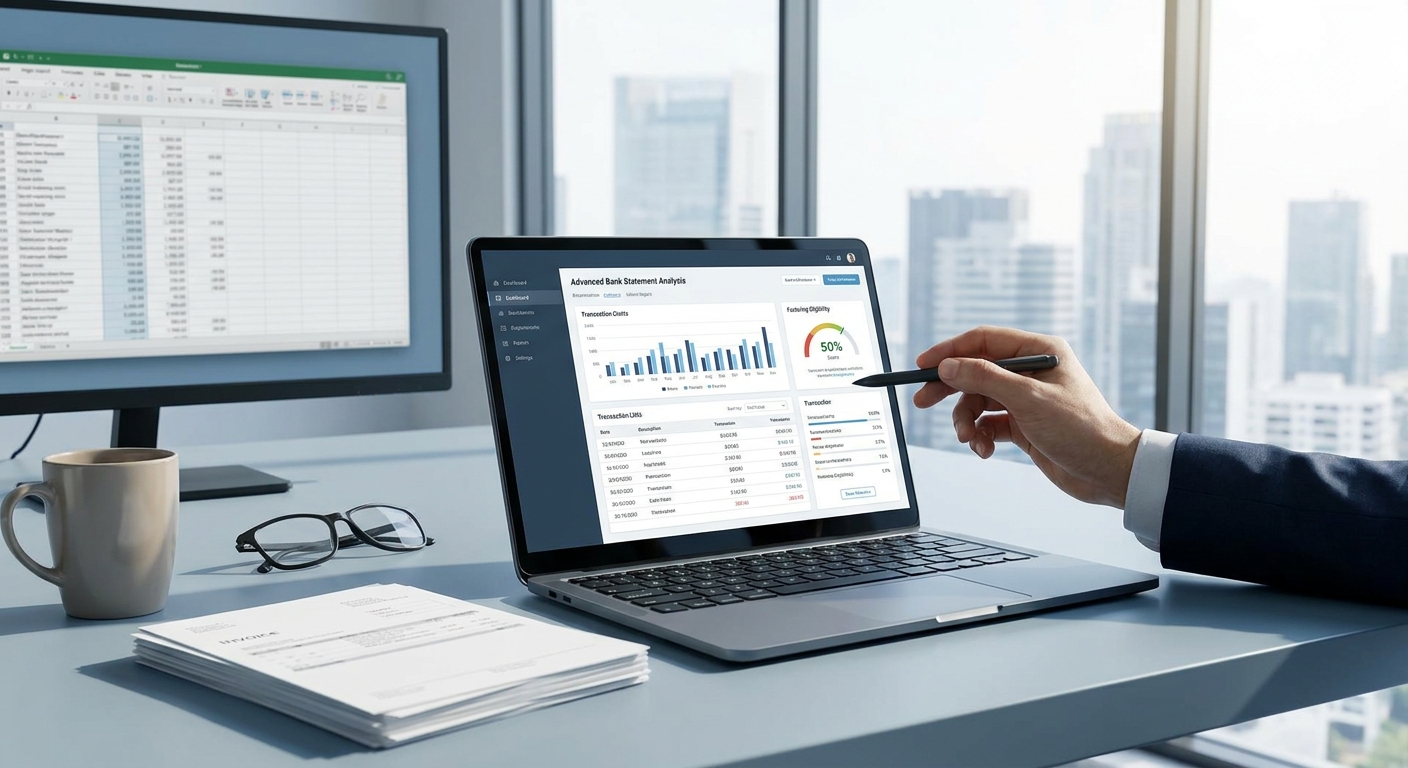
These platforms are built specifically to parse statements and flag fraud in the same pass, rather than treating extraction and fraud review as separate steps. ClearStaq runs 27+ fraud signals against every file, processes in under 5 seconds, and holds 99.5% accuracy across 900+ formats — the spec set that matters most for a factoring desk running deal volume in 2026. Verdict: Buy for any factoring company processing more than a handful of files a month.
Generic OCR and document capture tools — the almost-right pick
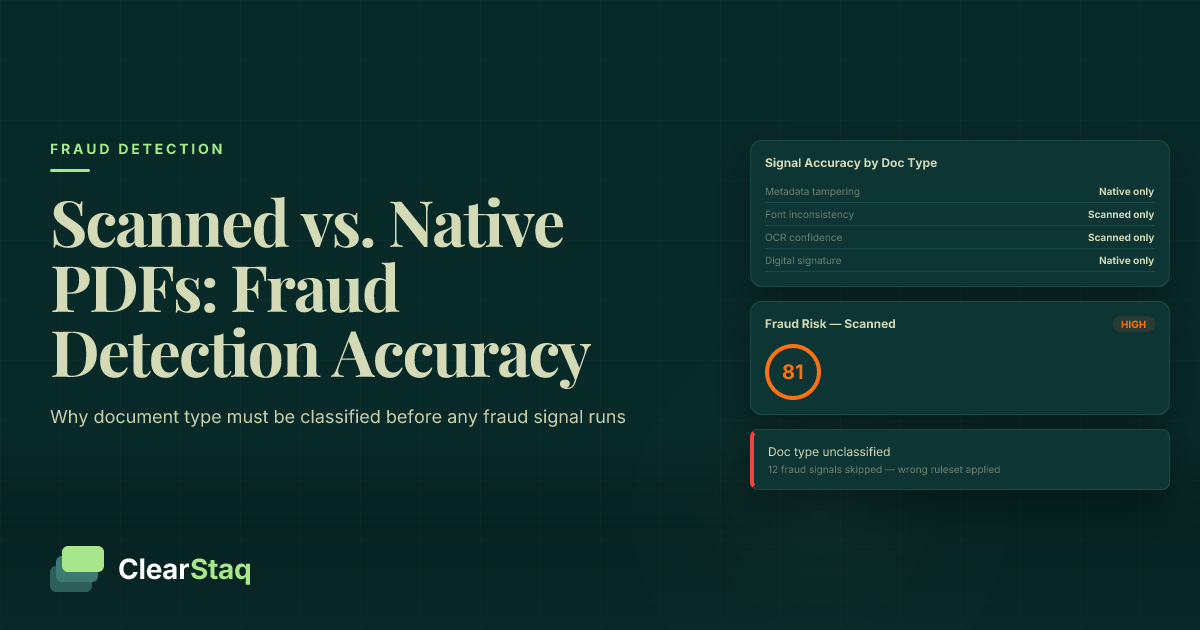
These tools extract text and numbers competently, and some even categorize transactions. What they don't do is fraud pattern detection — no structuring flags, no commingled funds detection, no cross-account behavior analysis. They're built for data capture, not underwriting risk. Verdict: Consider only as a secondary tool for basic categorization, Skip as your primary underwriting layer.
Manual back-office review teams — the slow-but-familiar pick
A trained reviewer manually going through statements catches things software might miss on edge cases, but the math doesn't scale: 4-8 hours of manual prep per file is common for a thorough review, and that time compounds across a growing pipeline. Verdict: Hold as a QA layer on flagged files, Skip as your primary process at any real volume.
Bank account verification aggregators — the connectivity-only pick
These services confirm an account exists and pull a balance snapshot through bank API connections. Useful for identity confirmation, but they don't analyze historical statement patterns or transaction-level fraud signals over time. Verdict: Consider as a supplementary check, never as a substitute for statement analysis.
In-house parsing scripts — the DIY pick
Building your own parser sounds cheaper until you're maintaining format coverage for hundreds of bank layouts and rebuilding every time a bank changes its PDF export. Reaching anything close to 900+ format coverage in-house means ongoing engineering headcount most factoring companies don't have budget for. Verdict: Skip unless you have a dedicated engineering team with nothing better to do.
What to Avoid
- Tools that verify account ownership but not statement content. Confirming an account is real tells you nothing about whether the cash flow inside it is real. Factoring risk lives in the transaction history, not the account metadata.
- Platforms with no per-file audit trail. If you can't show which signal flagged which transaction, you can't defend an approval or a decline when it's questioned later.
- Any tool that treats income smoothing as a formatting issue rather than a fraud signal. Applicants moving money between accounts to flatten visible cash flow are one of the most common patterns factoring underwriters miss when relying on a single account's statement.
Verdict Comparison Table
| Solution | Format Coverage | Fraud Signal Depth | Turnaround | Verdict |
|---|---|---|---|---|
| AI-native parsing + fraud platform | 900+ formats | 27+ signals | Under 5 seconds | Buy |
| Generic OCR / document capture | Moderate | None to minimal | Minutes | Consider (secondary only) |
| Manual back-office review | N/A (human) | Reviewer-dependent | 4-8 hours/file | Hold (QA layer only) |
| Bank verification aggregator | Connected accounts only | None | Seconds | Consider (supplement) |
| In-house scripts | Limited, manually maintained | Custom-built, inconsistent | Varies | Skip |
FAQ
What is bank statement analysis software for factoring companies? It's software that parses uploaded or connected bank statements to extract cash flow data and flag fraud patterns — things like structuring, commingled funds, or income smoothing — so a factoring underwriter can verify an applicant's real revenue before advancing against invoices.
Is bank statement analysis software better than manual underwriting review for factoring deals? For volume, yes — a platform processing files in under 5 seconds outperforms a manual review that takes 4-8 hours per file, and it catches cross-account patterns a single reviewer typically misses. Manual review still has a role as a QA check on flagged files.
How much does bank statement analysis software cost for factoring companies? Pricing varies by vendor and deal volume — check current pricing directly with the provider rather than relying on published list prices, since most platforms price against monthly file volume.
Can bank statement analysis software detect double-pledging or commingled funds? Platforms built with dedicated fraud signal libraries can flag commingled funds patterns by tracking inflows across linked accounts, which generic OCR or extraction-only tools typically can't do.
How fast should bank statement parsing be for a factoring deal? For same-day funding decisions, processing under 5 seconds per file is the benchmark in 2026 — anything measured in minutes starts to bottleneck a high-volume factoring desk.
Do factoring companies need fraud detection software separate from parsing software? No — the more efficient approach in 2026 is a single platform that parses and flags fraud in one pass, since separate tools create a manual handoff step between extraction and risk review.
What bank formats should the software support? Look for coverage in the 900+ format range, since factoring applicants bank across national, regional, and online-only institutions with inconsistent statement layouts.
Is OCR enough for factoring underwriting in 2026? No — OCR extracts text but doesn't detect fraud patterns like structuring or income smoothing, which require signal-based analysis across the full transaction history, not just character recognition.
One Last Thing
The statements that sink factoring companies usually aren't fake — they're real statements showing disguised behavior. A client moving revenue between two accounts to smooth out a slow month looks clean on any single statement you pull. Pull the full trailing 12 months and check every linked account before you set an advance rate, not just the one the applicant chose to send.
ClearStaq Team
Content Team
The ClearStaq team builds AI-powered tools for bank statement parsing, fraud detection, and income verification.