Down payment assistance (DPA) programs move fast when the paperwork checks out and stall for weeks when it doesn't — verifying proof of funds correctly the first time is what separates a closing on schedule from a file bounced back for the third round of stips.
- Verify proof of funds for down payment assistance programs by tracing every large deposit to a documented source, not just confirming a balance.
- A 60-day statement window plus gift letter matching catches most DPA fraud before underwriting sees the file in 2026.
- Manual review of bank statements runs 4-8 hours per file — parsing software cuts that to minutes.
- ClearStaq flags 27+ fraud signals automatically, including doctored deposits and mismatched gift letters, at 99.5% accuracy.
Why This Matters
DPA programs layer a second set of underwriting eyes on top of the primary loan file, and most of them require the borrower's own funds — not the assistance money — to be verified as legitimate, seasoned, and traceable. A gift that shows up three days before closing with no letter attached, or a $4,000 cash deposit with no explanation, is exactly what triggers a program denial or a repurchase demand later.
The stakes are higher than a standard purchase because DPA underwriters answer to a state housing agency or a nonprofit funder, and those funders audit files. A verification mistake in 2026 doesn't just cost you a closing date — it can cost the lender its DPA program eligibility entirely.
What You'll Need
- Two to three months of bank statements for every account holding funds used for the down payment or closing costs
- Gift letters for any non-borrower-sourced funds, dated and signed
- Source documentation for large or unusual deposits (pay stubs, sale receipts, tax refund notices, transfer confirmations)
- The specific DPA program's seasoning and sourcing requirements — these vary by state housing agency and by program
- A way to detect altered PDFs or inconsistent statement formatting — manual eyeballing misses most of it
Software built for bank statement analysis for down payment assistance lenders belongs in this list too, because DPA files carry more scrutiny per dollar than almost any other loan type in 2026.
The Steps
1. Pull the full statement history for the required window
Most DPA programs and the underlying conventional or FHA guidelines require the two most recent monthly statements — effectively a 60-day window — though some state programs extend that to 90 days. Get every account the borrower is drawing funds from, not just the primary checking account.
Missing an account is the single most common reason files get sent back. Ask for statements covering savings, secondary checking, and any account mentioned in the loan application's asset section.
Common mistake: accepting a screenshot of an account balance instead of the full transaction history. A balance alone hides every deposit that matters.
2. Confirm the seasoning period on every large deposit
FHA guidelines flag any single deposit exceeding roughly 1% of the adjusted property value for explanation — DPA underwriters apply the same logic even on conventional-adjacent programs. A deposit that isn't seasoned for the full window looks like undisclosed debt or an unverified gift, and that's an automatic stip.
Check the date on every deposit against the statement period start date. A deposit landing on day one of a 60-day window with no prior history is a red flag, not a pass.
3. Trace gift funds to a matching, dated deposit
A gift letter without a corresponding deposit on the borrower's statement is worthless to underwriting. Match the dollar amount and the date on the letter to an actual line item in the bank statement — not an approximate amount, the exact figure.
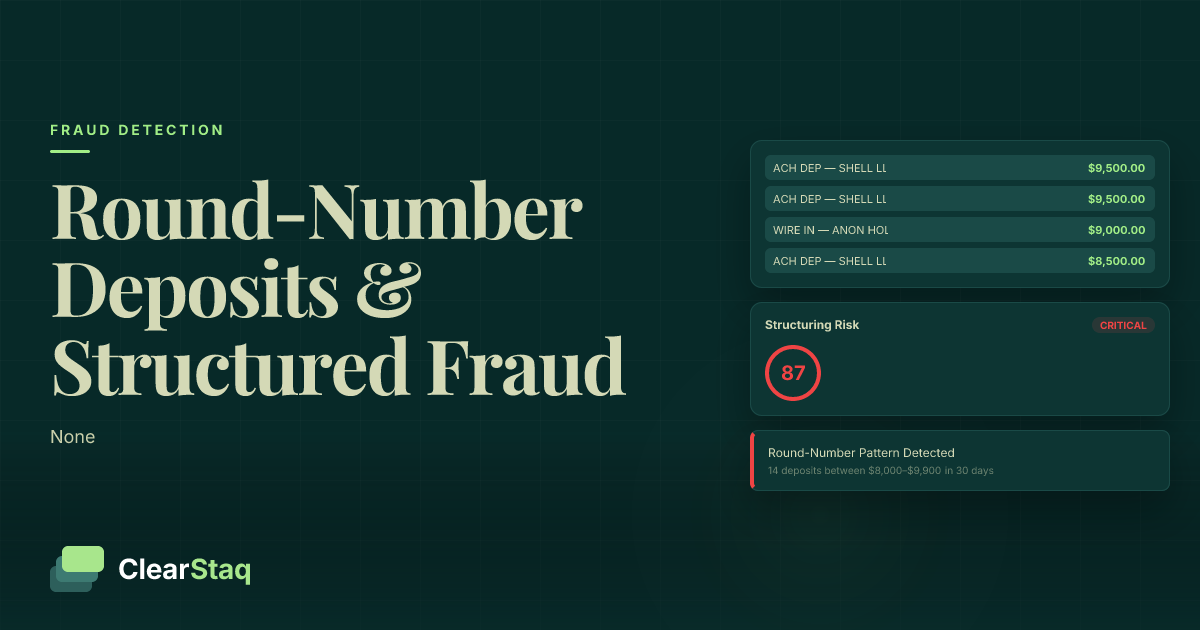
If the gift arrived as cash and was deposited in increments, that's a structuring pattern DPA underwriters are trained to flag, and it needs its own explanation letter.
4. Screen for altered or fabricated statements
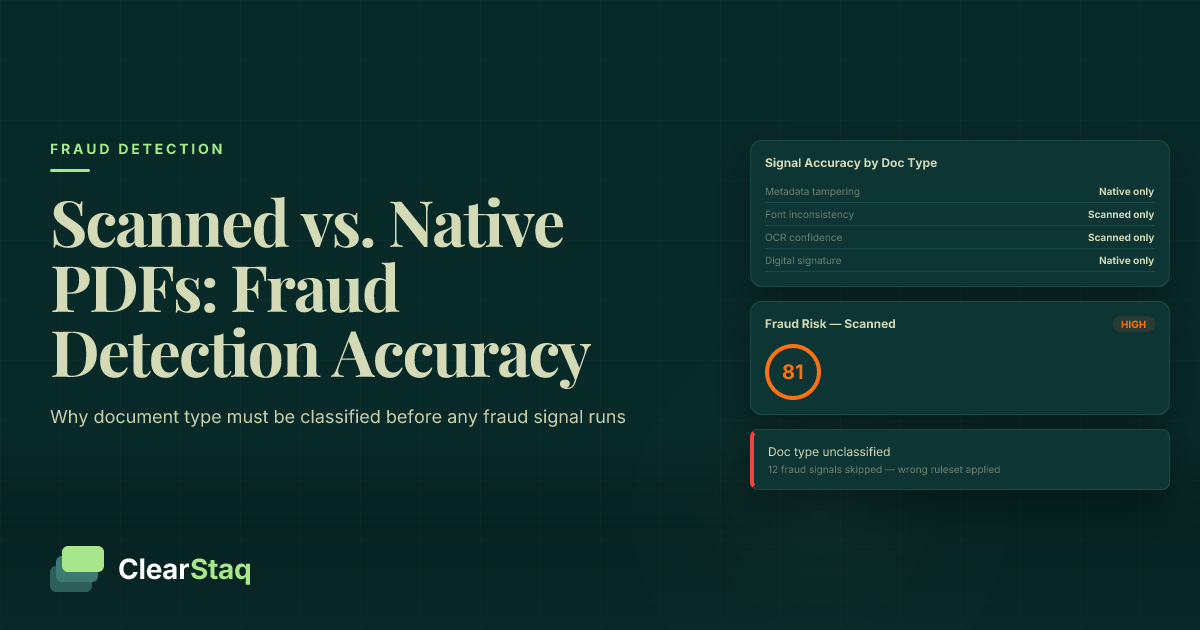
Doctored PDFs are the most common fraud vector in DPA files because the assistance money creates an incentive to inflate available funds. Look for inconsistent fonts, misaligned running balances, and metadata timestamps that don't match the claimed statement period.
Manual review catches maybe half of these. Automated parsing that checks how to detect fake bank statements in loan applications against 27+ signals catches formatting inconsistencies a human reviewer will miss on a fifth file of the day.
Common mistake: trusting a statement because the bank logo and layout look correct. Format cloning is the easiest part of a fake statement to get right.
5. Cross-check income against the source of funds
If the borrower claims the down payment came from savings built up over the statement window, the deposits need to trace back to documented income — payroll deposits, verified self-employment income, or another explainable source. A savings balance that grew faster than documented income allows is a mismatch underwriting will catch eventually, so catch it first.
For self-employed borrowers this step gets harder because income is irregular by nature — the process for verifying self-employed income for loan underwriting applies directly here.
6. Verify tax transcripts when the program requires income documentation
Some DPA programs cap eligibility by household income, which means the proof-of-funds review doesn't stand alone — it has to reconcile against tax transcripts. Cross-referencing tax transcript verification during mortgage underwriting against the bank statement deposits catches borrowers who understated income to qualify for the assistance and overstated it to qualify for the loan.
7. Document the audit trail
Write down which document proved which fact, and when it was reviewed. State housing agencies and nonprofit DPA funders audit files months or years after closing in 2026, and a lender with no documented verification trail is the one that eats the repurchase request.
Troubleshooting
- Gift letter dated after closing: reject and request a corrected letter dated before or on the deposit date — a post-dated letter doesn't satisfy seasoning requirements.
- Cash deposits with no paper trail: require a signed letter of explanation and, where possible, a receipt or sale document tying the cash to a specific source.
- Statements from multiple banks in different formats: don't rely on manual line-by-line review across formats — this is exactly where format-aware parsing earns its keep, since 900+ statement formats behave differently on scan quality and layout.
- Scanned PDF that won't extract cleanly: request a text-based export from the bank's online portal instead of a photographed or faxed copy.
- Deposit amount doesn't match gift letter exactly: treat the discrepancy as unresolved until the borrower or donor provides a written explanation — don't round or assume a bank fee.
- Borrower has funds split across four accounts to stay under reporting thresholds: flag this as a potential structuring pattern and escalate before closing, not after.
Tools and Resources
- DPA program guidelines from the specific state housing finance agency or nonprofit funder
- FHA and Fannie Mae/Freddie Mac large-deposit and seasoning guidance for the loan type layered under the assistance
- A parsing platform that checks bank statements and tax returns for fraud signals automatically — ClearStaq processes statements in under 5 seconds per document at 99.5% accuracy, which matters when a DPA file needs three accounts reviewed before a closing date that isn't moving
- A standardized checklist for gift letter requirements by program, since thresholds and documentation rules differ state to state
See DPA fraud signals in action
Check the platform built for down payment assistance underwriting.
What to Do Next
Once proof of funds clears, the next bottleneck is usually income verification — especially for self-employed or 1099 borrowers layering DPA funds onto a purchase. Review the process for handling irregular income documentation before the file moves to final underwriting, since the same deposits reviewed here often need a second look against income claims.
FAQ
How do you verify proof of funds for down payment assistance programs?
Verify proof of funds for down payment assistance programs by reviewing 60 to 90 days of bank statements, tracing every large deposit to a documented source, and matching gift letters to an exact dated deposit. Programs in 2026 typically require this before releasing assistance funds at closing.
How many months of bank statements do DPA programs require?
Most DPA programs require two to three months of statements, matching the standard 60-day seasoning window used in FHA and conventional underwriting. Some state housing agencies extend this to a full quarter for self-employed applicants.
What counts as a large deposit that needs explanation?
FHA guidelines generally flag any single deposit exceeding about 1% of the adjusted property value as needing a documented source. DPA underwriters apply similar scrutiny even when the base loan isn't FHA.
Do gift letters need to match the bank deposit exactly?
Yes, the dollar amount and approximate date on a gift letter need to match an actual line item on the borrower's bank statement. A mismatch, even a small one, triggers a stip request in most DPA underwriting workflows.
Can cash deposits be used as proof of funds for DPA programs?
Cash deposits can qualify but require a written explanation and, ideally, a receipt or document tying the cash to a specific source. Undocumented cash is one of the most common reasons DPA files get denied.
How long does manual proof of funds review take?
Manual review of bank statements and supporting documents for a single DPA file commonly takes several hours per file when done line by line. Automated parsing reduces that to minutes per statement.
What's the difference between seasoning and sourcing for down payment funds?
Seasoning confirms funds have sat in the account for the required window, usually 60 days, while sourcing confirms where the money came from. DPA underwriting requires both, not just one or the other.
Is fake bank statement fraud common in DPA files?
Doctored statements show up more often in DPA files than standard purchases because the assistance program creates an incentive to inflate available funds. Format-aware fraud detection catches inconsistencies a manual reviewer typically misses.
One Last Thing
The deposit that sinks a DPA file almost never looks like fraud on the surface — it's the $600 cash deposit nobody asked about, seasoned for 58 days instead of 60, sitting two lines above the down payment transfer. Reviewers who scan for the obvious red flags miss these every time; the ones checking every line, every account, every date, are the ones whose files don't come back from the housing agency six months later.
Related Guides
ClearStaq Team
Content Team
The ClearStaq team builds AI-powered tools for bank statement parsing, fraud detection, and income verification.