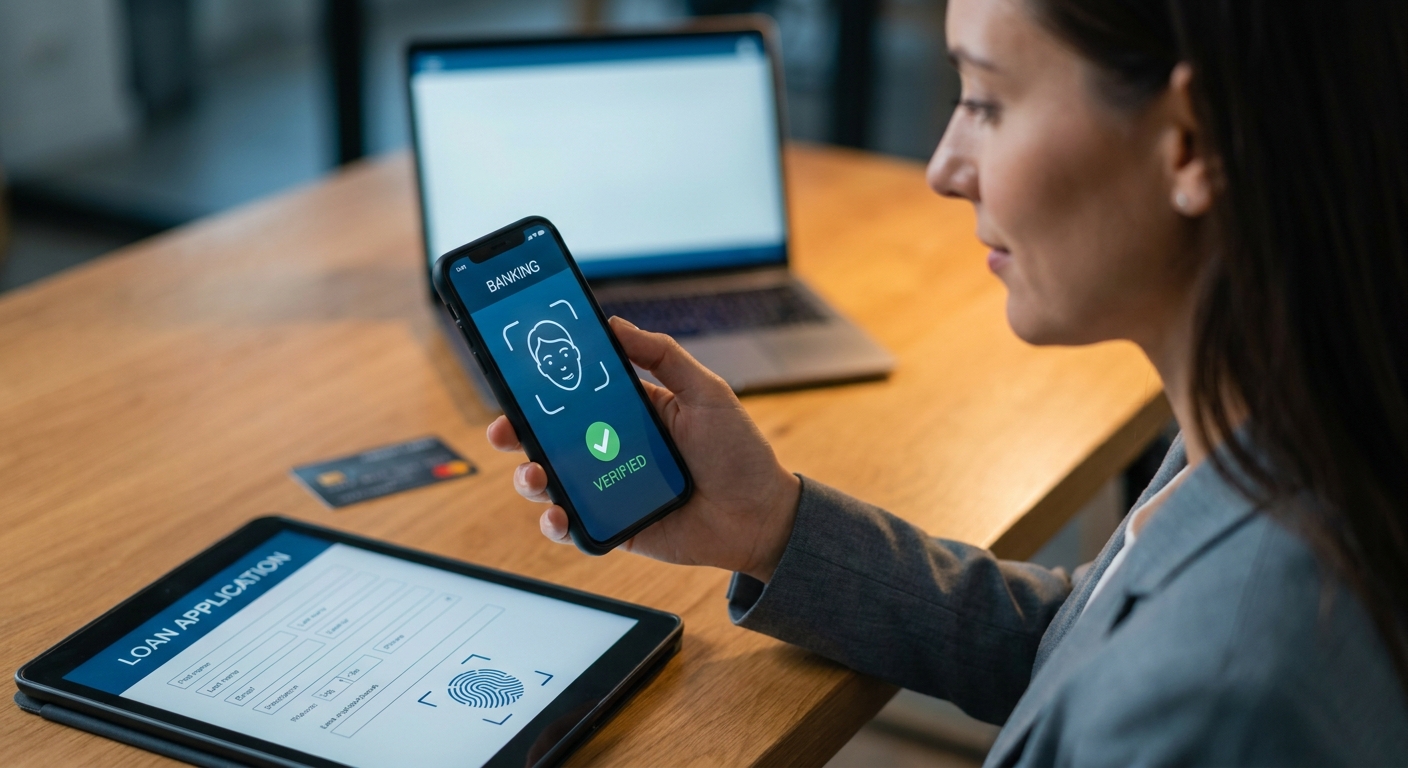
Remote loan applicants don't walk into a branch anymore — they upload a selfie and a driver's license from a phone, and the underwriting team has seconds to decide if that person is real. Biometric identity verification for loan onboarding closes the gap between a submitted application and a verified human, but not every tool closes it the same way.
- Socure and Jumio lead for volume lenders needing document-plus-selfie match in 2026 — Buy for high-application-volume shops.
- Persona wins on no-code workflow flexibility for smaller lending teams — Consider, not Buy, if you lack a dev resource.
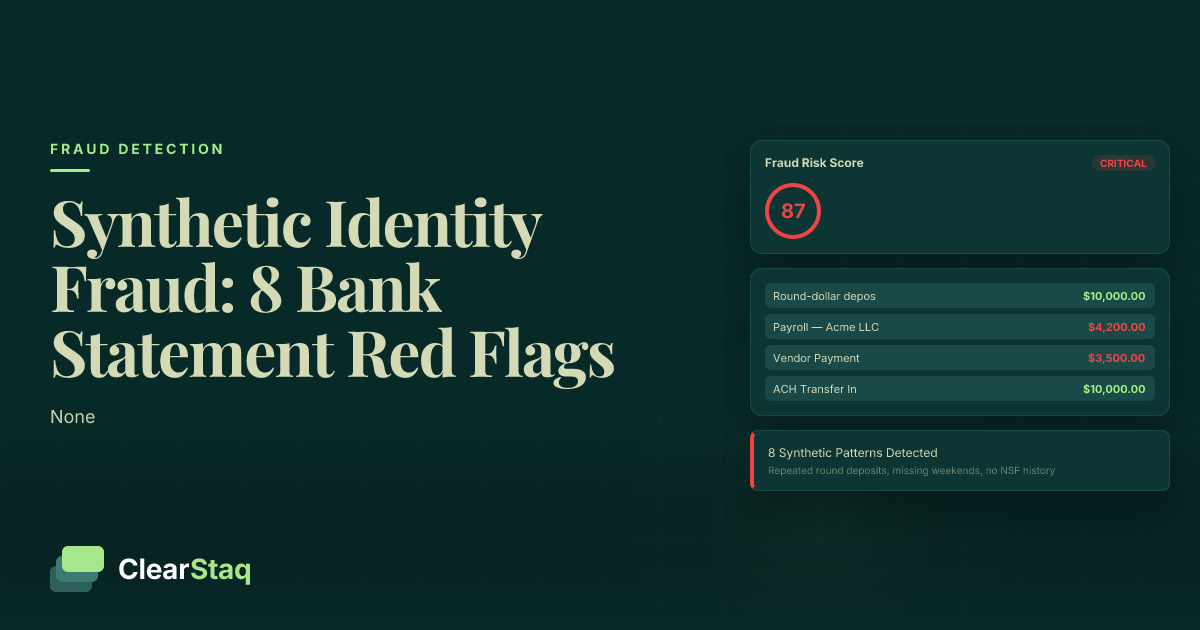
- Biometric identity verification for loan onboarding stops fake applicants but does not catch doctored bank statements or synthetic income — pair it with document-level fraud detection.
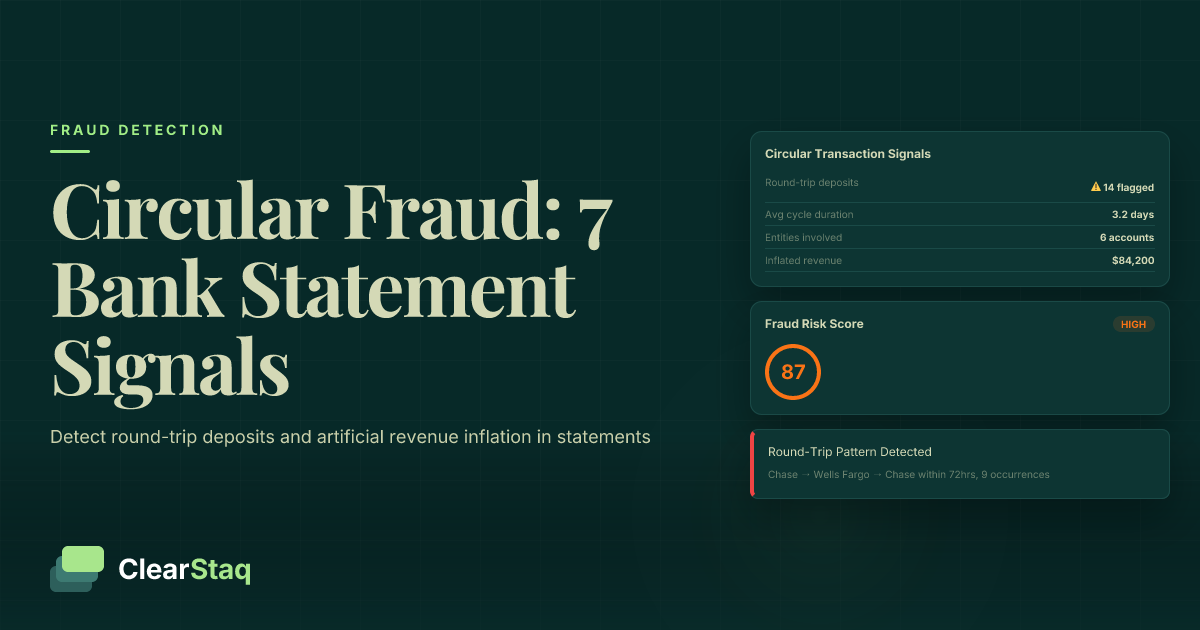
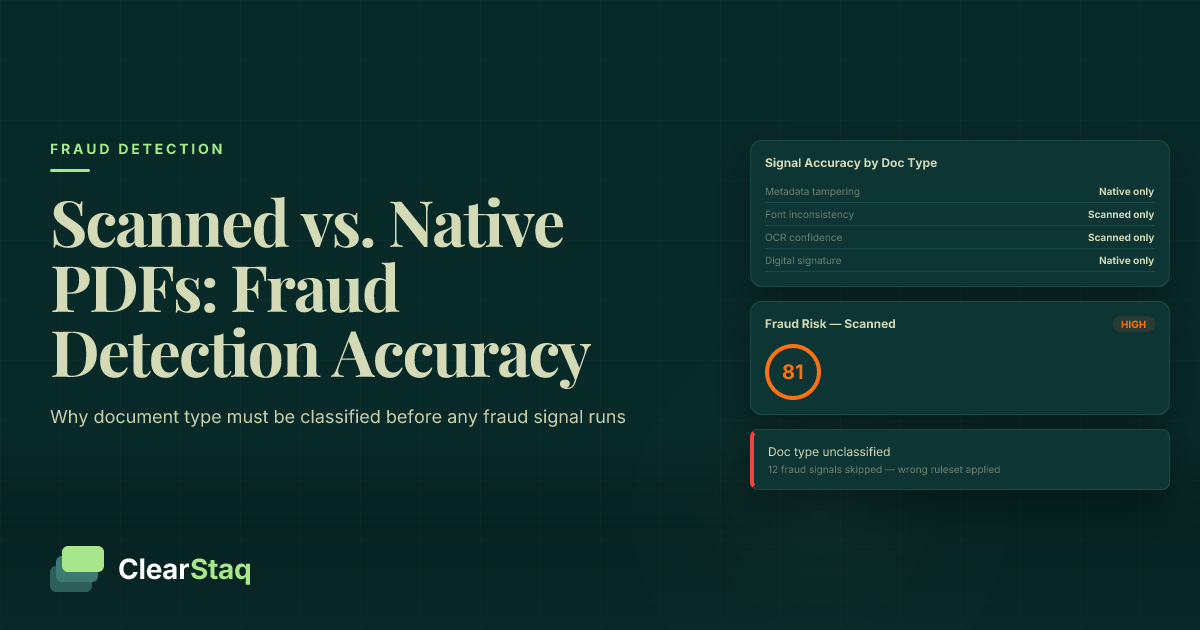
- ClearStaq's fraud detection layer runs 27+ signals in under 5 seconds and catches what biometric checks miss on the financial side.
Why this matters
A biometric check confirms the person submitting the loan application matches the ID they uploaded. It does not confirm the bank statement behind that application is real, that the income on it wasn't smoothed, or that the deposits aren't structured to dodge a review threshold. Lenders who treat biometric identity verification for loan onboarding as the whole fraud stack get burned on the financial side even after the identity side clears.
The ClearStaq fraud detection layer exists for exactly that gap — it runs after identity is confirmed and checks the documents themselves. Pairing the two is standard practice for digital lenders in 2026, not an upsell.
Who this is for
This guide is for digital lenders, MCA brokers, fintech lending platforms, and credit unions onboarding applicants remotely — anyone who can't verify identity face-to-face and needs a decision in minutes, not days. If your loan officers still meet applicants in person and check a physical ID, most of this doesn't apply to you yet. If more than a third of your applications come in through a web form or app, it does.
What to look for in biometric identity verification for loan onboarding
Liveness detection strength
A static photo or a printed mask should never pass. Look for vendors that require active liveness (blinking, head turns, or randomized prompts) rather than passive checks alone, since passive-only liveness is the most common bypass fraud rings exploit in 2026. Ask for the vendor's spoof-detection test methodology before signing, not just a marketing claim.
Document-to-selfie match speed
Applicants abandon forms that stall. A verification step that takes more than 30-45 seconds end-to-end starts costing you completed applications, especially on mobile where signal drops are common. Speed matters as much as accuracy here — a slow but accurate check still loses the deal if the applicant closes the tab.
False rejection rate
Every vendor will quote a fraud catch rate. Fewer will quote how often they reject a legitimate applicant. A high false-rejection rate quietly kills approved-but-bounced deals, and that number rarely shows up in the sales deck — request it directly.
Fraud signal integration with underwriting
Identity verification that sits in its own silo forces your team to manually cross-reference it against income and bank statement fraud checks. The stronger setup routes biometric pass/fail status into the same underwriting dashboard as synthetic identity fraud detection for fintech onboarding, so one screen shows both the person and the paperwork.
Compliance coverage
KYC and AML rules differ by state and by loan product. Confirm the vendor's document coverage matches your applicant geography — a tool built mainly for EU passports will underperform on U.S. state IDs and vice versa.
API integration effort
A biometric tool that can't plug into your loan origination system creates a manual re-entry step for every application. Check the vendor's documented integration time before you sign, not after — 2026 buyers report integration timelines ranging from days to months depending on how open the API is.
Top picks for biometric identity verification for loan onboarding
Socure — the risk-data-heavy pick. Socure pairs document and biometric verification with its own identity risk score built from consortium data across thousands of lenders. It fits shops already running heavy fraud analytics and wanting one score to gate approvals. Buy for risk-heavy consumer and small-business lenders.
Jumio — the enterprise-volume pick. Jumio covers a wide range of global ID document types and pairs certified liveness detection with document authentication in one pass. It suits lenders processing high application volume across multiple states or countries. Buy for volume-first digital lenders.
Persona — the flexible no-code pick. Persona's workflow builder lets non-developers configure verification steps without an engineering sprint. It's the right call for smaller lending teams that need to iterate on the flow themselves. Consider if you don't have dedicated dev resources; Skip if you need deep custom logic a no-code builder can't express.
Onfido (Entrust) — the global-document pick. Onfido's document library skews toward international ID formats, which helps lenders with foreign national applicants or cross-border underwriting. Consider for lenders with meaningful non-U.S. applicant volume; Skip if your book is domestic-only, since the premium isn't worth it.
Incode — the biometric-only wildcard. Incode focuses tightly on facial biometrics and liveness rather than a full document-verification suite. It's a fit if you already have a document check elsewhere and just need the identity layer. Consider as a bolt-on, Skip as a standalone system.
What to avoid
- Passive-liveness-only vendors marketed as "AI-powered." The phrase sounds current for 2026 but says nothing about spoof resistance — ask for the active-liveness option specifically.
- Biometric tools with no fraud-signal export. If the vendor can't push a structured pass/fail result into your loan origination system, you're building a manual bottleneck by design.
- Identity-only stacks with no financial document check. Confirming a person is who they say they are doesn't confirm their bank statement wasn't altered — see how to detect synthetic identity fraud in loan applications for what identity checks alone miss.
See the fraud signals identity checks miss
Bank statement and tax return fraud detection built for lenders and MCA brokers.
Verdict comparison
| Vendor | Best for | Integration effort | Verdict |
|---|---|---|---|
| Socure | Risk-heavy lenders | Moderate | Buy |
| Jumio | High-volume, multi-state | Moderate | Buy |
| Persona | Small teams, no-code | Low | Consider |
| Onfido | International applicants | Moderate-High | Consider |
| Incode | Bolt-on biometric layer | Low-Moderate | Consider |
FAQ
What is biometric identity verification for loan onboarding?
It's the process of confirming a loan applicant's identity through facial matching and liveness detection instead of an in-person ID check. In 2026, most digital lenders run it during the online application step before underwriting begins.
Is biometric verification enough to stop loan fraud?
No — it confirms the applicant's identity but not the accuracy of their bank statements or income documents. Lenders pair it with document-level fraud detection to catch altered statements and synthetic income.
How much does biometric identity verification cost for lenders?
Pricing varies by vendor and volume tier, and most vendors quote per-verification rates rather than flat fees. Get a quote based on your monthly application volume rather than relying on published list prices.
Which biometric verification vendor is best for high-volume lenders?
Jumio and Socure both handle high application volume well in 2026, with Jumio leaning toward broad document coverage and Socure toward risk scoring. Choose based on whether you need more document types or more fraud analytics.
Does biometric verification slow down loan applications?
A well-built check adds 30-45 seconds to the application, and anything slower increases abandonment. Test the vendor's actual mobile completion time before rolling it out broadly.
Can biometric verification replace document fraud detection?
No. Biometric checks verify the person; document fraud detection verifies the paperwork, including bank statements and tax returns. Lenders in 2026 run both because each catches a different fraud pattern.
What's the difference between active and passive liveness detection?
Active liveness requires the applicant to perform an action like a head turn or blink on prompt, while passive liveness analyzes a single image or short video without a prompt. Active liveness is harder to spoof and is the safer default for loan onboarding in 2026.
One last thing
Most lenders auditing their fraud stack in 2026 find the identity layer is solid but the document layer never got built — applicants pass the selfie check and still submit an altered bank statement three steps later. If your onboarding flow ends at biometric pass/fail, you have a gap, not a finished process.
Related guides
ClearStaq Team
Content Team
The ClearStaq team builds AI-powered tools for bank statement parsing, fraud detection, and income verification.