Identity verification software for vacation rental platforms confirms that the guest booking a stay and the host collecting a payout are who they claim to be, before a stolen card, a fake listing, or a synthetic profile turns into a chargeback or a liability claim. Guest-side checks (ID scan, selfie match, payment-name match) and host-side checks (business registration, payout account ownership) solve different problems, and most platforms only build for one of them.
- Identity verification software for vacation rental platforms needs two workflows: guest ID/liveness checks and host/property-manager KYB — most tools cover only one.
- Manual photo-ID review plus a payment-name match catches basic booking fraud without buying software in 2026.
- Synthetic identity and doctored-document fraud require signal-based detection, not visual review alone.
- ClearStaq's fraud detection runs 27+ signals in under 5 seconds and fits host/property-manager onboarding, not guest check-in scans.
Why identity verification matters for vacation rental platforms
A vacation rental platform runs two identity problems at once: the guest side and the host side. Guest-side fraud shows up as stolen-card bookings, party-fraud (booking under one identity, hosting a different group), and chargeback disputes after checkout. Host-side fraud shows up as fake listings, stolen payout accounts, and shell entities collecting payouts under a business name that doesn't match the property owner on record.
Most identity tools on the market solve the guest side only — ID scan plus selfie match at booking. That's the same problem two-sided marketplace platforms run into when they build for the buyer side and leave the seller/host side unchecked. A vacation rental platform that only screens guests still has an open door on payouts.
Verdict: identity verification for vacation rental platforms in 2026 requires pairing a guest-facing ID/liveness tool with a document-fraud and KYB layer on the host side — no single vendor in this category covers both well.
Build the verification workflow step by step
Verify guest ID at the point of booking
Start with the manual, free version before adding software: require a government ID upload and a matching name on the reservation.
- Compare the ID name against the account name and the payment method name
- Flag bookings where the ID was issued in a country with no stated travel connection
- Require ID upload before the booking is confirmed, not after check-in
- Log ID expiration dates and reject expired documents automatically
Match the booking name to the payment method
Name mismatches between the card on file and the ID on file are the single cheapest fraud signal available in 2026, and almost no platform checks it by default.
- Pull the cardholder name from the payment processor and compare it to the ID name
- Flag mismatches for manual review instead of auto-approving
- Watch for last-minute bookings paid with a newly added card
- Cross-reference the billing address against the guest's stated location
Screen for synthetic and reused identities
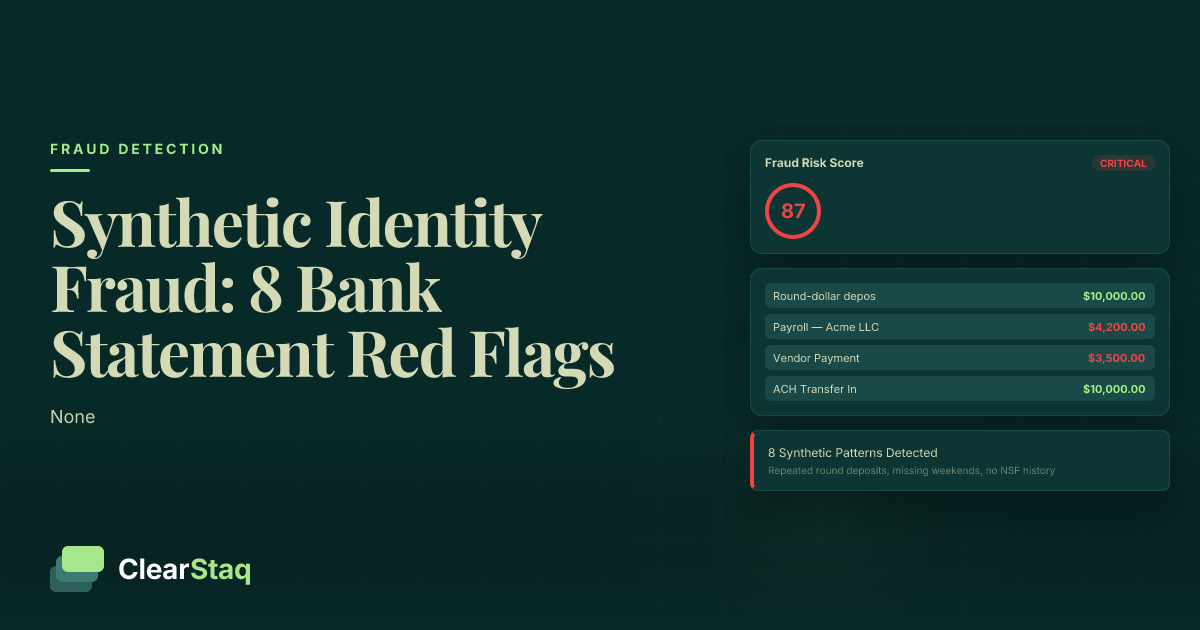
Stolen or fabricated identities pass a basic ID scan because the document itself can look clean. Catching them takes signal-based detection, not visual review.
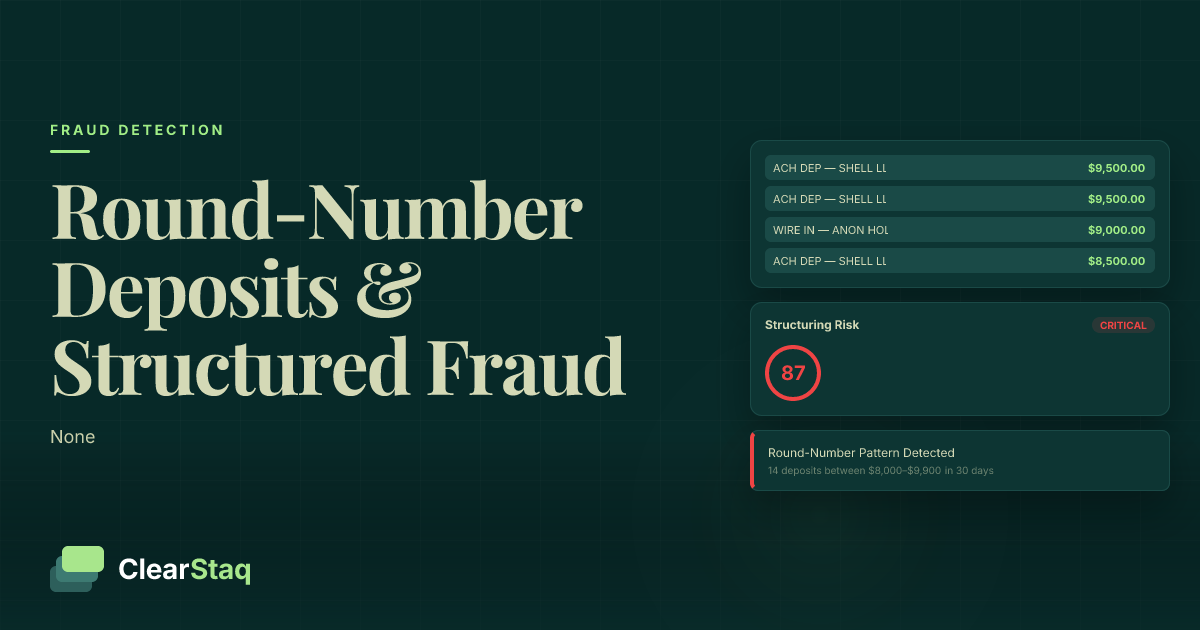
- Check whether the ID number has appeared across multiple unrelated guest accounts
- Flag identities with no prior transaction or credit history tied to the name
- Cross-check submitted documents against synthetic identity fraud detection patterns used in lending onboarding — the same fabricated-identity tactics show up on booking platforms
- Rate-limit new accounts making high-value bookings within their first 24 hours
ClearStaq's fraud detection runs 27+ signals against submitted documents in under 5 seconds, which is the faster path once manual cross-referencing starts missing repeat offenders across accounts.
Run liveness checks before high-risk check-ins
A photo ID upload alone can be a screenshot of someone else's document. Liveness detection — a selfie matched to the ID photo in real time — closes that gap for high-risk bookings: large groups, last-minute stays, and unverified first-time guests.
- Require a live selfie for bookings over a set guest-count threshold
- Flag static or low-quality selfie submissions for manual review
- Apply liveness checks only to flagged bookings, not every reservation, to avoid friction on repeat guests
- Store the liveness result with the booking record for dispute resolution
Verify host and property-manager identity during onboarding
Payout fraud starts here, not at check-in. A host account tied to a shell entity or a stolen bank account is a bigger liability exposure than a single fraudulent guest booking.
- Verify the business registration on file matches the property address
- Confirm the payout account owner matches the registered host name
- Require a government ID from the individual controlling the payout account, not just the listing
- Re-verify hosts who change payout accounts or business names mid-listing
Catch doctored or deepfake ID documents
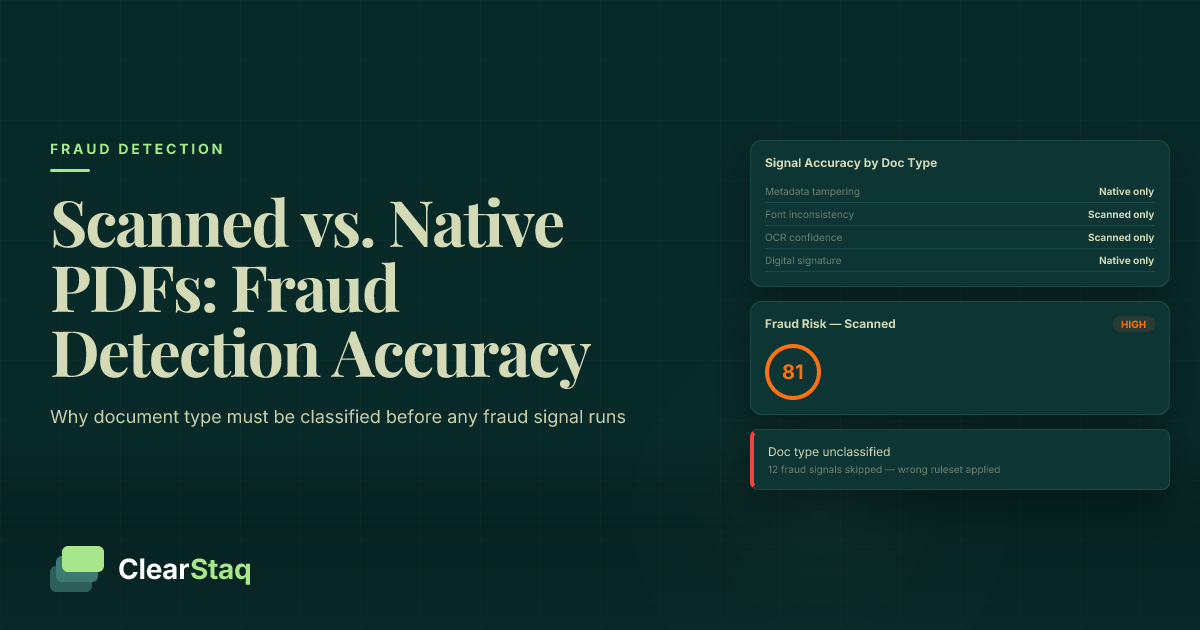
ID uploads get edited more than platforms assume — names swapped, photos replaced, expiration dates extended. Visual review by a booking agent catches obvious edits and misses the rest.
- Run submitted IDs through document-tamper detection before manual approval
- Watch for inconsistent fonts, misaligned security features, or mismatched document templates
- Reference deepfake identity document detection methods built for lending onboarding — the same doctoring techniques appear on rental platform ID uploads
- Flag any document edited or re-uploaded more than once for the same booking
Automate re-verification for repeat and high-risk guests
One-time verification at signup doesn't hold for a platform where the same account can book dozens of properties across years. Risk profiles change.
- Re-verify guests after a chargeback or dispute, before their next booking is confirmed
- Re-check host payout accounts on a fixed schedule, not only at signup
- Flag accounts with a rising rate of last-minute cancellations or disputes
- Require re-verification when a guest or host changes their linked payment method
Compare the identity verification options
| Option | Best for | Key limitation |
|---|---|---|
| Autohost | Guest risk scoring at booking | Not built for host-side payout or KYB checks |
| Superhog | Guest liability and damage screening bundled with ID check | Focused on guest risk, weak on document fraud analytics |
| Stripe Identity | General-purpose ID verification API | No vacation-rental-specific risk scoring or party-fraud detection |
| ClearStaq | Document and synthetic identity fraud detection for host/property-manager onboarding | Not a guest check-in ID scanner — built for document parsing, not selfie liveness |
Verdict: no single vendor covers guest check-in and host payout verification end to end in 2026 — pick a guest-facing tool for booking-time ID checks and pair it with document-fraud detection like ClearStaq for the host onboarding side.
See ClearStaq's fraud signals
27+ signals flag doctored IDs and payout documents in under 5 seconds.
Common mistakes vacation rental platforms make
- Checking guest ID once at signup and never again — risk profiles shift after chargebacks, and a platform that doesn't re-verify keeps approving the same bad actor under a clean-looking account.
- Skipping host and property-manager KYB entirely — guest-side ID checks get all the attention while payout accounts sit unverified, which is where the larger dollar-value fraud lives.
- Trusting a visual ID review without a payment-name match — a clean-looking document with a mismatched cardholder name is still the cheapest fraud signal available and it gets skipped constantly.
- Applying liveness checks to every booking instead of flagged ones — blanket friction on repeat guests hurts conversion without adding meaningful fraud protection where it's not needed.
- Treating a single vendor as a complete solution — a guest-facing ID scanner and a document-fraud detection layer solve different halves of the same problem in 2026, and buying one doesn't cover the other.
FAQ
What is identity verification software for vacation rental platforms?
It's software that confirms guests and hosts are who they claim to be before a booking, payment, or payout is processed, typically combining ID document scans, selfie liveness checks, and payment-name matching. Vacation rental platforms need both guest-facing and host-facing verification, which most single vendors don't cover together.
Is Autohost or Superhog better for vacation rental identity checks?
Autohost focuses on guest risk scoring at booking time, while Superhog bundles guest liability and damage screening with its ID check. Neither covers host or property-manager onboarding verification, so platforms running payouts still need a separate document-fraud layer.
Does ClearStaq verify guest identity at check-in?
No. ClearStaq detects document fraud and synthetic identities using 27+ signals, which fits host and property-manager onboarding verification, not guest-facing selfie liveness checks at check-in.
How do vacation rental platforms catch synthetic identities?
Synthetic identity detection cross-references ID numbers and document details across accounts to catch fabricated or reused identities that pass a basic visual ID scan. This requires signal-based detection rather than manual document review.
What's the biggest identity verification gap on vacation rental platforms in 2026?
Host and property-manager payout verification is the most commonly skipped step, since most platforms invest in guest-facing ID checks and leave payout account ownership unverified. That gap carries a higher dollar-value fraud risk than guest-side chargebacks.
Do I need liveness detection for every booking?
No. Liveness checks work best applied to flagged bookings only, such as large groups, last-minute reservations, or unverified first-time guests, rather than every reservation, which adds friction without proportional fraud protection.
Can doctored ID documents pass a manual visual review?
Yes. Edited names, swapped photos, and extended expiration dates often look clean to a booking agent doing a visual check, which is why document-tamper detection catches edits that manual review misses.
Should vacation rental platforms re-verify guests after a chargeback?
Yes. Re-verifying identity after a dispute or chargeback before the next booking is confirmed catches repeat offenders who keep the same account but change payment methods or booking patterns.
One last thing
The payment-name-to-ID match catches more fraud than the ID scan itself, and it costs nothing to implement in 2026 — most platforms skip it because it feels like a formality, not a fraud control. Add it before spending on any verification vendor.
Related guides
ClearStaq Team
Content Team
The ClearStaq team builds AI-powered tools for bank statement parsing, fraud detection, and income verification.