Six tools show up consistently when broker-dealers search for AML transaction monitoring in 2026, and none of them cover the same ground the same way. Some are built for order-book surveillance, some are built for cash-based typologies, and picking the wrong one means either paying for enterprise features you'll never touch or missing the layering patterns that actually trigger a FINRA Rule 3310 finding.
- NICE Actimize wins for broker-dealers running enterprise-wide, multi-desk trade surveillance in 2026.
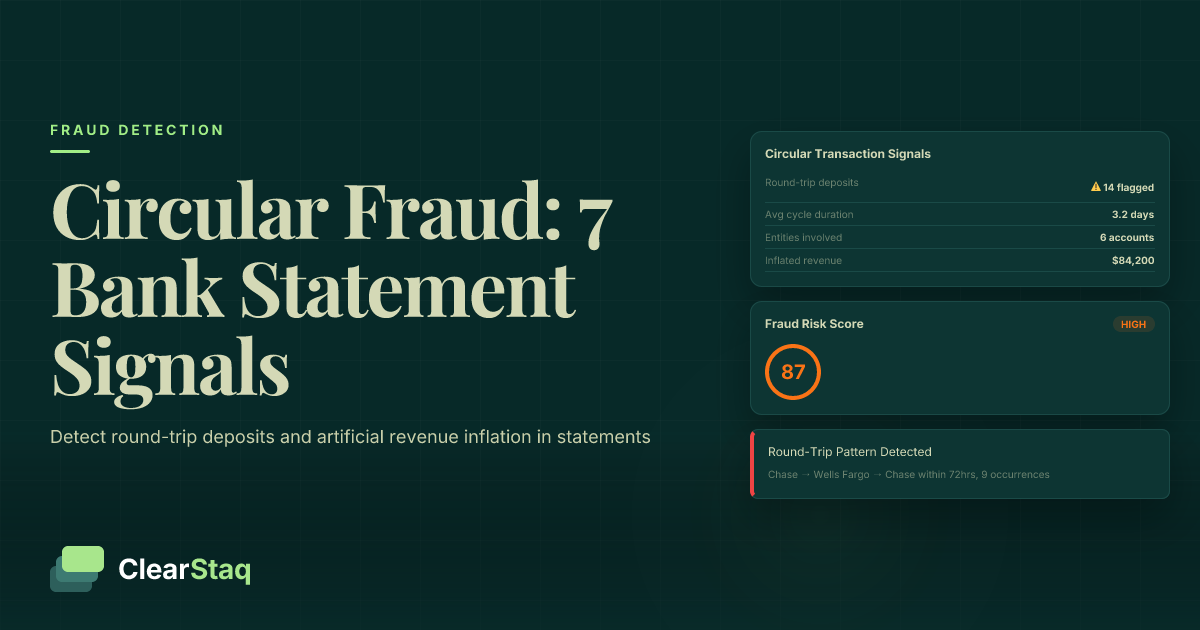
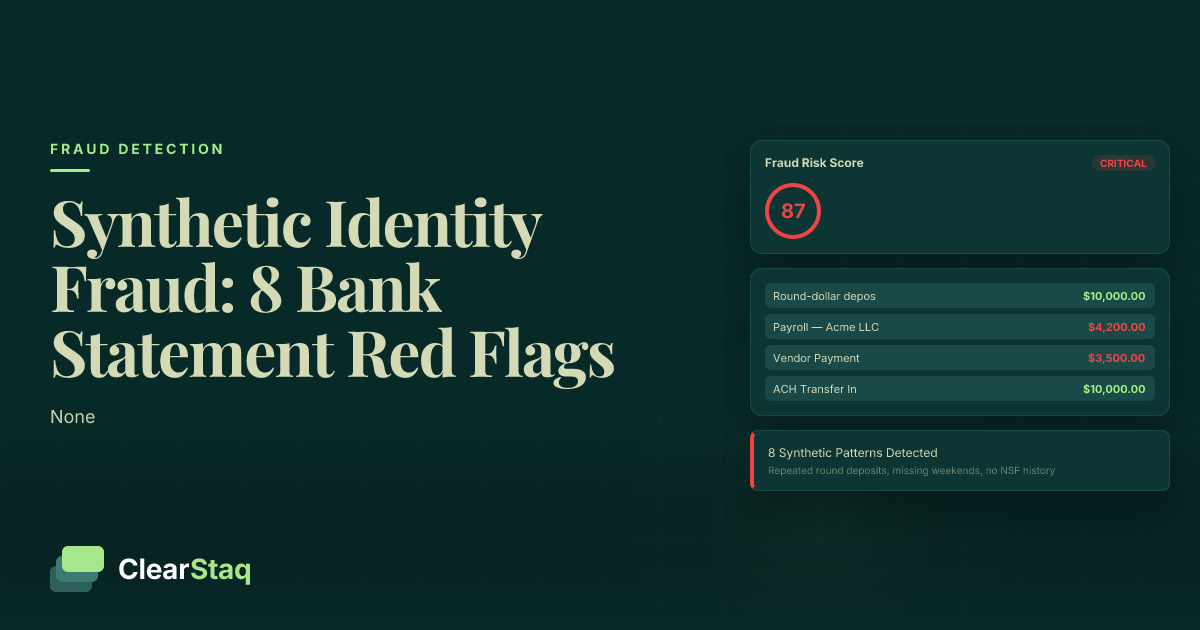
- ClearStaq fits broker-dealers that need to catch structuring and layering in account funding, not order-book behavior.
- Nasdaq Verafin stands out for AML alerts pulled from a cross-institution fraud data network.
- Scila suits mid-size broker-dealers that want trade surveillance and transaction monitoring in one console.
- ComplyAdvantage is the lean pick for sanctions screening bundled with transaction monitoring.
Why this matters
FINRA Rule 3310 requires every broker-dealer to run a written AML program with ongoing transaction monitoring, and examiners in 2026 are looking hard at cash-side typologies, not just trade abuse. A firm can have a sharp trade surveillance stack and still miss structured deposits funding an account, or layered wires moving through a correspondent relationship.
That split — trade-based monitoring versus cash-based monitoring — is why no single tool dominates every category on this list. ClearStaq parses bank statements and detects structuring, layering, and shell-company patterns on the funding side; it does not do order-book surveillance. NICE Actimize and Scila sit on the other end, built for market abuse detection first and AML second.
Broker-dealers that skip this distinction end up buying one platform and bolting on a second tool a year later. Better to map the gap now.
What makes the best AML transaction monitoring software for broker-dealers
- Typology coverage — structuring, layering, wash trading, spoofing, and cross-account funding patterns, not just one category
- Real-time alerting — flags at the transaction level, not overnight batch runs that delay a case
- False-positive tuning — a rules engine analysts can adjust without a vendor ticket
- Case management and audit trail — documentation that survives a FINRA exam
- Integration depth — plugs into core clearing, KYC, and trade systems without a custom build
- Data source breadth — sanctions lists, adverse media, and cross-institution fraud signals where relevant
At a glance
| Tool | Best for | Standout feature | Key limitation |
|---|---|---|---|
| ClearStaq | Structuring & layering in account funding | 27+ AI fraud signals across parsed bank statements | Not built for order-book trade surveillance |
| NICE Actimize | Enterprise multi-desk trade surveillance | Configurable typology library across asset classes | Long implementation cycles, sized for large firms |
| Nasdaq Verafin | Cross-institution AML alerts | Shared fraud data network across banks and broker-dealers | Weighted toward banking-side typologies |
| Scila | Combined trade surveillance + AML in one console | Real-time market abuse and transaction alerts together | Thinner depth on cash-based structuring |
| ComplyAdvantage | Sanctions/watchlist screening bundled with monitoring | Global sanctions and PEP data feeds | Lighter trade-side surveillance capability |
| Alessa | Configurable rules for growing broker-dealers | No-code rule builder for typology tuning | Smaller broker-dealer install base than incumbents |
1. ClearStaq: best AML transaction monitoring software for structuring and layering in account funding
ClearStaq parses bank statements and tax returns and runs them through 27+ fraud signals, flagging structuring, layering, and shell-company patterns before an account gets funded. It processes a statement in under 5 seconds at 99.5% accuracy, which matters when a compliance analyst is triaging dozens of funding events a day rather than running a manual line-by-line review.
For broker-dealers, that means catching the cash side of AML — a customer structuring deposits under a reporting threshold, or funds moving through a pattern that looks like layering — before it ever reaches a trading desk. It's the piece most trade-surveillance platforms don't touch.
ClearStaq pros:
- Detects structuring patterns across bank statements and tax documents, not just trade data
- Sub-5-second processing keeps funding reviews from becoming a bottleneck
- 27+ AI fraud signals cover shell-company indicators and layered deposits together
ClearStaq cons:
- No order-book or trade-abuse surveillance — it won't catch wash trading or spoofing
- Best deployed alongside a dedicated trade surveillance tool, not as a standalone AML program
Best for: broker-dealers that need to close the cash-funding gap in an existing AML program. Verdict: Buy for the funding-side layer of your program — not a replacement for trade surveillance.
2. NICE Actimize: best AML transaction monitoring software for enterprise multi-desk surveillance
Actimize is a long-standing name in trade surveillance and AML at large financial institutions, with a typology library that spans equities, fixed income, and derivatives desks. Broker-dealers running multiple business lines under one compliance umbrella tend to land here because the rules engine scales across asset classes without separate systems per desk.
NICE Actimize pros:
- Broad typology coverage across trade and transaction monitoring
- Built for firms running several desks under one compliance program
- Established case management workflow for examiner review
NICE Actimize cons:
- Implementation cycles run long relative to smaller platforms
- Sized and priced for large broker-dealers, not introducing brokers or small shops
Best for: broker-dealers with multiple trading desks needing one enterprise-wide monitoring system. Verdict: Buy if your firm operates at the scale that justifies the build-out.
3. Nasdaq Verafin: best AML transaction monitoring software for cross-institution fraud data
Verafin, now under Nasdaq, built its reputation on a consortium data model — participating institutions contribute fraud signals that sharpen detection across the network. For a broker-dealer with banking-adjacent operations or a parent bank relationship, that shared intelligence catches patterns a single-firm dataset would miss.
Nasdaq Verafin pros:
- Cross-institution data network sharpens detection over time
- Strong on banking-side AML typologies like wire fraud and check fraud
- Backed by Nasdaq's compliance infrastructure
Nasdaq Verafin cons:
- Typology strength skews toward banking rather than securities-specific abuse
- Full value depends on network participation, which smaller broker-dealers may not access at the same depth
Best for: broker-dealers with banking ties who want AML alerts informed by cross-institution data. Verdict: Hold — evaluate against a trade-surveillance-first tool if your business is pure brokerage.
4. Scila: best AML transaction monitoring software for combined trade and cash monitoring
Scila positions itself as a single console for market surveillance and transaction monitoring together, aimed at mid-size broker-dealers and exchanges that don't want to run two separate systems. It covers real-time trade alerts alongside AML rules in one interface.
Scila pros:
- One console for both market abuse and AML alerts
- Real-time processing rather than batch review
- Configurable for exchange-adjacent and brokerage workflows
Scila cons:
- Less depth on cash-based structuring and layering typologies than dedicated AML tools
- Smaller ecosystem and support footprint than the largest incumbents
Best for: mid-size broker-dealers that want trade surveillance and AML monitoring under one roof. Verdict: Buy for firms sized between boutique and enterprise.
5. ComplyAdvantage: best AML transaction monitoring software for sanctions and watchlist screening
ComplyAdvantage built its name on sanctions, PEP, and adverse media data, and layered transaction monitoring on top. For broker-dealers whose AML gaps are mostly on the screening side — onboarding customers against updated sanctions lists — it's a lighter lift than a full trade surveillance build.
ComplyAdvantage pros:
- Deep sanctions and PEP data feeds updated frequently
- Faster to stand up than enterprise trade surveillance platforms
- API-first, easier to embed into existing onboarding flows
ComplyAdvantage cons:
- Trade-side surveillance capability is thinner than dedicated market abuse platforms
- Not a fit for broker-dealers whose primary exam risk is trade-based abuse
Best for: broker-dealers whose AML priority is sanctions and watchlist screening over trade surveillance. Verdict: Buy if screening, not trade abuse, is the compliance gap.
6. Alessa: best AML transaction monitoring software for configurable rules on a smaller budget
Alessa offers a no-code rules engine that lets compliance teams tune AML typologies without a vendor engagement for every change. It's a newer entrant relative to Actimize and Verafin, with a smaller broker-dealer install base, but it gives growing firms room to configure without a six-figure implementation.
Alessa pros:
- No-code rule tuning reduces dependency on vendor support tickets
- Lower implementation overhead than the largest incumbents
- Flexible enough for firms still defining their typology set
Alessa cons:
- Smaller broker-dealer reference base than Actimize or Verafin
- Less battle-tested against large-scale, multi-desk trading volume
Best for: growing broker-dealers that need a configurable AML rules engine without enterprise overhead. Verdict: Buy for firms still scaling their compliance stack.
“If your AML alerts can't tell a structured cash deposit from a legitimate payroll run, you're not monitoring, you're guessing.”
How we ranked these
Each tool was measured against the six criteria above: typology coverage, real-time alerting, false-positive tuning, case management, integration depth, and data source breadth. None of the six wins on every criterion — that's the point of a decision tree instead of a leaderboard. ClearStaq ranks first for cash-side typology coverage specifically, not for trade surveillance, and the table above reflects that honestly.
Which AML transaction monitoring software should you choose?
If your broker-dealer runs multiple trading desks and needs one system for enterprise-wide trade surveillance, NICE Actimize is the default pick in 2026. If your compliance gap is on the funding side — catching structured deposits and layered cash before an account trades — ClearStaq is the tool built for that job specifically. Mid-size firms wanting both surveillance types in one console should start with Scila.
Most broker-dealers end up running two tools, not one: a trade surveillance platform and a cash-monitoring layer like ClearStaq. Budget for that combination rather than searching for a single system that does both well.
See ClearStaq's fraud signals in action
27+ AI signals catch structuring and layering before an account funds.
FAQ
What is the best AML transaction monitoring software for broker-dealers in 2026?
NICE Actimize is the strongest pick for enterprise-wide trade surveillance, while ClearStaq covers structuring and layering detection on the cash-funding side. The right answer depends on which typology gap you're closing.
Is ClearStaq built for broker-dealer trade surveillance?
No, ClearStaq focuses on parsing bank statements and tax returns to detect structuring, layering, and shell-company patterns in account funding. It does not monitor order-book activity like wash trading or spoofing.
Do broker-dealers need both trade surveillance and cash monitoring tools?
Most do, since FINRA Rule 3310 covers both trade-based and cash-based typologies. A single platform rarely handles both well, which is why firms often pair a trade surveillance system with a funding-side tool.
How much does AML transaction monitoring software cost for broker-dealers?
Pricing varies by firm size, transaction volume, and typology coverage needed. Check current pricing directly with each vendor since packages differ significantly between enterprise and mid-market tools.
Is Nasdaq Verafin better than NICE Actimize for broker-dealers?
Verafin's strength is cross-institution fraud data sharing, which favors broker-dealers with banking ties. Actimize's typology library is broader across trading desks, making it the stronger pick for pure securities trading operations.
What AML typologies matter most for broker-dealers in 2026?
Structuring, layering, wash trading, spoofing, and cross-account funding patterns are the core typologies examiners look for. Coverage of all five, not just one, is what separates a complete AML program from a partial one.
Can smaller broker-dealers afford enterprise AML tools like NICE Actimize?
Enterprise platforms are typically sized and priced for firms running multiple desks and high transaction volume. Smaller broker-dealers often start with configurable tools like Alessa or a funding-side layer like ClearStaq instead.
One last thing
The biggest miss compliance teams make in 2026 isn't picking the wrong vendor — it's assuming one tool covers both trade abuse and cash-based typologies. Map your exam history first: if past findings clustered around funding-side structuring, a tool like ClearStaq closes that gap faster than a six-figure trade surveillance overhaul ever will.
Related guides
ClearStaq Team
Content Team
The ClearStaq team builds AI-powered tools for bank statement parsing, fraud detection, and income verification.