AML transaction monitoring software for neobanks flags structuring, layered cash deposits, and sanctioned counterparties inside a mobile-first account base that opens accounts in minutes and moves money in seconds — the compliance layer that separates a chartered fintech from a FinCEN consent order. Most neobanks buy a rules engine for the alerts and then discover the harder problem sits one layer down, inside the bank statement itself.
- AML transaction monitoring software for neobanks works best paired with bank statement fraud signals, not as a single standalone system.
- ClearStaq scans 27+ signals per statement to surface structuring and layered deposits before a monitoring case even opens.
- Sanctions and PEP screening are separate systems from transaction monitoring — treat the stack as three layers, not one tool.
- Neobanks that skip statement-level analysis in 2026 catch synthetic identity and structuring only after funds have already moved.
Why AML transaction monitoring matters for neobanks
A neobank operates under the Bank Secrecy Act through its sponsor bank charter, and the compliance officer of record — not the software vendor — carries the liability when an examiner finds a gap. That liability shows up fast: the $10,000 Currency Transaction Report threshold and the 30-day Suspicious Activity Report filing window under FinCEN rules apply the same whether the account was opened at a branch counter or through a five-minute mobile signup.
Digital-only onboarding is the difference. A traditional bank spreads new-account risk across a branch network and a paper trail; a neobank opens accounts at volume with almost no friction, which is exactly the profile bad actors target with structuring and synthetic identities. AML transaction monitoring software for neobanks has to be tuned for high account velocity and low onboarding friction, not retrofitted from a legacy bank's rule set.
Compliance teams at neobanks also tend to run lean — often a handful of analysts covering an account base that would need a much larger team at a traditional bank. That gap is exactly why the AML transaction monitoring program built for lenders starts with prioritization rules before it adds a single detection model — a compliance team that alerts on everything catches nothing.
Steps to build AML transaction monitoring for neobanks
1. Map your transaction risk categories
Start with the account types and transaction paths that actually carry risk for a digital-only bank, not a generic template borrowed from a branch-based institution.
- Peer-to-peer transfers and instant payment rails (RTP, FedNow)
- Card-not-present spend and merchant category codes tied to high-risk verticals
- ACH pulls from external accounts opened within the same 30-day window
- Crypto on-ramp and off-ramp activity if the neobank offers it
- Cash deposit network partners (retail cash-load kiosks, ATM networks)
2. Set velocity and threshold rules
Manual rule-writing works fine at low volume — the free path is a spreadsheet of dollar and frequency thresholds reviewed monthly by a compliance analyst.
- Daily transaction count per account relative to account age
- Aggregate deposit value against the $10,000 CTR threshold across a rolling 24 hours
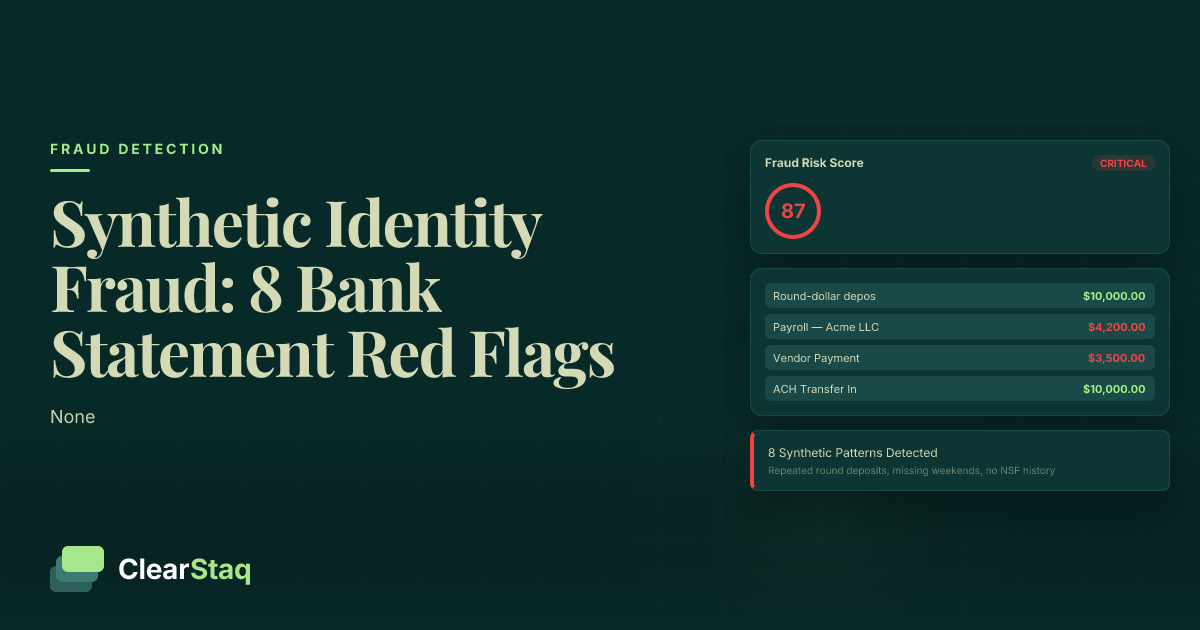
- Round-dollar transfers repeated across multiple accounts sharing a device fingerprint
- Rapid movement of funds in and immediately back out (pass-through behavior)
3. Screen counterparties against sanctions and PEP lists
Sanctions and politically exposed person screening is a distinct control from transaction monitoring, and neobanks that fold the two together end up under-screening both. The manual version cross-checks OFAC's SDN list against counterparty names on every wire or transfer above a set dollar threshold; the sanctions screening software built for fintech lenders automates the match logic and the fuzzy-name tuning that manual lookups miss.
- OFAC SDN and consolidated sanctions list matching on originator and beneficiary
- Politically exposed person screening at onboarding and on ownership changes
- Adverse media checks tied to account risk-tier upgrades
- Re-screening on a fixed cadence, not just at account opening
4. Detect structuring and layered cash deposits
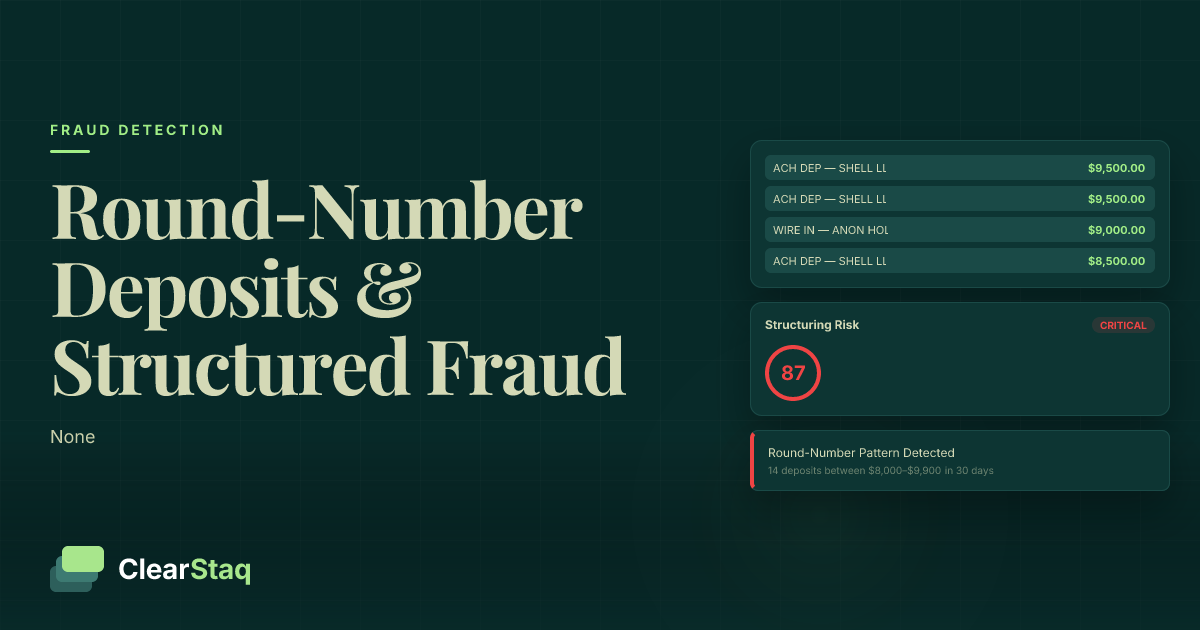
This is the step most neobank AML stacks handle worst, because structuring shows up inside the bank statement's transaction history, not inside a rules engine watching live transaction feeds. A compliance analyst manually scanning statement PDFs for layered cash deposit patterns can spend hours per file; ClearStaq's parsing layer runs the same pattern check across 27+ fraud signals in under 5 seconds per statement.
- Multiple deposits just under the $10,000 reporting threshold within a short window
- Deposits split across linked accounts on the same day
- Cash-in, wire-out patterns with no business rationale on the statement
- Deposit timing that doesn't match the stated income source on file
5. Tune false positive rates before they bury your analysts
A monitoring system tuned straight out of the box against a generic risk model will bury a small compliance team in false alerts within the first quarter.
- Segment thresholds by account age instead of one flat rule for all accounts
- Suppress duplicate alerts triggered by the same underlying transaction pattern
- Track alert-to-SAR conversion rate monthly and retune rules that never convert
- Feedback closed-case outcomes back into the rule library quarterly
6. Automate case management and SAR filing
Once alerts are accurate, the bottleneck moves to documentation. Manual SAR narratives pulled from raw transaction logs take analysts hours per case; automating the evidence assembly — pulling the flagged transactions, the account history, and the supporting statement data into one packet — is what keeps a lean compliance team inside the 30-day filing window as account volume grows in 2026.
- Auto-populate SAR narrative fields from flagged transaction data
- Attach supporting bank statement excerpts to each case automatically
- Track filing deadlines against the 30-day BSA clock per case
- Maintain an audit trail of analyst decisions for examiner review
Comparison: AML monitoring options for neobanks
| Option | Best for | Key limitation |
|---|---|---|
| Legacy enterprise AML suites | Large banks with dedicated compliance headcount | Multi-month implementation, overbuilt for a neobank's account volume |
| Single-purpose sanctions/PEP tools | Checklist-level regulatory coverage | No bank-statement-level structuring or layering detection |
| In-house rules engine on core banking data | Teams with engineering bandwidth to maintain rules | No fraud-signal library; rules drift as typologies change |
| ClearStaq statement analysis + dedicated case manager | Neobanks needing transaction-level structuring detection | Does not replace full case management or SAR filing workflow on its own |
Verdict: a neobank needs the statement-level detection layer and a case management system working together — no single tool in 2026 covers both ends of AML transaction monitoring end to end.
Common mistakes neobanks make with AML monitoring
- Treating onboarding KYC as the finish line. Identity verification at signup catches nothing that happens in month three of the account's life.
- Copying threshold rules from a legacy bank's risk model. A digital-only user base moves money faster and in smaller increments than a branch-based population, and static thresholds miss it.
- Ignoring crypto off-ramp activity. If the neobank supports crypto funding or withdrawal, transaction monitoring has to cover that path or it becomes the blind spot bad actors find first.
- Skipping structuring detection on aggregate small-dollar deposits. Deposits that individually clear every threshold can still add up to a reportable pattern across a week.
- Letting alert volume outpace analyst headcount. An untuned system generates false positives faster than a lean team can close them, and real SARs get buried in the backlog.
See ClearStaq's fraud signal layer
27+ signals per bank statement, parsed in under 5 seconds.
FAQ
What is the best AML transaction monitoring software for neobanks in 2026?
There's no single tool that covers every layer — the strongest 2026 stacks pair a case management and rules engine with statement-level fraud detection like ClearStaq for structuring and layered deposits. Neobanks running one tool alone tend to under-detect either the pattern-level fraud or the case documentation side.
Is transaction monitoring the same as sanctions screening?
No, they're separate controls under the same BSA/AML program. Transaction monitoring watches account behavior over time; sanctions screening matches counterparty names against lists like OFAC's SDN list at the point of a transaction.
How much does AML transaction monitoring software cost for a neobank?
Pricing varies by transaction volume, account count, and whether sanctions/PEP screening is bundled in — check current terms directly with each vendor rather than relying on a published range.
What triggers a Suspicious Activity Report at a neobank?
A SAR is required when an institution identifies a transaction of $5,000 or more that it suspects involves funds from illegal activity, and it must be filed within 30 days of detection under FinCEN rules. Structuring patterns just under the $10,000 CTR threshold are a common trigger.
Do neobanks need their own AML program or does the sponsor bank cover it?
Neobanks operating through a bank partnership still need their own transaction monitoring controls even though the sponsor bank holds the charter, because examiners hold both parties accountable for BSA/AML compliance in the relationship.
How does structuring detection work in bank statement data?
Structuring detection looks for multiple deposits or transfers just under a reporting threshold, split across linked accounts or a short time window. Bank statement parsing tools flag these patterns automatically instead of requiring an analyst to review each statement line by line.
Can AML transaction monitoring reduce false positives?
Yes, tuning thresholds by account age, suppressing duplicate alerts on the same transaction, and feeding closed-case outcomes back into the rule library cuts false positive volume significantly over a static rule set. Teams that skip this retuning step see alert backlogs grow as account volume scales.
One last thing
The detail most neobank compliance teams miss: structuring doesn't have to happen in a single account to trigger a SAR. Deposits split across two or three linked accounts opened by the same person within the same week still add up to a reportable pattern, and a monitoring system watching only one account at a time will never see it. Cross-account pattern detection, not per-account thresholds, is what catches the structuring cases that actually get referred to FinCEN in 2026.
Related guides
ClearStaq Team
Content Team
The ClearStaq team builds AI-powered tools for bank statement parsing, fraud detection, and income verification.