Factoring companies advance cash against invoices in hours, not weeks — and every hour spent keying invoice data by hand is an hour a competitor uses to fund the deal first. This guide breaks down what invoice data extraction software for factoring companies actually needs to do, which capabilities matter most, and which shortcuts cost you fraud losses later.
- ClearStaq extracts invoice and bank statement data with 27+ fraud signals — Buy for factoring desks funding same-day in 2026.
- Generic OCR-only tools with no fraud layer are a Skip for invoice-heavy factoring workflows.
- Sub-5-second processing beats the 4-8 hours manual review typically takes per file.
- 900+ format coverage matters when client invoices arrive from dozens of different accounting systems.
Why this matters
Factoring runs on speed and trust in the paper. A broker or underwriter who can't verify an invoice fast enough loses the deal to someone who can fund same-day; one who verifies too loosely gets stuck holding a duplicate-pledged or altered invoice with no recourse.
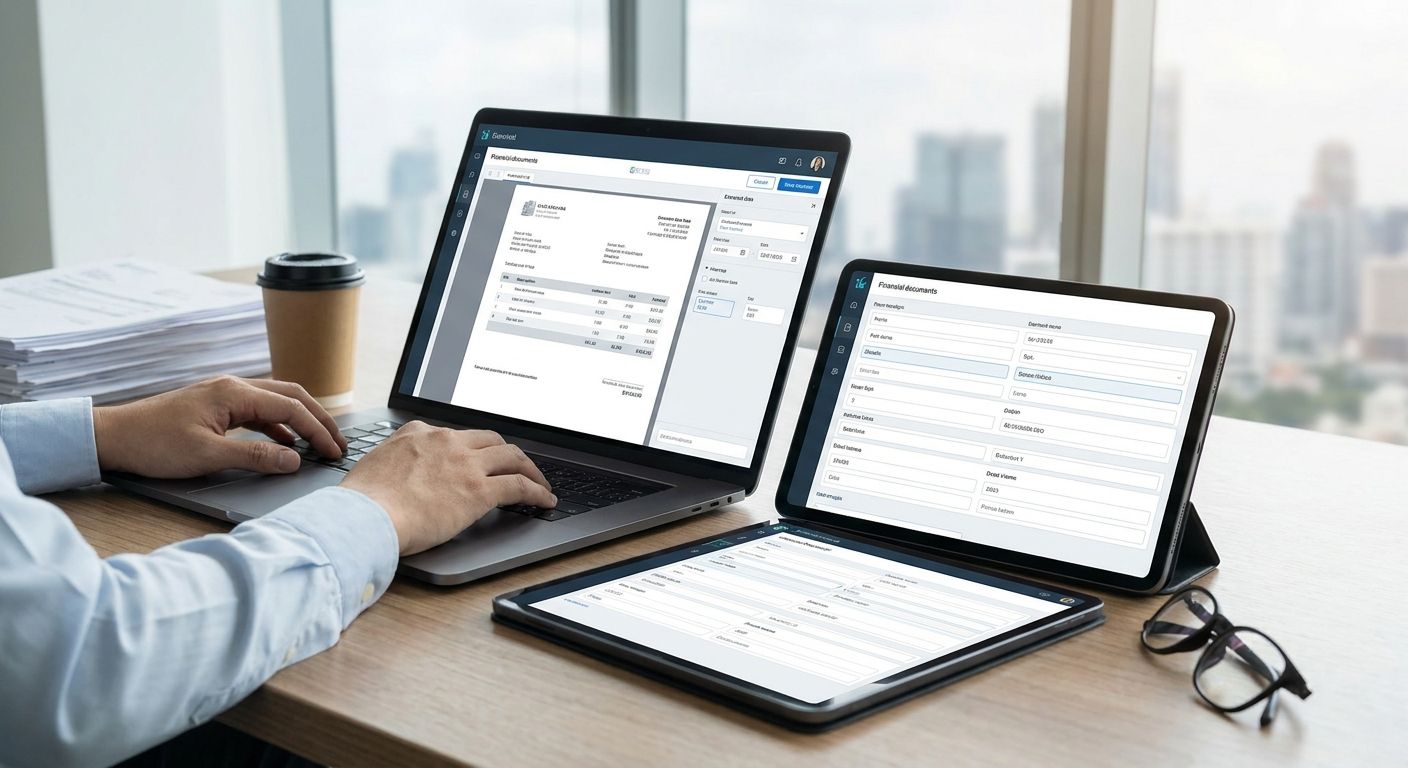
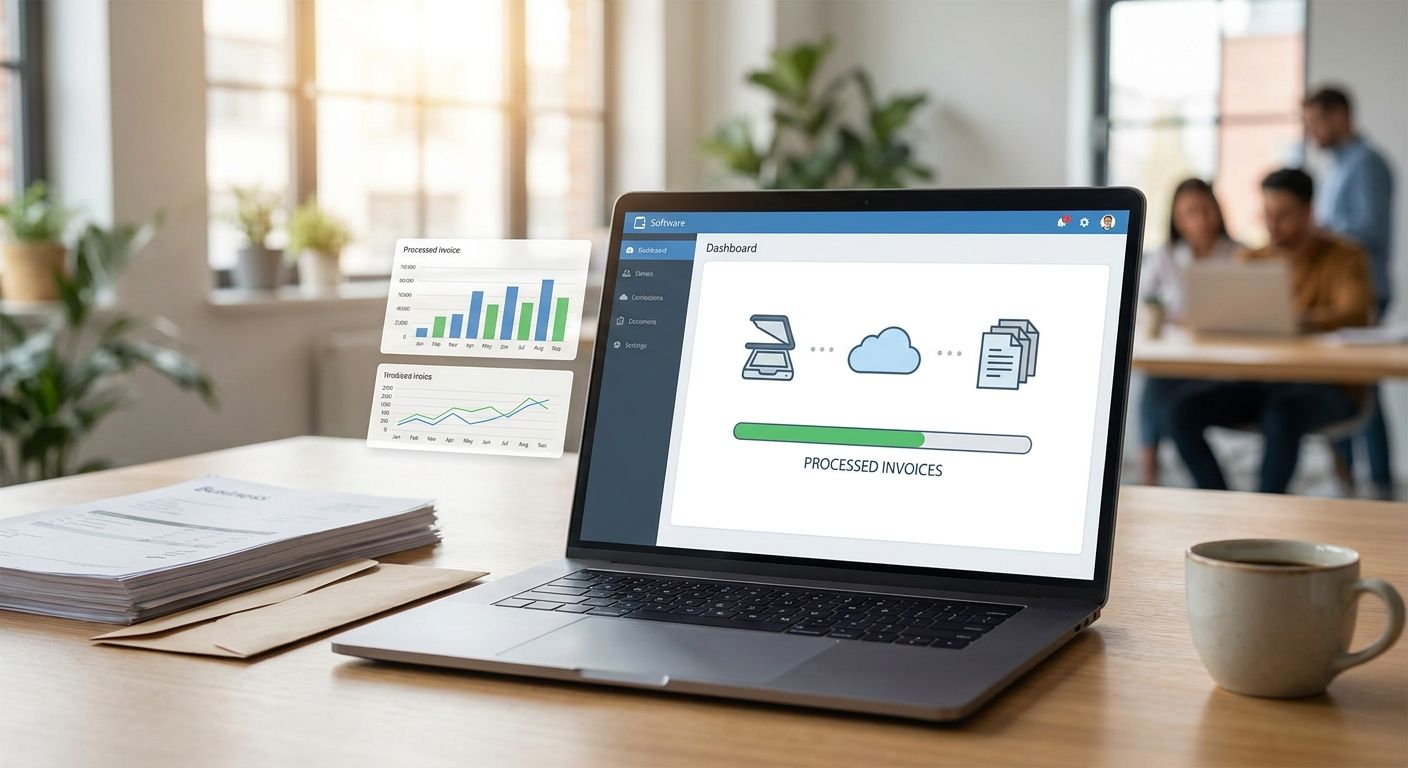
Manual invoice review doesn't scale past a handful of files a day per underwriter. ClearStaq built its parsing engine around that exact bottleneck — extracting invoice line items, dates, amounts, and debtor details in under 5 seconds, then running the extracted data against 27+ fraud signals before an underwriter ever opens the file.
The rest of this guide covers what to look for in invoice data extraction software for factoring companies specifically, not generic OCR buyers.
Who this is for
This guide is for factoring company underwriters, ops leads, and brokers who process invoices from multiple debtors and multiple client accounting systems every week. If your desk still routes PDFs to a data entry queue before an underwriter sees them, or if you've had a duplicate-pledged invoice slip through in the last 12 months, the criteria below apply directly to you.
What to look for in invoice data extraction software for factoring companies
OCR accuracy across invoice formats
Invoices from a trucking client look nothing like invoices from a staffing agency or a construction subcontractor. Software that only handles clean, templated PDFs breaks the moment a debtor sends a scanned fax or a photographed invoice from a phone.
Accuracy below 95% on messy source documents means an underwriter re-keys the difference by hand anyway, which erases the time savings the software was supposed to deliver.
Fraud detection built for invoice-specific risk
Factoring fraud looks different from mortgage or auto-loan fraud. Double-pledging the same invoice to two factors, altering invoice totals after the fact, and fabricating invoices for nonexistent debtors are the patterns that cost factoring companies real money.
Software that stops at "text extracted successfully" without flagging altered fonts, inconsistent metadata, or duplicate invoice numbers across submissions leaves that exposure wide open.
Cross-verification against bank statements
An invoice says a debtor owes $40,000. The client's bank statements should eventually show that debtor's payments landing on a pattern consistent with the invoice terms. Software that only parses the invoice in isolation can't catch a client submitting invoices for revenue that never actually materializes in their deposits.
Processing speed for same-day funding decisions
Factoring's entire value proposition to a client is speed of cash. If your extraction step adds a day to the underwriting cycle, you've undercut the reason clients choose factoring over a bank line of credit in the first place. Sub-5-second processing per document is the bar in 2026 — anything that takes minutes per file compounds fast across a 50-invoice batch.
Format and system coverage
Debtor and client accounting systems span QuickBooks exports, ERP-generated PDFs, scanned paper, and everything in between. Software built for a narrow set of templates forces manual handling the moment a new client's invoice format shows up, which happens constantly in a factoring book with dozens of active clients.
Integration with existing underwriting workflow
Extracted data that sits in a separate dashboard your underwriters have to tab over to check isn't actually saving time. The extraction layer needs to feed directly into whatever system your underwriters already work in — otherwise you've added a step, not removed one.
Top picks for factoring companies in 2026
The foundation pick — OCR extraction accuracy. This is the capability everything else depends on: if the extraction layer misreads a line item or a debtor name, every downstream fraud check inherits the error. ClearStaq's OCR approach runs at 99.5% accuracy across 900+ document formats, which covers the scanned-fax-to-clean-PDF range factoring desks actually see. Verdict: Buy.
The fraud filter — invoice-specific fraud detection. Duplicate pledging and altered invoice amounts are the two failure modes that cost factoring companies the most money, and they're invisible to a plain OCR tool. Document fraud detection built for factoring companies checks extracted invoices against 27+ signals — font inconsistency, metadata tampering, duplicate invoice numbers across submissions — before funding. Verdict: Buy.
The cross-check — bank statement verification. An invoice tells you what a debtor owes; a bank statement tells you whether that revenue pattern is real. Bank statement analysis built for factoring companies cross-references debtor payment patterns against submitted invoices, catching clients who submit invoices for revenue that never lands in deposits. Verdict: Buy for desks funding above $25,000 per advance where the exposure justifies the extra check.
The skip — generic OCR-only tools. Plain text-extraction tools that stop once the invoice number, amount, and date are pulled out leave the fraud question entirely to the underwriter's eyeball. That's the same manual bottleneck the software was supposed to remove, just with an extra software subscription attached. Verdict: Skip for any factoring desk processing more than a handful of invoices a week.
See invoice extraction in action
Check how ClearStaq parses invoices and bank statements for factoring underwriting.
What to avoid
- Document storage platforms marketed as parsing tools. Some platforms store the PDF and let a human read it on screen — that's file management, not invoice data extraction software for factoring companies.
- Spreadsheet-based manual logging. Typing invoice fields into a spreadsheet before running underwriting math might feel like a system, but it scales the same way a paper ledger does: badly, and with typos that compound at volume.
- Fraud checks that run after funding, not before. A fraud flag that surfaces after the advance has gone out is a post-mortem, not a control. Any tool worth using in 2026 checks the invoice before the money moves.
Verdict comparison
| Capability | Why it matters for factoring | ClearStaq coverage | Verdict |
|---|---|---|---|
| OCR accuracy | Bad extraction breaks every downstream check | 99.5% across 900+ formats | Buy |
| Invoice fraud detection | Duplicate pledging and altered totals are the top loss category | 27+ fraud signals | Buy |
| Bank statement cross-check | Confirms debtor revenue matches invoice claims | Built-in parsing and analysis | Buy |
| Processing speed | Same-day funding depends on it | Under 5 seconds per document | Buy |
| Generic OCR-only tools | No fraud layer, manual review still required | Not applicable | Skip |
FAQ
What is invoice data extraction software for factoring companies?
It's software that automatically pulls line items, amounts, dates, and debtor details from submitted invoices instead of requiring manual data entry. The best versions in 2026 also run the extracted data through fraud checks before an underwriter approves funding.
How accurate is invoice OCR in 2026?
Leading invoice extraction tools hit around 99.5% accuracy across varied formats, including scanned and photographed documents. Accuracy below 95% typically forces underwriters to re-key data manually, erasing most of the time savings.
Can invoice extraction software catch duplicate-pledged invoices?
Yes, when the software includes fraud detection layered on top of extraction, checking invoice numbers and metadata against prior submissions. Plain OCR tools that only extract text without fraud checks cannot catch this on their own.
How fast should invoice processing be for a factoring desk?
Under 5 seconds per document is the current bar for software built for same-day funding decisions. Anything measured in minutes per file adds up fast across a batch of 30-50 invoices.
Does invoice extraction replace bank statement analysis?
No — invoice extraction confirms what a debtor owes, while bank statement analysis confirms the client's actual cash flow matches what they've submitted. Factoring desks funding larger advances typically run both checks.
What formats should invoice extraction software support?
It should handle clean PDFs, scanned documents, and photographed invoices from at least several hundred source formats. Factoring books with dozens of active clients see enough format variety that narrow-coverage tools break down within weeks.
Is manual invoice review still viable for small factoring companies?
Manual review works only at very low volume, typically under a handful of invoices per day per underwriter. Past that, review time and error rates both climb, and fraud patterns become harder to catch by eye.
One last thing
The fraud pattern that catches the most experienced factoring underwriters off guard isn't a crude forgery — it's a real invoice for a real debtor that's already been pledged to a different factor the same week. Extraction alone won't catch that; it takes a fraud layer checking invoice numbers and debtor details against prior submissions, which is exactly the gap between OCR-only tools and invoice data extraction software for factoring companies built for 2026 underwriting volume.
Related guides
ClearStaq Team
Content Team
The ClearStaq team builds AI-powered tools for bank statement parsing, fraud detection, and income verification.