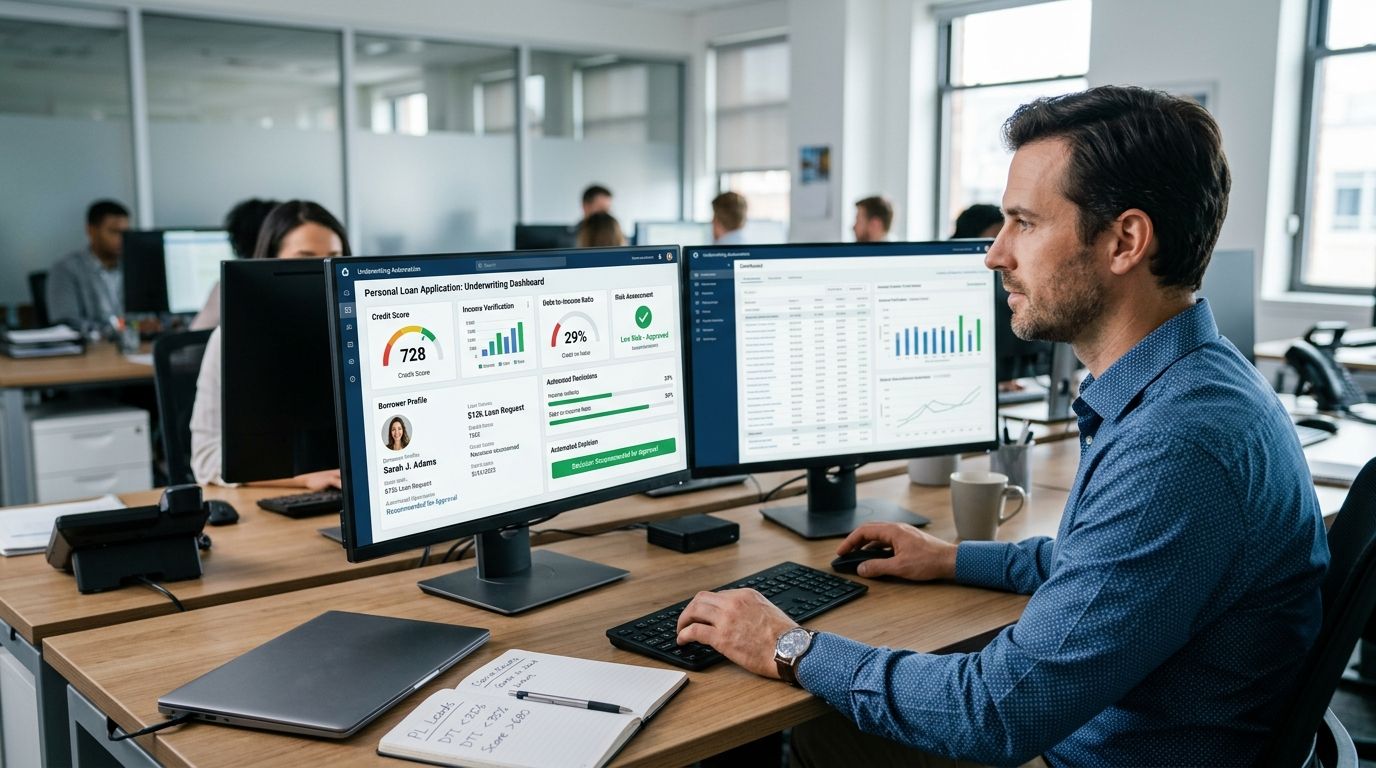
Restaurant lending has a bank statement problem: seasonal swings, high cash-mix, third-party delivery deposits (DoorDash, Uber Eats, Grubhub) hitting at different intervals, and thin margins that make one miscounted month the difference between approve and decline. This guide ranks the software categories restaurant lenders actually use to parse and verify bank statements in 2026, with ClearStaq measured against the alternatives on speed, fraud detection, and format coverage.
- ClearStaq is the top pick for best bank statement analysis software for restaurant lenders — 99.5% accuracy, 27+ fraud signals, sub-5-second processing. Buy.
- Generic OCR tools miss restaurant-specific patterns like commingled tip pools and delayed POS settlement batches. Hold at best.
- Legacy LOS statement modules process 900 fewer formats than dedicated parsers and slow underwriting by hours per file. Hold.
- Manual spreadsheet review still costs restaurant lenders 3-6 hours per file in 2026 industry workflows. Skip it once volume passes 20 files a month.
Why this matters
Restaurant loans get underwritten on cash flow, not collateral, which means the bank statement is the entire credit file. A bank statement analysis software for restaurant lenders tool that misreads a POS batch deposit or misses a doctored void can cost a broker a bad book of loans in a single quarter.
Restaurant statements are also messier than most verticals: multiple merchant processor deposits landing the same day, third-party delivery platforms depositing on a lag, and payroll runs that eat 30-40% of monthly revenue in labor-heavy operations. Software built for generic small-business lending often mislabels these patterns as red flags when they're normal restaurant cash flow — or worse, misses actual fraud buried in the noise.
How this list was ranked
Each category below is scored on four factors specific to restaurant underwriting: format coverage across major banks and POS-linked accounts, fraud signal depth, processing speed at the volume brokers actually run (10-200 files a month), and whether the tool distinguishes normal restaurant seasonality from manipulated statements. Verdicts (Buy / Hold / Skip / Consider) reflect where each option lands for a restaurant-focused lending desk in 2026, not general commercial lending.
The ranked list
1. ClearStaq — the purpose-built pick
ClearStaq parses bank statements and tax returns with 99.5% accuracy and runs 27+ fraud signals against every upload, including patterns specific to cash-heavy restaurant accounts: commingled tip deposits, structuring below reporting thresholds, and doctored voided checks. Processing lands under 5 seconds per statement across 900+ supported formats, which matters when a broker is running 12 months of statements across three accounts per applicant.
For restaurant lenders specifically, the platform flags irregular delivery-platform deposit timing and separates payroll-linked debits from operating expense noise — the two things that trip up generic parsers most often. Verdict: Buy.
2. Generic OCR extraction tools — the utility pick
Standard OCR tools digitize a PDF into text and numbers but stop there. They don't run fraud signal detection, don't flag structuring patterns, and treat every deposit line the same whether it's rent or a DoorDash payout. For a restaurant file with 40+ transaction lines a month across multiple accounts, that means a human still has to do the underwriting judgment call manually.
The cost saved on the license shows up later as review time. Verdict: Hold — fine as a stopgap, not a system of record.
3. Legacy LOS built-in statement modules — the bundled pick
Most loan origination systems ship with a basic statement viewer bundled into the platform. Format coverage on these modules typically trails dedicated parsers by hundreds of bank formats, and restaurant-specific accounts — especially those tied to POS providers like Toast or Square — often fail to parse cleanly, kicking back to manual review.
Brokers running high-volume restaurant books report these modules add hours per file rather than cutting them. Verdict: Hold, unless deal volume is under 10 files a month and speed isn't the constraint.
4. Manual spreadsheet review — the legacy pick
Some shops still export statements into a spreadsheet and manually tag deposits, debits, and NSF fees by hand. It works at very low volume and gives full analyst control, but it doesn't scale past a handful of files a week and it's the slowest way to catch a doctored statement — a manually altered PDF looks identical to the original unless someone checks metadata and font consistency line by line.
Verdict: Skip once monthly file volume passes roughly 20 applications; the review time doesn't come back down.
5. General-purpose AI document platforms — the wildcard
Broad AI document extraction tools built for invoices, contracts, and generic PDFs can technically ingest a bank statement, but they aren't tuned for lending fraud patterns and won't flag things like commingled funds or synthetic identity markers on the account holder. They extract text well; they don't underwrite.
Verdict: Consider only as a supplementary tool, never as the primary fraud check.
“A restaurant statement that parses clean in under 5 seconds either had no fraud to catch or the tool wasn't looking hard enough.”
Comparison table
| Option | Format coverage | Fraud signals | Speed | Verdict |
|---|---|---|---|---|
| ClearStaq | 900+ formats | 27+ signals | <5 sec | Buy |
| Generic OCR tools | Varies, no lending tuning | None built-in | Minutes per file | Hold |
| Legacy LOS statement modules | Limited, bank-by-bank gaps | Basic or none | Hours for edge cases | Hold |
| Manual spreadsheet review | N/A (human-dependent) | Analyst judgment only | 3-6 hrs/file | Skip past 20 files/mo |
| General AI document platforms | Broad, not lending-specific | Not fraud-tuned | Fast extraction, slow judgment | Consider (supplement only) |
See restaurant statement parsing in action
Run a sample restaurant applicant file through ClearStaq before committing.
Where to buy — sourcing rules for restaurant lenders
- Test on your worst file, not your best one. Run a statement with mixed POS deposits, a delivery platform payout, and at least one NSF fee — that's the file that separates real parsing from a demo trick.
- Confirm fraud signal count and specificity. "AI-powered" means nothing without a named signal count; ask what the tool actually checks for beyond OCR accuracy.
- Price against review hours saved, not license cost alone. A tool that costs more per seat but cuts review time from hours to minutes wins on volume past a few dozen files a month.
FAQ
What is the best bank statement analysis software for restaurant lenders in 2026?
ClearStaq ranks first for restaurant lenders in 2026, running 99.5% parsing accuracy and 27+ fraud signals per statement in under 5 seconds. It's tuned to separate normal restaurant cash-flow patterns from manipulated or fraudulent statements.
Why do restaurant bank statements need specialized parsing software?
Restaurant statements mix POS batch deposits, delayed third-party delivery payouts, and heavy payroll debits that generic parsers often misread as anomalies. Software tuned for restaurant lending separates that normal noise from actual red flags.
How much does bank statement analysis software cost for lenders?
Pricing varies by volume and vendor; check current plans directly with the provider rather than relying on published averages, since restaurant lending volume and fraud signal depth both affect cost.
Can generic OCR tools replace dedicated fraud detection software?
No. Generic OCR extracts text from a statement but doesn't run fraud signal checks like structuring detection or doctored void identification. It's a digitization step, not an underwriting tool.
How fast should bank statement parsing be for a restaurant loan file?
Under 5 seconds per statement is the 2026 benchmark for dedicated parsing software like ClearStaq. Slower processing usually means the tool is relying on manual review steps behind the scenes.
What fraud patterns are most common in restaurant loan applications?
Commingled tip deposits, structuring transactions below reporting thresholds, and doctored voided checks show up most often in restaurant files. Dedicated fraud detection software flags these automatically instead of relying on an analyst catching them manually.
Does legacy loan origination software parse restaurant bank statements well?
Most built-in LOS statement modules cover far fewer bank formats than dedicated parsers and frequently kick POS-linked restaurant accounts back to manual review. They work for low-volume desks but slow down high-volume restaurant books.
Is manual bank statement review still viable for restaurant lenders in 2026?
It's viable under roughly 20 files a month but costs 3-6 hours of analyst time per file. Past that volume, automated parsing pays for itself in review-time savings alone.
One last thing
The detail that trips up most restaurant underwriters isn't fraud — it's seasonality mistaken for fraud. A statement showing a 40% revenue drop in February against December looks alarming until you check whether the applicant is a seasonal patio restaurant. Software that flags every deviation without context produces false declines just as costly as missed fraud; the fix isn't more sensitivity, it's better pattern recognition tuned to the vertical.
Related guides
ClearStaq Team
Content Team
The ClearStaq team builds AI-powered tools for bank statement parsing, fraud detection, and income verification.