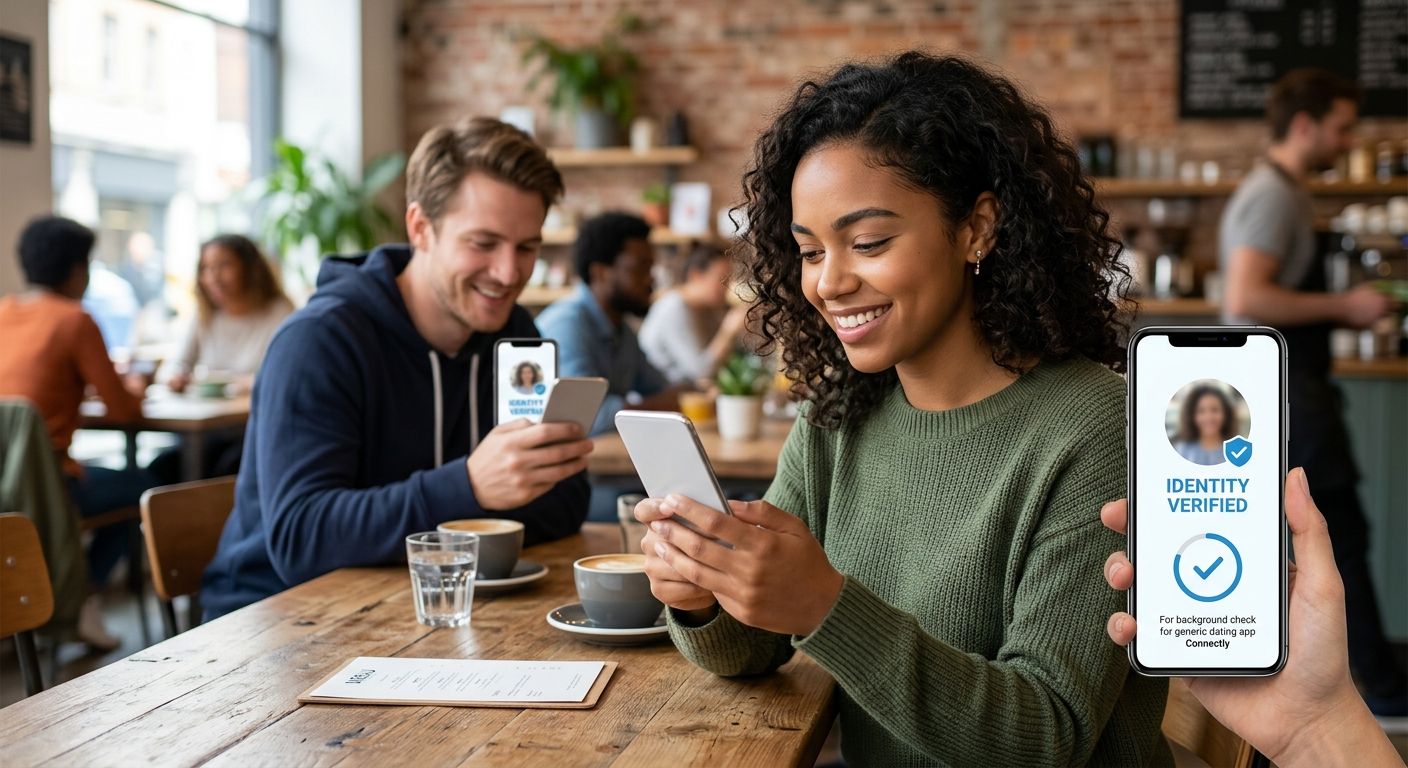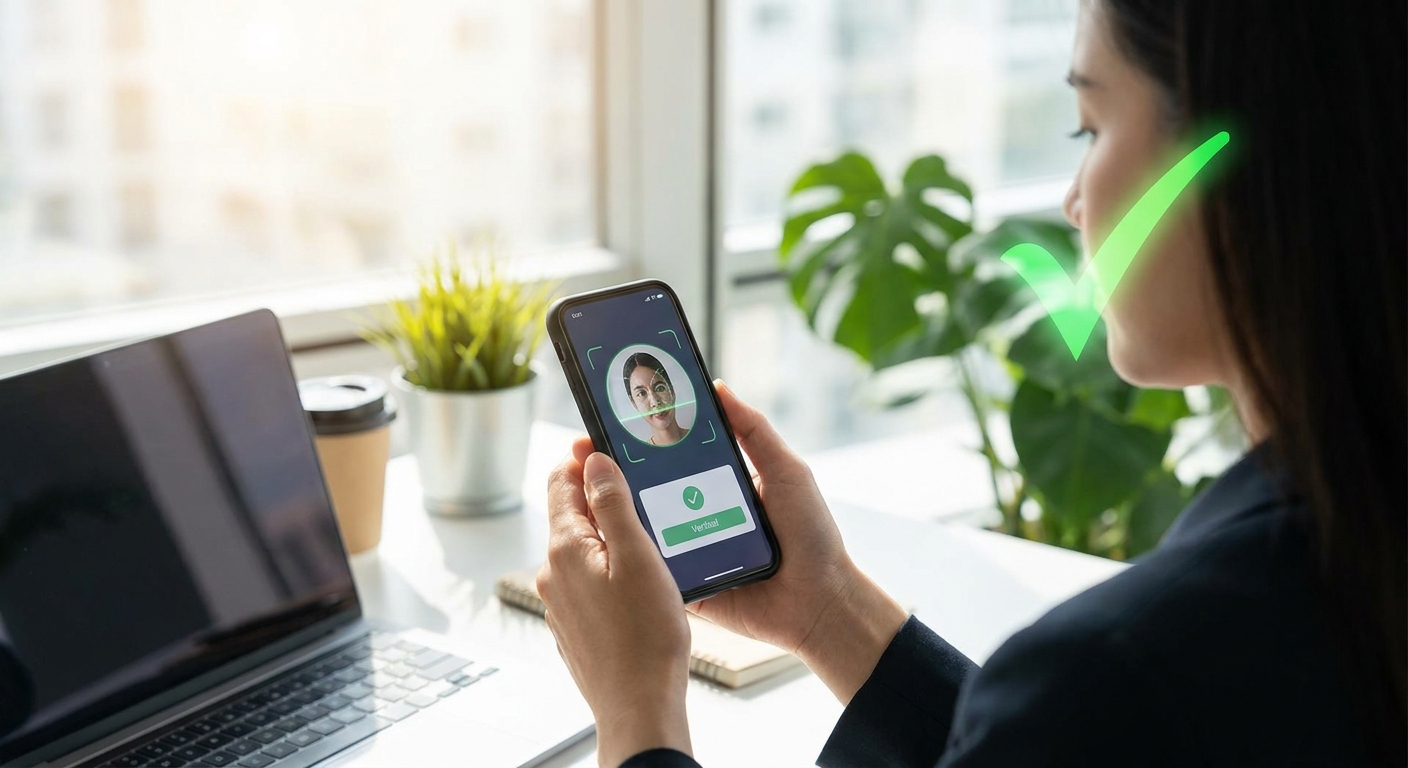
Fintech lenders and MCA brokers use biometric verification to prove the applicant on camera matches the ID they submitted — this guide ranks the platforms doing that job in 2026 and tells you which ones are worth the contract.
- Persona wins for teams that need a no-code onboarding builder — Buy.
- Socure is the strongest pick when fraud scoring has to sit next to biometrics — Buy.
- Incode leads on deepfake and injection-attack detection heading into 2026 — Buy.
- Trulioo only earns its price if you onboard applicants outside the US — Skip if you're US-only.
- Biometric verification confirms identity, not income — pair it with document-level fraud checks.
Why this matters
Biometric verification answers one question: is the person on camera the same person named on the ID? It says nothing about whether the bank statements or tax returns backing the loan application are real. Lenders who stop at the identity layer still approve funding on doctored pay stubs and inflated statements because the fraud moved to a different document entirely.
That's the gap biometric identity verification for loan applicants closes on the front end — and it's why most fintech underwriting stacks in 2026 run biometrics and document-level fraud detection as two separate, stacked checks rather than one tool doing both jobs.
A platform built to catch document fraud, like ClearStaq, parses bank statements and tax returns and flags 27+ fraud signals in under 5 seconds, at 99.5% accuracy across 900+ statement formats. That's a different job than confirming a face matches a driver's license. Both matter. Neither substitutes for the other.
How this list was ranked
Each platform below was evaluated on four things that matter for fintech onboarding specifically, not general enterprise IDV: liveness detection quality, deepfake and injection-attack resistance, integration speed into existing loan origination workflows, and pricing transparency for mid-volume lenders (not just enterprise banks with six-figure minimums). Vendor capabilities reflect publicly documented features as of 2026 — pricing and exact accuracy figures vary by contract and region, so confirm current numbers directly with each vendor before signing.
The ranked list
1. Persona — the flexible builder's pick
Persona's draw is its no-code workflow builder: you can chain document capture, liveness checks, and database verification into a single flow without an engineering sprint. That matters for fintechs iterating on onboarding conversion month to month.
It's a strong fit for teams that want to A/B test onboarding steps without filing a dev ticket every time. Verdict: Buy for lending platforms that need to own their onboarding logic in-house.
2. Socure — the fraud-first pick
Socure bundles identity risk scoring with document and biometric verification in one pass, which appeals to lenders who want a single fraud score instead of stitching together separate vendor outputs. It's widely deployed across fintech lending in 2026.
The tradeoff is less flexibility than Persona's builder model — you're buying a scoring methodology, not a workflow you design yourself. Verdict: Buy for lenders who want risk scoring and biometrics from one contract.
3. Jumio — the incumbent
Jumio has broad document coverage across geographies and mature liveness detection that's been through more iterations than most newer entrants. It's the safe, boring choice — which is sometimes exactly what a compliance team wants.
Pricing tends to run higher than newer competitors for comparable volume tiers. Verdict: Hold — solid, but benchmark it against Persona or Socure pricing before renewing in 2026.
4. Onfido (Entrust) — the compliance-heavy pick
Onfido leans into document verification depth and has deep integrations with regulated banking compliance stacks, which is why it shows up more often at banks than at scrappier fintech lenders.
If your loan origination system already runs on Entrust infrastructure, the integration lift is lower than switching vendors. Verdict: Buy for banks with heavier KYC documentation requirements.
5. Incode — the deepfake specialist
Incode puts more weight on injection-attack and deepfake detection layered on top of standard liveness checks. That's the category to watch in 2026 as generative face-swap tools get cheaper and more convincing.
Lenders seeing a rise in synthetic biometric attempts — not just synthetic identity on paper — should weight this heavier than raw onboarding speed. Verdict: Buy for lenders already seeing injection-attack attempts in application logs.
6. Veriff — the speed pick
Veriff is built around automated decisioning that cuts manual review queues, which matters for high-volume digital lenders processing thousands of applications a month. Less human review means faster time-to-funding.
Confirm regional document coverage before switching — automated decisioning is only as good as the document types it recognizes. Verdict: Consider for high-volume shops, confirm coverage first.
7. Trulioo (GBG) — the global coverage pick
Trulioo aggregates identity data sources across a wide set of countries, which is the whole value proposition if you're onboarding applicants outside the US. Domestic-only lenders get little benefit from that breadth.
Verdict: Buy if you onboard cross-border applicants. Skip if you're US-only — you're paying for coverage you'll never query.
Verify income after identity is confirmed
Parse bank statements and tax returns in under 5 seconds with 27+ fraud signals.
Comparison table
| Vendor | Best for | Deepfake/injection focus | Verdict |
|---|---|---|---|
| Persona | Custom no-code onboarding flows | Standard | Buy |
| Socure | Bundled fraud scoring + biometrics | Standard | Buy |
| Jumio | Broad geographic coverage | Mature | Hold |
| Onfido | Regulated bank compliance stacks | Standard | Buy |
| Incode | High-risk synthetic attack detection | Strong | Buy |
| Veriff | High-volume automated decisioning | Standard | Consider |
| Trulioo | Cross-border applicant onboarding | Standard | Buy (international only) |
Where to buy
- Pilot with real applicant volume before signing an annual contract. False-reject rates on liveness checks vary by lighting, camera quality, and demographic group — a vendor's marketed accuracy rarely matches your actual applicant mix on day one.
- Ask specifically about injection-attack and screen-replay detection, not just standard liveness. Deepfake tooling got cheaper and more accessible through 2026, and standard liveness checks alone don't catch a well-made virtual camera attack.
- Request SOC 2 Type II documentation and any NIST FRVT test summaries before onboarding a vendor into a regulated lending stack. Compliance teams will ask for this eventually — get it before contract signature, not after an audit.
FAQ
What's the best biometric verification software for fintech onboarding in 2026?
Persona and Socure lead for most fintech lenders in 2026 — Persona for custom onboarding flows, Socure for bundled fraud scoring with biometrics. Incode is the stronger pick if synthetic and deepfake attacks are the primary concern.
Is Jumio better than Onfido for KYC?
Jumio has broader document coverage across more geographies, while Onfido integrates more deeply with regulated banking compliance stacks. Choose Jumio for global coverage and Onfido if your loan origination system already runs on Entrust infrastructure.
How much does biometric verification software cost fintech lenders?
Pricing is typically volume-based and varies by vendor contract, so confirm current rates directly rather than relying on published estimates. Jumio and Onfido tend to run higher than Persona or Socure at comparable application volumes.
Do fintech lenders need liveness detection and deepfake detection separately?
Standard liveness detection confirms a live person is present, but it doesn't reliably catch injection attacks using virtual cameras or screen replays. Lenders seeing synthetic attack attempts need a vendor like Incode that layers deepfake-specific detection on top of liveness.
Can biometric verification alone stop synthetic identity fraud?
No — biometric verification confirms the person on camera matches the submitted ID, but synthetic identities often pair a real face with fabricated Social Security numbers or fabricated financial documents. Document-level fraud detection catches what biometrics can't see.
How long does biometric onboarding take for loan applicants?
Most platforms complete the liveness and document match in under a minute for the applicant, though automated decisioning speed varies by vendor and document type. Veriff is built specifically to minimize manual review queues after that capture step.
What's the difference between biometric verification and income verification?
Biometric verification confirms identity — that the applicant is a real, live person matching their ID. Income verification confirms the financial documents behind the loan application are real, which requires parsing bank statements and tax returns rather than a camera check.
Does biometric verification alone satisfy KYC compliance requirements?
Biometric verification covers the identity-proofing component of KYC but not the full compliance picture, which typically also requires sanctions screening and adverse media checks. Most regulated lenders run biometrics alongside a separate screening layer, not as a standalone compliance solution.
One last thing
Biometric verification tells you the applicant is real. It says nothing about whether the $47,000 in monthly deposits on their bank statement is real. Lenders that treat identity verification as the whole fraud stack are the ones still getting burned by doctored pay stubs and commingled funds well into 2026 — the fraud simply moved one layer downstream, past the camera check and into the documents nobody automated.
Related guides
ClearStaq Team
Content Team
The ClearStaq team builds AI-powered tools for bank statement parsing, fraud detection, and income verification.