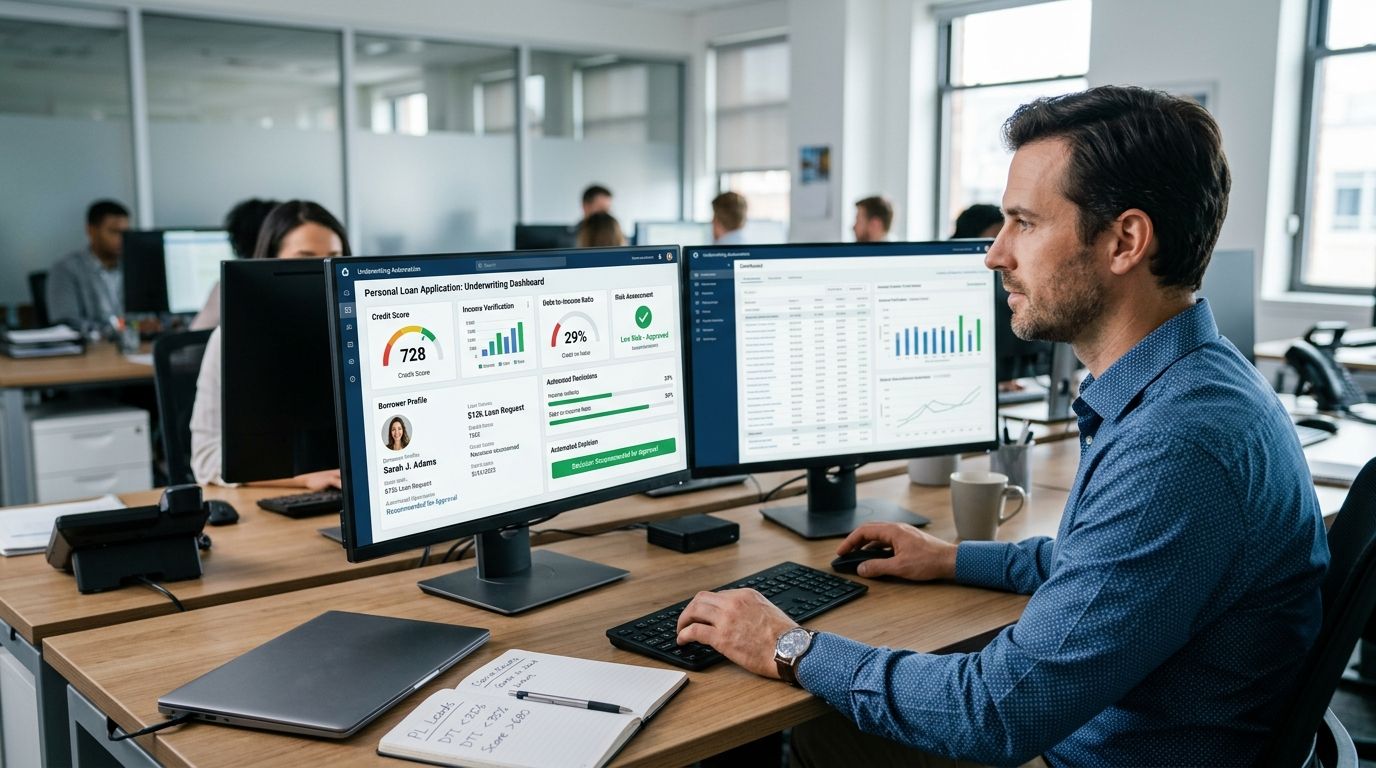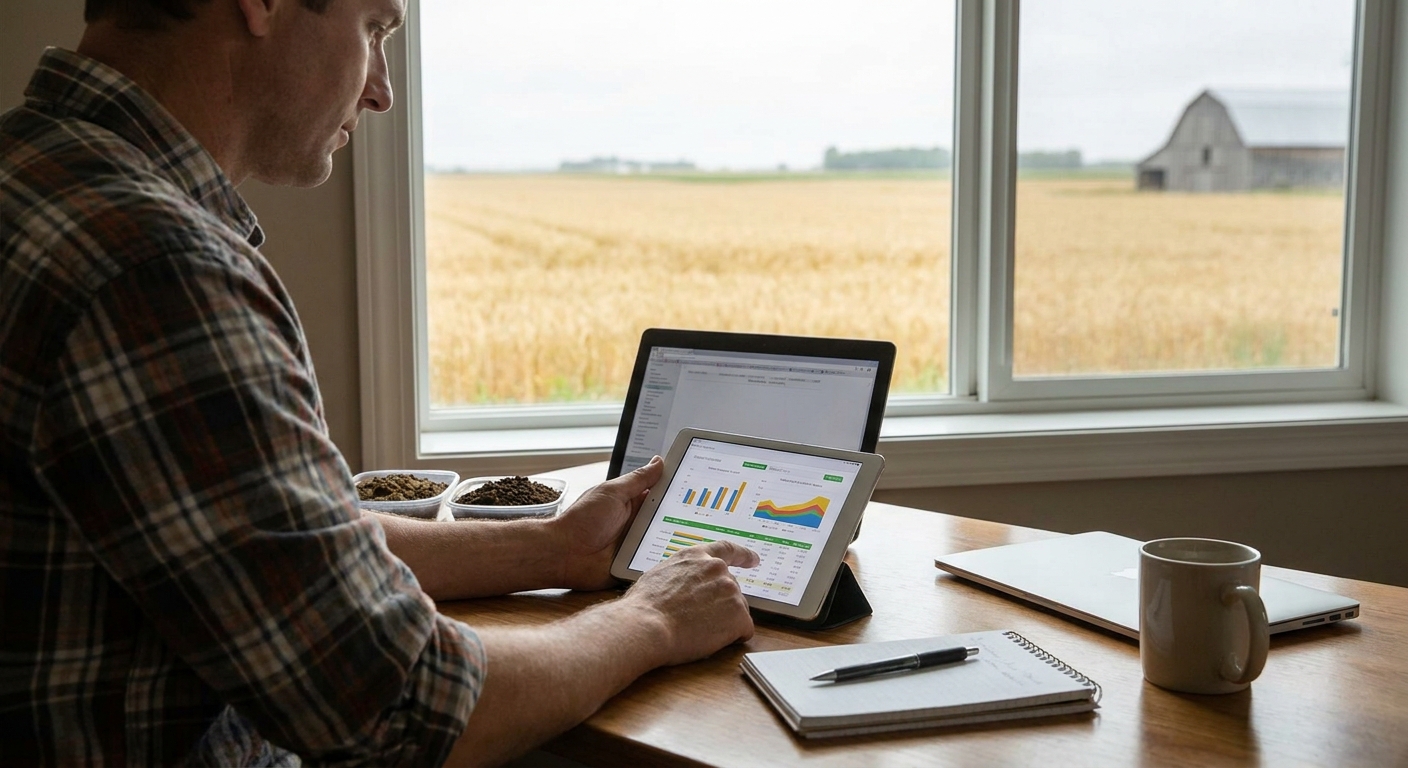
Agricultural lending runs on a calendar that has nothing to do with fiscal quarters — it runs on planting, harvest, and commodity settlement dates. Bank statement analysis software for agricultural lenders has to read cash flow through that lens, or it will reject good borrowers and approve bad ones on the same set of numbers.
- Bank statement analysis software for agricultural lenders must normalize seasonal deposits, not just sum them. Buy tools that do this.
- ClearStaq parses statements in under 5 seconds at 99.5% accuracy across 900+ bank formats — relevant for high-volume ag lending desks.
- Structuring and income-smoothing detection matter more in ag lending than in urban commercial lending because harvest-season deposits look irregular by design.
- Generic OCR tools that can't handle multi-page rural bank statements or handwritten deposit slips. Skip them.
Why this matters
A row crop operation can post near-zero deposits for four months and still be the healthiest borrower in the portfolio — the money came in at harvest and the account has been drawing down ever since. A cattle operation might show one enormous deposit in October and nothing meaningful until spring. Standard trailing-90-day cash flow underwriting, the kind built for retail or SaaS borrowers, treats both patterns as red flags.
That mismatch costs lenders two ways in 2026: good ag borrowers get declined because the software can't see past a flat month, and bad actors exploit the same seasonal noise to hide commingled funds or structured deposits. ClearStaq was built to read bank statements at the transaction level and flag what actually matters, not just what looks unusual on a monthly average.
Who this is for
This guide is for underwriters and credit teams at community banks, farm credit institutions, USDA-guaranteed lenders, and equipment or land financiers who evaluate self-employed farm income from bank statements rather than clean payroll records. If your borrower pool includes row crop, livestock, dairy, or specialty ag operations with revenue concentrated in two or three months a year, the criteria below apply directly to your file review process.
What to look for in bank statement analysis software for agricultural lenders
Seasonal revenue normalization
Ag income doesn't smooth into a monthly average the way a retail business's does — it clusters. Software that spreads 12 months of deposits into an accurate seasonal profile, rather than a flat average, is the difference between approving a real farm and declining one because month seven looked empty.
Structuring and income-smoothing detection
A borrower who splits a $47,000 harvest payment into six deposits under $10,000 is either avoiding reporting thresholds or hiding a side arrangement — either way, that's a fraud signal, not a quirk. Detection has to run on transaction-level patterns, not on whether the monthly total looks reasonable, because in agricultural lending the monthly total is often the wrong number to trust.
Multi-format parsing across rural and regional banks
Ag borrowers bank with everything from national institutions to single-branch rural community banks with statement formats that haven't changed in a decade. A parser that only handles Chase, Bank of America, and Wells Fargo layouts will choke on a large share of ag files. Format-aware parsing across hundreds of layouts, not a handful of majors, is a baseline requirement here, not a nice-to-have.
Fraud signal depth for commingled accounts
Most small and mid-size farm operations run personal and operating expenses through the same account. Software needs enough fraud signals — 27 or more, scanning for altered balances, inconsistent formatting, and voided or duplicated transactions — to separate real commingling from doctored statements. A tool built for clean commercial accounts will miss this.
Integration with underwriting and credit memo workflows
Parsing a statement is only useful if the output feeds directly into a credit memo or loan origination system. If the data has to be re-keyed into a spreadsheet before it reaches underwriting, the software has moved the bottleneck, not removed it.
Turnaround at harvest-season volume
Ag loan applications spike ahead of planting season and again at harvest settlement. Software that processes a statement in seconds rather than minutes is the only way to keep review time flat when application volume triples for six weeks a year.
See ag lending statements parsed live
Run a sample farm operating statement through ClearStaq before you commit.
Top picks by capability
Seasonal cash-flow normalization — the non-negotiable. This capability spreads a full year of deposits into a monthly profile instead of a flat average, which is the single biggest factor in whether an ag borrower gets a fair read. Tools built specifically for cash flow underwriting on small business bank statements handle this correctly by design. Buy.
Structuring pattern detection — the fraud catch. Deposits deliberately split to stay under the $10,000 currency transaction reporting threshold are one of the most common red flags examiners look for, and they show up constantly in cash-heavy ag operations selling at local markets. Software that can spot structuring patterns in business bank statements catches this before the loan closes, not after. Buy.
Income smoothing detection — the seasonal trap. Some borrowers, or their accountants, artificially flatten deposits across months to look more like a conventional business. That flattening hides the real revenue timing a lender needs to see. Tools that detect income smoothing in bank statement underwriting reconstruct the true seasonal picture instead of trusting the smoothed one. Buy.
Automated financial statement spreading — the underwriting shortcut. Manual spreading of a full year of ag borrower statements into a standard financial format still takes hours per file at most shops. Automated spreading compresses that into minutes and standardizes the output for credit memo generation. Consider — worth the switch once monthly ag file volume justifies the setup.
What to avoid
- Generic photo-to-text OCR apps. They're built for receipts and single-page statements, not multi-page rural bank PDFs with inconsistent column layouts.
- Personal budgeting parsers rebadged for lending. These tools categorize spending for consumers — they don't detect commingled farm and personal funds, which is exactly what ag underwriting needs to catch.
- Trailing-90-day cash flow tools with no seasonal override. Any software that can't be told "this borrower's revenue concentrates in two months" will systematically misjudge every ag file it touches.
Verdict comparison
| Criteria | Why it matters for ag lending | Verdict |
|---|---|---|
| Seasonal revenue normalization | Prevents flat-month deposits from reading as distress | Critical |
| Structuring detection | Catches deposits split to dodge reporting thresholds | Critical |
| Income smoothing detection | Reveals true harvest-timed revenue behind flattened averages | Critical |
| Multi-format bank parsing | Rural and regional bank layouts vary widely | Important |
| Fraud signal depth (27+) | Separates real commingling from doctored statements | Important |
| LOS/credit memo integration | Keeps parsed data out of manual spreadsheets | Nice-to-have |
FAQ
What is bank statement analysis software for agricultural lenders?
It's software that parses farm and ranch operating account statements to extract cash flow, detect fraud, and normalize seasonal revenue for underwriting. In 2026, the better tools process a statement in under 5 seconds and check it against 27 or more fraud signals.
How does ag lending bank statement analysis differ from standard commercial underwriting?
Ag lending requires seasonal normalization instead of a flat trailing average, because harvest and settlement timing concentrate revenue into a few months. Standard commercial tools built for steady monthly revenue will misread that pattern as distress.
Can bank statement analysis software detect structuring in farm deposits?
Yes, transaction-level structuring detection flags deposits deliberately split under the $10,000 reporting threshold. This is a common pattern in cash-heavy ag operations and one of the clearer fraud signals underwriters check for.
How long does it take to parse a year of ag borrower bank statements?
Format-aware parsers process each statement in under 5 seconds, so a full 12-month file typically clears in under a minute of processing time. Review time still depends on how the underwriter reads the output.
Does bank statement analysis software work with USDA-guaranteed loan files?
The software parses the deposit account statements attached to a loan file, the same statements included in any commercial package. It doesn't process USDA guarantee paperwork directly.
What's the biggest bank statement fraud risk in agricultural lending?
Commingled personal and farm funds combined with structured deposits around harvest settlement is the most common risk pattern. Both require transaction-level fraud signals rather than a review of the monthly total.
How accurate is automated bank statement parsing for ag lenders?
Leading tools parse at 99.5% accuracy across 900-plus bank formats as of 2026, including many regional and rural bank layouts. Accuracy drops sharply with tools limited to a handful of major bank formats.
Is manual spreading still necessary for agricultural loan files?
No — automated financial statement spreading now handles the standard spread output directly from parsed statements. Manual spreading remains common only at shops that haven't switched tools yet.
One last thing
The pattern most underwriters miss isn't fraud — it's timing. A cattle operation that sells its herd in October and posts near-zero deposits from December through March isn't distressed, it's on cycle. Software that flags flat months as risk will decline that borrower every single year, and it will keep doing it in 2026 unless someone overrides the model with a seasonal read.
“A flat month on a farm operating account isn't distress signal — it's the calendar working as designed.”
Related guides
ClearStaq Team
Content Team
The ClearStaq team builds AI-powered tools for bank statement parsing, fraud detection, and income verification.